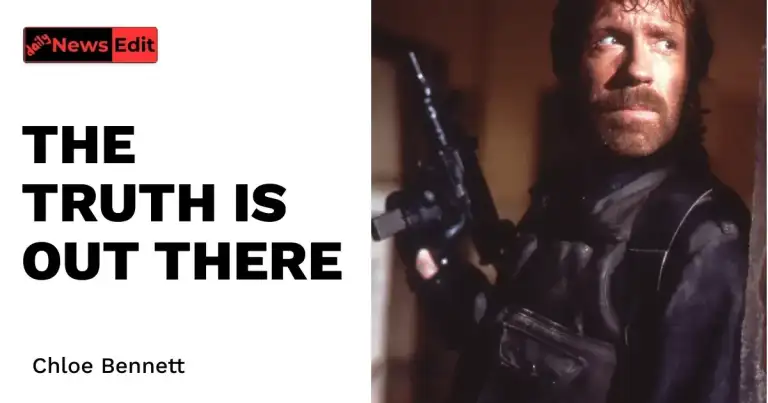
The whispers began subtly, then crescendoed into a full-blown roar across the internet: Mickey Rourke, the once-sizzling heartthrob, the actor whose raw intensity could set the screen ablaze, was homeless. Not just down on his luck, mind you, but destitute, wandering the streets, reportedly even turning away the outstretched hands of concerned fans. It’s a narrative so tragically compelling, so utterly Hollywood in its rise-and-fall arc, that it almost feels true. But here’s the brutal, inconvenient truth: the reports of Mickey Rourke’s current homelessness are a fiction, a ghost story haunting the digital age, a tragic misinterpretation of a life lived on the fringes of self-destruction and cinematic genius.
This isn’t to say Mickey Rourke’s life hasn’t been a brutal tapestry of self-inflicted wounds, squandered opportunities, and profound personal demons. Quite the contrary. His story is a masterclass in the corrosive power of addiction, pride, and the unforgiving machinery of fame. It’s a cautionary tale, yes, but not of a man abandoned to the streets. It’s the far more complex, and perhaps more harrowing, saga of a man who, despite numerous chances at redemption, has repeatedly danced with the precipice, leaving a trail of wreckage that makes the notion of current homelessness almost seem plausible.
Let’s dismantle this pervasive myth, shall we? A quick glance at reputable sources, a simple search of current film projects, or even a scroll through his own active Instagram account reveals a man who, while certainly bearing the scars of his tumultuous past, is very much alive, working, and living. In the last couple of years alone, he’s appeared in films like “The Palace” (2023), “Junction” (2024), and “The Commando” (2022). This isn’t the resume of a man sleeping rough. So, why does this particular rumor persist with such tenacity? Because it fits a convenient, albeit heartbreaking, narrative: the fallen idol, the star whose light dimmed irrevocably. And in Mickey Rourke’s case, the seeds of such a narrative were sown decades ago, watered by his own tempestuous choices.
The real story of Mickey Rourke isn’t about current destitution; it’s about the decades-long battle against himself, a war waged in public, leaving visible and invisible wounds. It’s about the profound question: how does a talent so raw, so undeniable, so utterly captivating, manage to sabotage himself with such relentless precision?
The Boxing Ring: A Self-Inflicted Scar to Mickey Rourke
To understand Mickey Rourke’s trajectory, one must first understand his pivot to professional boxing in the early 1990s. At the height of his fame, after iconic roles in films like 9½ Weeks and Angel Heart, Mickey Rourke did the unthinkable for a leading man: he walked away from Hollywood. He traded the klieg lights for the squared circle, the carefully choreographed fights for the brutal reality of the ring. This wasn’t a desperate act of a man with no options; it was a deliberate, almost defiant, rebellion against the industry that had made him a star.
“I was going to hell,” Mickey Rourke famously stated in interviews, referring to his state of mind during his initial acting success. “I thought boxing would save me.”
He believed the discipline, the raw physicality, the primal confrontation, would somehow cleanse him of the excesses and emptiness he felt in Hollywood. But what it did, physically, was devastating. The consequences were immediate and enduring. He sustained multiple concussions, broken noses, shattered cheekbones, and crushed ribs. His face, once lauded for its striking, unconventional beauty, became a canvas of damage. The transformation was so profound, it begged the question: was this a quest for authenticity, or a desperate act of self-mutilation disguised as sport?
The subsequent reconstructive surgeries, by his own admission, were botched, leaving him with an appearance drastically altered, a face that no longer quite matched the public’s memory of him. “I had to have five operations on my nose and one on my cheekbone,” he recounted. “They had to take cartilage from my ear to rebuild my nose and do a number of operations to my face because the doctors didn’t know what they were doing.” This wasn’t merely a cosmetic change; it was a professional death knell for a leading man in an industry obsessed with aesthetics. Directors, once drawn to his brooding intensity, now found his altered visage a distraction, a narrative in itself that overshadowed any character he might play. Was this “giving up”? Perhaps not intentionally, but it was certainly an act of self-sabotage that dramatically altered the course of his career, slamming shut doors that might otherwise have remained open. The boxing ring didn’t save him; it merely offered a different kind of destruction, one that left indelible marks on his career and his very identity.
The Difficult Man Mickey Rourke: Hollywood’s Blacklist
Beyond the physical transformation, there was the reputation. Mickey Rourke was, and often still is, notoriously difficult to work with. He clashed with directors, argued with co-stars, and developed a “bad boy” persona that quickly wore thin in an industry that demands a certain level of professionalism, or at least, pliability. Stories abound of his erratic behavior on set, his refusal to follow direction, and his general disdain for the conventional trappings of stardom. One notorious anecdote involves his insistence on bringing his pet chihuahua to set, often disrupting production. Such stories, whether embellished or accurate, painted a picture of an actor unwilling to conform, a rebel without a cause in a town built on compromise.
This wasn’t just artistic temperament; it was a pattern of behavior that alienated producers, casting directors, and ultimately, audiences. Hollywood has a long memory, and it doesn’t suffer difficult talent gladly, especially when there’s an endless supply of fresh, eager faces waiting in the wings. Mickey Rourke found himself increasingly blacklisted, relegated to direct-to-video features or roles that were caricatures of his former glory. Was this a conscious “giving up”? No, but it was a self-inflicted exile, a refusal to play the game that ultimately cost him dearly. His pride, his defiance, his unwillingness to conform, became both his strength and his undoing. He was too real, too raw, too volatile for the polished facade of mainstream cinema. He was a force of nature, but Hollywood prefers tamed beasts, and Rourke refused to be leashed.
Consider the sheer audacity of a man who, after achieving global stardom, would openly scorn the very system that elevated him. This wasn’t a calculated career move; it was a visceral rejection, a middle finger to the machine. And the machine, in turn, exacted its price. Roles dried up, offers dwindled, and the phone stopped ringing. The “difficult” label became a brand, a scarlet letter that preceded him into every casting meeting. It wasn’t just about bad behavior; it was about a perceived lack of respect for the craft, for the crew, for the millions of dollars invested in a production. In an industry built on collaboration, Rourke often seemed to prefer confrontation. This wasn’t merely a bump in the road; it was a deliberate demolition of his own career, brick by painful brick.
The Serpent in the Garden: Drugs and Alcohol
But perhaps the most insidious factor in Mickey Rourke’s long, slow decline was his battle with substance abuse. This isn’t speculation; it’s a truth he has candidly admitted, often with heartbreaking honesty. Alcohol and cocaine became his constant companions, dulling the pain, fueling his erratic behavior, and systematically dismantling his life, piece by agonizing piece. The glittering allure of Hollywood nightlife, the endless parties, and the ever-present temptations proved to be an irresistible siren song for Rourke, who, by his own admission, was already grappling with deep-seated personal issues.
“I spent 15 years self-destructing,” Mickey Rourke confessed in an interview, reflecting on the depths of his addiction. “My shrink told me I had to get away from everything. I was so sick of myself.”
He described a period where he was “hiding in the closet, with the gun in my mouth,” contemplating suicide. These weren’t fleeting moments of weakness; they were years of being enslaved by his demons. The raw vulnerability of these confessions paints a picture of a man teetering on the brink, not just of professional ruin, but of complete self-annihilation. How many stars have we seen fall prey to similar fates? Mickey Rourke’s story is a stark reminder that fame offers no immunity from the clutches of addiction; if anything, it often amplifies the destructive power of such habits.
The impact of his drug and alcohol use was catastrophic. It exacerbated his already volatile personality, making him unreliable on set and impossible in personal relationships. It clouded his judgment, leading to questionable career choices and strained friendships. It contributed to the “difficult” label, but more profoundly, it stole years of his life, years of potential, years of creative output. When people ask if drugs “took over his life,” the answer, unequivocally, is yes. They didn’t just take over; they nearly ended it. They were the serpent in the garden of his talent, poisoning everything in their path. The charisma that once captivated audiences was slowly eroded, replaced by a haunted, unpredictable persona. His talent, once a blazing inferno, became a smoldering ember, choked by the very substances he sought for solace.
The Glimmer of Redemption: The Wrestler
Then came The Wrestler. In 2008, Darren Aronofsky cast Mickey Rourke as Randy “The Ram” Robinson, a washed-up professional wrestler clinging to past glory. It was a role that mirrored Mickey Rourke’s own life with uncanny, almost cruel, precision. The film was a triumph, a raw, poignant masterpiece, and Rourke’s performance was universally hailed as a masterpiece of acting, earning him an Academy Award nomination. He didn’t just play Randy “The Ram”; he was him. The lines between actor and character blurred, creating a performance of such raw authenticity that it resonated deeply with critics and audiences alike. It was a cinematic miracle, a phoenix rising from the ashes of a career many had long written off.
“I had to go to a place I didn’t want to go to,” Rourke said of the role. “But I had to do it. It was like living my own life all over again.”
The Wrestler was more than a comeback; it was a resurrection. It proved, beyond a shadow of a doubt, that the talent was still there, perhaps even burnished by the fires of his personal hell. Hollywood, briefly, opened its arms again. Mickey Rourke was given a second chance, a rare gift in an industry that rarely offers even one. The narrative of the fallen idol finding his way back to the light was almost too perfect, too Hollywood, to be true. But for a fleeting moment, it was.
So, what happened? Why didn’t he capitalize on this momentum, this extraordinary opportunity for a full-fledged return to grace? This is where the narrative of “not taking help” or “giving up” might find a more nuanced footing. While there’s no evidence of him turning down fan donations while homeless, his post-Wrestler career has been a mixed bag, to say the least. He took roles in films like Iron Man 2 (a caricature), The Expendables (another caricature), and a string of less-than-stellar projects. He didn’t seem to fully grasp the opportunity, or perhaps, the demons that had plagued him for so long were simply too deeply ingrained to truly shake off. Was it a lack of judgment, a lingering self-sabotage, or simply the brutal reality that Hollywood, even after a comeback, rarely forgives completely?
His personality, his pride, his inherent defiance, never truly left him. The man Mickey Rourke who alienated Hollywood once, found ways to do it again, albeit less dramatically. He has spoken of his struggles to find roles that genuinely challenge him, of being typecast, of the ongoing battle against his own reputation. Does this constitute “giving up”? Or is it the lingering echo of a past that refuses to fade, a self-fulfilling prophecy of a man forever on the edge? The industry, ever eager to brand and categorize, seemed to struggle with where to place the “new” Mickey Rourke. Was he a leading man reborn, or a character actor forever marked by his past? The ambiguity, it seems, proved to be another hurdle in his path to sustained redemption.
The Enduring Myth and the Unforgiving Truth
The rumor of Mickey Rourke’s current homelessness, then, is a symptom of a deeper truth: the public’s fascination with the tragic decline of its heroes, and Rourke’s own long, documented dance with destruction. It’s easier to believe in the simplified narrative of a man completely broken and abandoned than to grapple with the complex, messy reality of a life lived battling internal and external forces. Why do we crave such stark, black-and-white narratives when the truth is almost always a thousand shades of grey?
Mickey Rourke’s story is not yet over. He continues to work, continues to appear on social media, continues to exist in the public eye, albeit often as a shadow of his former self, a living testament to the ravages of time, choices, and addiction. His face, a roadmap of his life’s battles, tells a story more compelling than any manufactured rumor. He is a walking, talking monument to resilience and self-destruction, a paradox wrapped in a leather jacket. He has, against all odds, survived, even if the survival itself is a testament to the sheer force of his will and perhaps, a touch of stubborn defiance.
The real tragedy isn’t that Mickey Rourke is currently homeless and refusing aid. The real tragedy is the decades he lost, the talent he squandered, the relationships he ruined, all in a desperate, often self-destructive, search for something he could never quite articulate. It’s a testament to the unforgiving nature of Hollywood, yes, but more profoundly, it’s a testament to the brutal, relentless power of personal demons. So, next time you hear the whispers of his destitution, remember this: the true story of Mickey Rourke is far more heartbreaking, far more complex, and far more real than any internet rumor could ever convey. And it’s a story that, for better or worse, is still being written. The final chapter remains unpenned, a testament to a life lived on the edge, always, it seems, just one punch away from either triumph or oblivion.
Source: Google News
Related Articles
- Oscars 2026: Fear on the Red Carpet?
- Rachel Zoe Traumatized After Mansion Break-In – How She and Her Kids Are Coping Today
- Rihanna Villa Shooting Unveils Fatal Flaws in Beverly Hills Celebrity Security