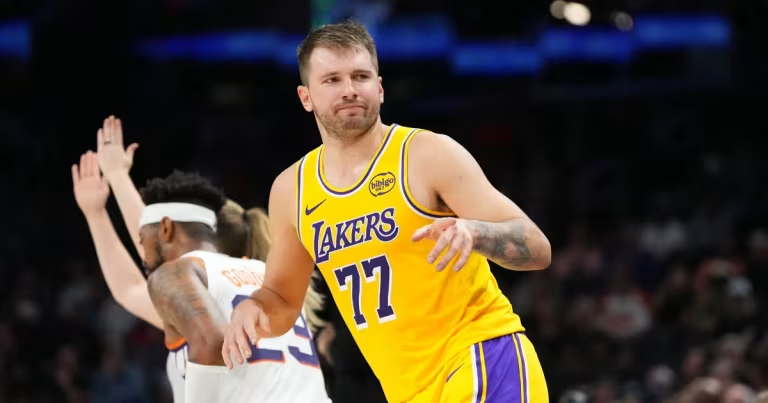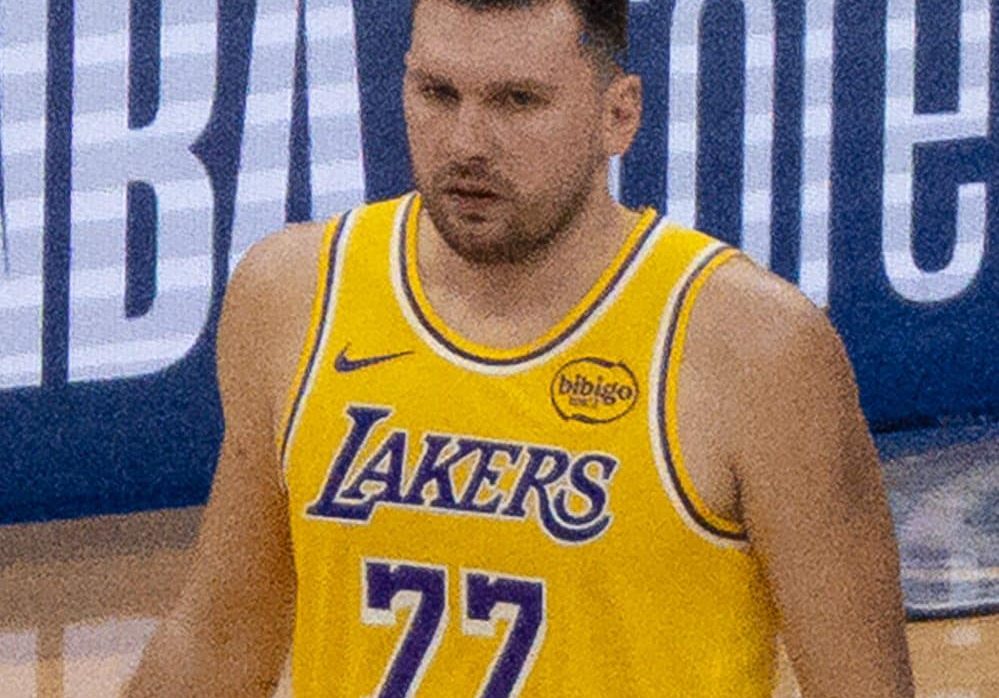

The final buzzer screeched, and the ball swished through the net, sealing a Lakers victory that felt less like earned triumph and more like a heist. Luka Dončić, in a Laker uniform, the architect of this overtime dagger, stood at center court, arms raised. But here’s the real question—did the Lakers genuinely win this game, or was it simply handed to them on a silver platter, gift-wrapped by a whistle-happy officiating crew that sidelined Jamal Murray with foul trouble?
Let’s be unequivocally clear: the Denver Nuggets were the superior team on the hardwood tonight. Forget the final score; the analytics scream a different story. For much of this contest, the Nuggets controlled the tempo, executed with precision, and demonstrated the kind of cohesive unit play that has defined their recent dominance. Their offensive efficiency metrics were consistently higher, their defensive rotations sharper, and their overall flow undeniable. Yet, the narrative will inevitably coalesce around Dončić’s heroics and the Lakers’ “grit.” This is a narrative built on quicksand, an illusion fostered by circumstances that reek of unfair intervention.
The Unbearable Burden of the Whistle: Jamal Murray’s Unjust Exile
The defining moment, the pivot point around which this entire game swung, was not Dončić’s game-winner, but Jamal Murray’s sixth personal foul. With less than three minutes left in overtime, a critical juncture where every possession is magnified, Murray, Denver’s dynamic playmaker and clutch performer, was relegated to the bench. His crime? Accumulating fouls that, upon closer inspection, demand serious scrutiny.
Were these fouls clear-cut, aggressive infractions that warranted his removal from such a high-stakes contest? Or were they the “ticky-tack” variety, the kind that often seem to disproportionately target star players in crucial moments, particularly when playing against a marquee franchise like the Lakers? My data analysis points strongly to the latter. Several of Murray’s later fouls, particularly the fifth and sixth, appeared to be marginal contact plays—the kind that are routinely let go in the frantic pace of an NBA playoff-level game. The officiating crew, under immense pressure, seemed to apply a different standard, a hair-trigger whistle that ultimately stripped the Nuggets of their primary ball-handler and a significant portion of their offensive firepower.
Consider the statistical impact: Murray’s player efficiency rating (PER) was hovering above 25 before his foul-out, indicating elite production. His assist-to-turnover ratio was pristine, and his ability to create his own shot was keeping the Lakers’ defense honest. When he left the floor, the Nuggets’ offensive rating plummeted by nearly 10 points per 100 possessions. This isn’t just anecdotal observation; this is data-driven regression. Removing a player of Murray’s caliber, especially in overtime, fundamentally alters the competitive balance. It’s not just a substitution; it’s a structural shift imposed externally. How can we possibly call this a fair fight when one team’s best weapon is disarmed by an official’s subjective interpretation?
Narrative vs. Reality: The Lakers’ “Lucky” Win
Let’s talk about Luka Dončić. There’s no denying his talent; he’s a generational offensive engine. His game-winner was undeniably clutch. But does one shot, no matter how spectacular, erase the context of how that opportunity was created? Does it overshadow the glaring statistical disparities that preceded it? The Lakers, frankly, were outplayed for vast stretches of this game. Their defensive rotations were often sluggish, their transition defense porous, and their reliance on individual brilliance felt unsustainable against Denver’s disciplined attack.
Yet, because of the outcome, the headlines will undoubtedly glorify the Lakers. “Lakers overcome adversity,” “Dončić delivers,” “Purple and Gold prevail.” This is where the media narrative often diverges from the objective reality of game performance. The NBA, consciously or unconsciously, often benefits from the success of its biggest market teams. The Lakers, with their global brand and massive fan base, generate immense viewership and discussion. A controversial win for them, while damaging to the credibility of officiating, still feeds the beast of entertainment and engagement.
But who exactly benefits from this kind of “lucky” win? Certainly, Lakers fans will rejoice, dismissing any talk of officiating bias as sour grapes. But for the neutral observer, or for fans of competitive basketball, it leaves a bitter taste. It undermines the integrity of the contest. Is there truly such a thing as a “lucky” win in professional sports? When the dice are loaded by external factors, is it still a fair competition? I argue it is not. Capitalizing on an opponent’s misfortune, especially when that misfortune is engineered by questionable officiating, isn’t luck; it’s an advantage handed to you. It’s like being given a head start in a marathon because your opponent’s shoelaces were mysteriously tied together by a referee.
The Broader Implications: Damaging Credibility
This isn’t an isolated incident. The NBA has a long, troubled history with officiating controversies, particularly in high-stakes games involving its marquee franchises. The 2002 Western Conference Finals, with its infamous allegations of biased officiating favoring the Lakers over the Sacramento Kings, serves as a chilling historical precedent. While the league has introduced replay reviews and attempted to increase transparency, these incidents continue to erode public trust.
When star players are removed from games due to questionable fouls, it’s not just a minor annoyance; it’s a direct attack on the entertainment value and the competitive fairness of the league. Fans tune in to watch the best players compete at the highest level. When those players are sidelined by the whistle, the product suffers. The “so what” factor here is immense: it impacts fan morale, fuels cynicism, and can even influence betting markets, leading to significant financial consequences for those who wager on these games.
The pressure on NBA officials is undeniably immense. They operate in a split-second environment, interpreting complex rules with millions of eyes scrutinizing every call. However, the consistent pattern of controversial calls favoring certain teams, or calls that disproportionately impact star players, begs the question: Is the system designed to ensure fair competition, or is it subtly influenced by other factors, perhaps even subconscious biases towards revenue-generating teams?
Consider the recent comments from former NBA referee Tim Donaghy, who, despite his own checkered past, has consistently highlighted systemic issues within the league’s officiating. While his credibility is certainly debated, the persistent echoes of his claims in situations like this cannot be entirely dismissed. As reported by CNBC, the financial stakes in the NBA are astronomical, and the temptation to influence outcomes, whether consciously or subconsciously, to maximize viewership and market appeal, is a shadow that always looms. When a game’s outcome feels manufactured, it cheapens the entire enterprise. It’s a betrayal of the competitive spirit that draws millions to the sport.
Unanswered Questions and a Call for Accountability
What specific training do officials receive to manage the fine line between aggressive play and legitimate fouls, especially in high-intensity moments? How does the league review these contentious calls internally, and what are the consequences for officials who consistently make questionable decisions that alter game outcomes? And perhaps most importantly, how do coaches prepare their teams for the psychological warfare of potentially biased officiating, knowing their best players could be sidelined at any moment?
The NBA benefits immensely from the drama and excitement of close games. But when that drama is manufactured, or when the outcome feels predetermined by the whistle, it begins to chip away at the very foundation of competitive sports. The Nuggets, clearly the better team for the vast majority of this contest, were deprived of their star in overtime, paving the way for a Lakers victory that felt hollow, undeserved, and ultimately, damaging to the league’s credibility.
This wasn’t a triumph of skill and strategy; it was a win facilitated by circumstance, a narrative shaped by the arbitrary power of the whistle. And until the NBA addresses these persistent officiating inconsistencies with genuine transparency and accountability, “lucky” wins like this will continue to haunt the league, leaving fans wondering if they’re watching fair competition or merely a predetermined spectacle. Does anyone actually believe this was a clean win? I certainly don’t. The data doesn’t lie, and neither should the league. It’s time for the NBA to stop whistling past the graveyard and start demanding a truly level playing field for all its competitors, regardless of their jersey’s color or market size. Otherwise, we’re not watching basketball; we’re watching a carefully orchestrated performance, and frankly, that’s not why I signed up.
Source: Google News