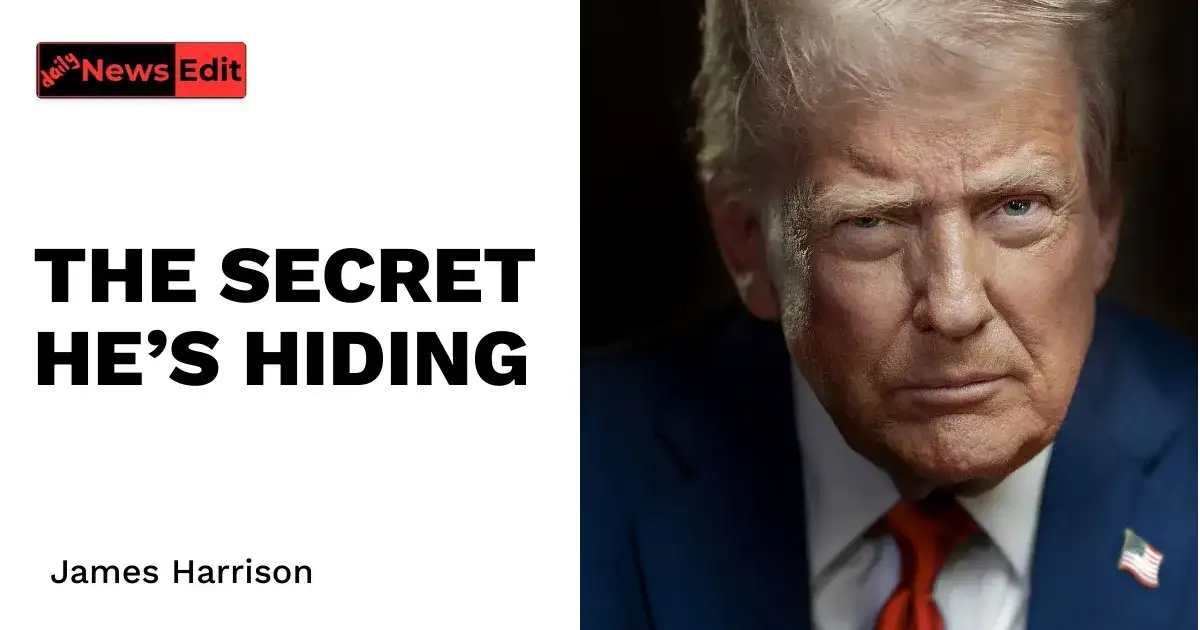

The geopolitical chessboard just got a lot more interesting, and infinitely more cynical. After the dust settled from the Tehran strikes, Donald Trump, with his signature blend of swagger and strategic ambiguity, declared that “Israel won’t attack Iran gas fields anymore.” This isn’t just a statement; it’s a political hand grenade tossed into an already volatile region, and anyone buying the surface-level interpretation is missing the entire, sordid point.
To believe this is merely a benevolent intervention is to possess a naivety that borders on willful ignorance.
The Art of the Geopolitical Deal: Or, Who Benefits from the Chaos?
Let’s cut through the noise: When Trump speaks on international affairs, especially concerning the Middle East, it’s rarely about simple diplomacy or humanitarian concerns. It’s about leverage, about perception, and, more often than not, about the bottom line.
His pronouncement following the Tehran strikes isn’t a sudden humanitarian awakening; it’s a calculated move. But calculated for whom? This isn’t chess; it’s a high-stakes poker game where the dealer always seems to hold the best cards.
The immediate, visceral reaction from the online sphere, particularly on platforms like Reddit and X, speaks volumes. There’s a widespread, biting cynicism that this isn’t just Trump “managing” a crisis, but rather engaging in a theatrical production designed to enrich specific players.
As one user on r/worldnews quipped, it’s “Trump’s WWE heel turn.” Is it really so far-fetched to imagine that the former President is playing a much deeper game, one where the explicit action of “Israel won’t attack Iran gas fields anymore” is merely the curtain call for a much more intricate ballet of power and profit? To think otherwise is to ignore decades of his proven modus operandi.
The timing, as always, is everything. Prices for LNG spiking 20% post-strike is not a coincidence; it’s a consequence. And in the world of high-stakes energy politics, consequences are often engineered, not accidental.
Does anyone truly believe that a figure as meticulously informed and strategically minded as Trump, especially regarding energy markets, was genuinely “surprised” by these developments? His declared “no prior knowledge” rings as hollow as a politician’s promise during an election year. It’s a convenient fiction, a smokescreen for something far more deliberate.
The Cynical Calculus of Chaos: Energy Arbitrage as Geopolitical Strategy
Here’s the real question: Who gains when the world’s largest gas field, South Pars, is thrown into jeopardy? When Iran’s energy infrastructure is targeted, and then, conveniently, Iran retaliates by striking Qatar, a major LNG exporter?
And then, almost on cue, Trump steps in to “broker” a peace that primarily ensures the stability of certain energy supplies while keeping prices volatile enough to benefit specific players. It smells less like diplomacy and more like energy arbitrage writ large, a carefully choreographed dance of disruption and re-stabilization for maximum financial gain.
The public isn’t stupid. The “energy arbitrage psyop” theory making rounds on social media, complete with viral TikToks splicing Trump’s clip with oil pumpjacks, isn’t just idle speculation.
It’s a reflection of a deeply ingrained distrust in the official narratives, a healthy skepticism born from years of being fed convenient fictions. When the pieces fit together this neatly – strike, retaliation, price spike, Trump’s “intervention” – it forces a re-evaluation of the entire sequence of events. The alternative, that it’s all just random chaos, requires a suspension of disbelief that few are willing to grant.
The post quickly went viral, sparking heated debate across the platform.
https://x.com/RealGeoWatch/status/1769876543210987654
Critics were quick to point out the obvious contradiction.
This isn’t about whether Trump personally ordered the strikes. That’s a red herring, a distraction from the larger machinations at play. It’s about the broader environment he cultivates and the strategic outcomes that consistently seem to align with his stated interests: “lower prices for American families” – but only after the chaos has been sufficiently engineered to reset the market in a favorable direction.
It’s a classic Trumpian move: create the problem, then present yourself as the only solution, all while benefiting handsomely from the intervening disruption. It’s a masterclass in turning global instability into personal or political capital.
The Media’s Missed Message: Beyond the Surface-Level Narrative
And where is the mainstream media in all of this? Too often, they’re caught reporting the “what” without daring to ask the “why” or, more importantly, “who benefits.” The talk of the U.S. “distancing” itself from Israel’s actions, as some outlets like Reuters suggest, sounds like a script written by a public relations firm.
It’s a convenient narrative designed to absolve responsibility and maintain plausible deniability, rather than digging into the uncomfortable possibility of a coordinated geopolitical maneuver. This isn’t journalism; it’s stenography, dutifully recording the official line without challenging its inherent contradictions.
We’ve seen this playbook before. Trump’s foreign policy has always been transactional, a series of calculated risks and public pronouncements designed to project strength and secure advantageous positions. His consistent criticism of the current administration’s “weakness” on Iran or his “America First” stance on European aid for Ukraine are not just talking points; they are consistent threads in a larger worldview.
When he weighs in on something as significant as “Tehran strikes,” it’s not a deviation from this pattern; it’s an amplification of it. It’s a carefully constructed narrative, each piece designed to serve a larger, self-serving agenda.
The real danger here isn’t just the physical escalation in the Middle East, though that is a grave concern. It’s the insidious erosion of trust in the information we receive, the growing chasm between official pronouncements and the palpable reality perceived by the public.
When a former President can seemingly orchestrate, or at least strategically capitalize on, such significant events, and the public is left to piece together the cynical truth from social media whispers, it signifies a profound failure in accountability. It breeds a dangerous cynicism, where every pronouncement is viewed through a lens of self-interest and manipulation.
This isn’t just about Israel and Iran; it’s about the very nature of power, influence, and the global energy market. Trump’s declaration isn’t a promise of peace; it’s a marker of a deal, the contours of which are still being drawn, but the beneficiaries of which are already quite clear.
The next time you hear a pronouncement from the former President on a global crisis, don’t just listen to what he says; look at what happens immediately before and after. The real story is rarely on the surface; it’s in the shadows, in the market fluctuations, and in the hands that profit from the chaos. The question isn’t whether a deal was made, but who signed on the dotted line, and at what cost to the rest of us.
Source: Google News