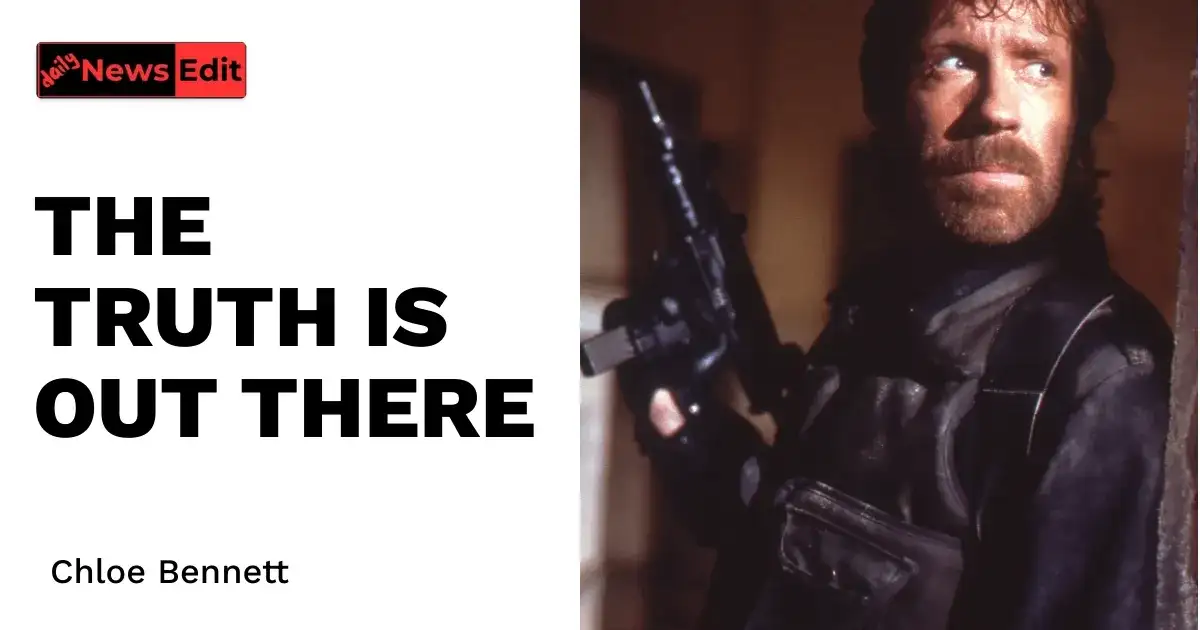

The internet, that vast digital swamp of misinformation and fleeting outrage, has once again decided to put Chuck Norris through the wringer. “Chuck Norris dead at 86,” the digital whispers began, amplified by the usual suspects of clickbait journalism and the perpetually misinformed. But here’s the real story, and it’s far more interesting than a simple obituary: Chuck Norris doesn’t die. Death, it seems, just taps out.
This isn’t a mere celebrity death hoax; it’s a cultural phenomenon, a recurring internet ritual that tells us more about our collective anxieties and the absurd durability of a meme than it does about the actual health of a martial arts legend. For the fifth time this year, apparently, the internet has tried to kill Chuck Norris. And for the fifth time, it has failed spectacularly, proving that even in the age of AI-generated content and deepfakes, some legends are simply too big to fall.
The Immortal Meme Machine Chuck Norris vs. The Grim Reaper
Does anyone actually believe these headlines anymore? The immediate, visceral reaction across social media platforms like Reddit and X (formerly Twitter) wasn’t grief, but a collective eye-roll. “Fifth time this year. Walker, Texas Ranger slays rumors too,” one Reddit user quipped in an r/OutOfTheLoop thread, perfectly capturing the weary cynicism that greets these periodic pronouncements of Norris’s demise. It’s almost as if the internet has decided that if it can’t generate new content, it will simply recycle old, debunked narratives, hoping someone, somewhere, will bite.
The source of this latest falsehood? A vague health scare and a hospital visit in Hawaii, where Chuck Norris, now 86, was reportedly “in good spirits.” This nugget of actual information was quickly distorted, stretched, and then snapped into a sensationalized headline by outlets like “Hollywood Whisperer” – a name that already screams credibility, doesn’t it? The public’s reaction wasn’t sympathy for Norris, but pure scorn for the clickbait peddlers. Users were quick to torch these TMZ-adjacent gossip mills for fearmongering, especially when Norris had just posted a boxing video a week prior, looking, for all intents and purposes, rather spry for an octogenarian.
This isn’t just about a single false report; it’s about the weaponization of celebrity and the insidious nature of online content creation. Why does this particular rumor persist? Because Chuck Norris isn’t just an actor; he’s a meme, a cultural touchstone whose hyperbolic “facts” about his indestructibility have permeated the digital consciousness for decades. “Chuck Norris facts” predate this latest death hoax by a generation, turning any rumor of his mortality into instant self-parody.
“Chuck Norris doesn’t die; death taps out.” — A recurring sentiment across social media, encapsulating the public’s disbelief and humor regarding the hoaxes.
The humor, the memes, the brutal debunking – it all stems from this pre-existing narrative. When the internet tries to kill Chuck Norris, it’s not just reporting news; it’s challenging a fundamental tenet of online folklore. And the internet, in its infinite wisdom, responds by doubling down on the absurdity.
The Anatomy of a Hoax: Who Benefits?
So who exactly benefits from this relentless cycle of celebrity death hoaxes? Certainly not Norris, who has to contend with his loved ones being unnecessarily alarmed. No, the beneficiaries are the shadowy corners of the internet that thrive on sensationalism and traffic. These are the content farms, the ad impression chasers, the digital vultures who understand that a bold, shocking headline, however false, is a guaranteed click.
It’s a perverse form of engagement, where outrage and disbelief are just as valuable as genuine interest. The more people share to debunk, the more people share to mock, the more traffic flows to the original, fraudulent source. It’s a vicious cycle, fueled by our collective inability to scroll past something we know is wrong without engaging with it. It’s a digital hydra, where every attempt to chop off a head of misinformation seems to sprout two more, each more ludicrous than the last.
The irony is that these hoaxes, while disruptive, also paradoxically highlight Norris’s enduring appeal. His public appearances, though less frequent these days, are met with considerable enthusiasm. His long-standing commitment to martial arts, particularly Tang Soo Do, remains a significant part of his public identity, often discussed in martial arts publications and fan communities. His philanthropic efforts, like the “Kickstart Kids” program, which teaches character-building through martial arts in schools, continue to receive local news coverage. But none of this genuine, positive news generates the same viral velocity as a false death report. It’s a fascination with the macabre and the sensational over the genuinely impactful.
Beyond the Roundhouse Kick: Norris’s Real Legacy
While the internet squabbles over his mortality, Chuck Norris’s actual legacy is far more complex and substantial than a mere collection of indestructible facts. He popularized martial arts in the West, influencing an entire generation of action stars. His filmography, from 1972’s *Way of the Dragon* alongside Bruce Lee to his iconic role as Cordell Walker in *Walker, Texas Ranger* (which ran for 9 seasons from 1993-2001), is a career built on discipline and physical prowess. He wasn’t just an actor; he was a cultural force, a symbol of American grit and unwavering justice.
But let’s be clear: this isn’t just about celebrating a cultural icon. It’s about critically examining the digital landscape that allows such blatant falsehoods to proliferate. The “Chuck Norris dead at 86” hoax isn’t just a harmless prank; it’s a symptom of a larger illness in our media ecosystem, where the line between fact and fiction has blurred to the point of non-existence. It’s a digital fog, obscuring truth and clarity, leaving us to stumble through a maze of manufactured outrage.
Gen Z, bless their digitally native hearts, are already mocking their elders for sharing these hoaxes earnestly. “Grandma, he’s fine, unlike your dial-up,” one might imagine them saying. This generational divide in media literacy is telling. Younger internet users, having grown up in a world saturated with disinformation, are often quicker to identify and dismiss these transparent attempts at clickbait. This gives a glimmer of hope that perhaps, just perhaps, the next generation will be less susceptible to the digital snake oil salesmen. They’ve seen this movie before, and they’re already bored with the plot twists.
The deeper, more conspiratorial corners of the internet, like r/conspiracy and 4chan, even spin sarcastic theories: “Deep state faked it to test immortality memes—Chuck roundhouse-kicked the reaper back to 1940.” Or perhaps it’s an “AI-generated psyop; Norris is cryo-frozen in his Texas ranch, plotting against libs.” These theories, while satirical, underscore the profound distrust in official narratives and the ease with which anything can be reframed as a deliberate manipulation. It’s a cynical dance, where every piece of information, no matter how mundane, can be twisted into a grand, shadowy plot.
The constant flow of retrospectives on his career, discussions about his impact on the action genre, and analyses of his enduring cultural presence in legitimate outlets like *Collider* or *Screen Rant* stand in stark contrast to the fleeting, fabricated reports of his death. These genuine explorations of his work remind us that a career built on real accomplishment will always outlast the manufactured outrage of a trending hashtag. They are the bedrock of his legacy, unshakeable by the digital tremors of falsehoods.
The internet’s obsession with killing Chuck Norris is not a tribute to his legacy; it’s a reflection of its own broken algorithms and insatiable hunger for attention. It’s a sad commentary on how easily the profound can be reduced to the trivial, and how often we mistake virality for veracity. Chuck Norris, the man, is very much alive. The internet, however, could use a serious reality check – perhaps even a roundhouse kick to its digital ego. What will it take for us to demand more from our digital town square than mere noise and manufactured drama?
Source: Google News