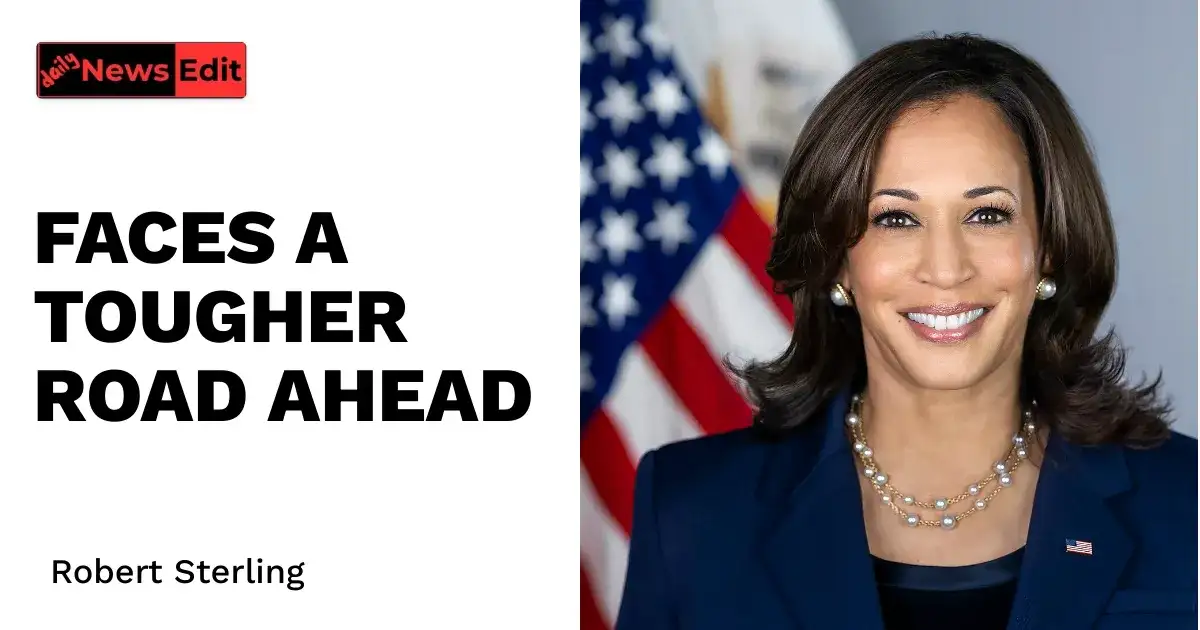

The political class, ever eager for a horse race, is once again falling victim to its own manufactured drama, breathlessly reporting that a new poll shows Vice President Kamala Harris and Governor Gavin Newsom “bombing.” This isn’t just a misreading of the tea leaves; it’s a deliberate misdirection, a narrative crafted to serve specific agendas long before the 2028 presidential primary is even a flicker on the horizon. Does anyone genuinely believe the American electorate is already locked into their choices for an election still four years away? The notion is absurd, and frankly, insulting to the intelligence of voters.
Let’s cut through the noise: the “bomb” in question isn’t a national catastrophe for the Democratic Party’s future. It’s a localized, early-stage blip, and the breathless pronouncements of doom for Harris and Newsom are, frankly, premature and politically motivated. This isn’t a disaster for the Democratic bench; it’s a strategic maneuver, a political head fake designed to shape perceptions and clear paths. The media, in its insatiable hunger for drama, has become an unwitting, or perhaps complicit, accomplice in this charade.
The Kamala “Bomb” and Its Real Target
The initial reports, amplified across various news desks, paint a picture of two prominent Democrats struggling to connect. We’re told of “favorability ratings in the low to mid-30s” and hypothetical head-to-head matchups where both are “trailing or in statistical ties.” But here’s what nobody is telling you: this poll, the supposed harbinger of doom, is primarily a California Democratic primary snapshot. It’s not a national survey of likely voters across the country, but a hyper-specific, state-level temperature check. To extrapolate national weakness from a California primary poll is not just intellectually lazy; it’s disingenuous, a cynical attempt to manipulate public opinion.
The data, once you peel back the sensational headlines, reveals a more complex, and frankly, less dramatic reality. The UC Berkeley/POLITICO poll, surveying just 1,000 California voters in February-March 2026, shows Newsom at 28% and Harris at 14% within the state’s Democratic primary. This is hardly a “bomb” for Harris, considering she’s the sitting Vice President and Newsom is the state’s popular governor. What does it actually signify? That Newsom, campaigning in his backyard, holds a home-field advantage. Is that surprising? Of course not. Is it indicative of national electability? Absolutely not. It’s like judging the viability of a presidential candidate based on their performance in a local county fair popularity contest. The scale is entirely different.
The immediate online reaction, particularly from more astute political observers, has been one of exasperation. As one Reddit user cuttingly remarked, “Bomb? This is like saying the Dodgers bombed because they didn’t win the AL pennant.” This sentiment is spot on. The political media’s insatiable hunger for a narrative, any narrative, often blinds it to the fundamental context of the data it’s reporting. They’re chasing a story, not necessarily the truth. This rush to judgment, fueled by clickbait economics, distorts our understanding of the political landscape.
The “Bench” Problem: A Convenient Fiction
The hand-wringing over the Democratic “bench” is a persistent, often self-serving, trope. Every time a poll like this emerges, the question inevitably surfaces: “Is this indicative of a deeper ‘bench’ problem within the Democratic Party?” My answer is an emphatic no. This isn’t a “bench” problem; it’s a “narrative” problem. The idea that Democrats lack viable candidates is a convenient fiction for those who wish to either destabilize the current frontrunners or elevate their preferred alternatives. It’s a talking point designed to sow doubt, not to reflect reality.
Yes, Vice Presidents often struggle to define their own political identity outside the shadow of the President. Al Gore faced this in 2000, navigating the end of the Clinton era, and Harris is no exception. She’s been tasked with some of the administration’s toughest assignments, from addressing the root causes of migration to leading efforts on voting rights. Her public profile is inextricably linked to President Biden’s. To expect her to be polling at stratospheric levels four years out from a potential primary, especially when her primary focus is governing, is unrealistic and ignores the historical precedent. Her job right now isn’t to campaign; it’s to govern, a distinction often lost in the feverish speculation of the political punditry.
Similarly, Newsom, for all his national profile, is a governor of California. His primary responsibilities lie within his state. While he has certainly positioned himself for a national run, particularly with his highly visible critiques of Republican policies and his willingness to engage in national debates, his numbers in a California primary poll are not a national referendum on his viability. They are, at best, a snapshot of his standing among a specific subset of voters in his home state, voters who are intimately familiar with his policies and governance.
The “so what” factor here is not about the supposed weakness of Harris or Newsom, but about the strategic implications of such early, decontextualized polling. It fuels internal party debates, encourages challengers, and forces candidates to constantly recalibrate, often to their detriment. It creates an unnecessary distraction, diverting energy and resources from the critical work of governance and policy-making.
The Cynical Play: Engineering a Narrative
So, who benefits from this manufactured narrative of Democratic vulnerability? Let’s be explicit about the players and their motives:
- Other Potential Democratic Contenders: Anyone else eyeing a 2028 run sees this as an opportunity. It weakens the perceived frontrunners, creating an opening for them to gain traction and build donor confidence. It’s a classic political tactic: diminish your rivals to elevate yourself.
- Republican Strategists: This is red meat for the opposition. It provides early talking points about Democratic disunity and perceived weakness, which they will undoubtedly use to energize their base and fundraise. It’s a ready-made narrative for Fox News and conservative talk radio, painting a picture of a Democratic Party in disarray.
- Gavin Newsom’s Camp (and the media outlets that benefit from the drama): Let’s be brutally honest. There’s a strong argument to be made that this “bomb” narrative, especially originating from a California poll, serves Newsom’s interests more than it harms them. It positions him as the leading alternative within his own state, and by extension, a powerful figure nationally. The online chatter is rife with speculation that “Newsom’s team leaked this to bury Harris before she even Hamlet’s her way in,” and it’s not an unreasonable assumption. Newsom has been exceptionally skilled at cultivating a national profile, often through high-profile confrontations with Republican governors and even a highly publicized debate with Florida Governor Ron DeSantis. This poll, framed as a “bomb” for both him and Harris, paradoxically elevates his standing as a viable alternative, making him appear as the strongest contender in the Democratic field, at least in California.
As reported by CNBC, the poll in question has been widely disseminated, often without the crucial context that it’s a *California* primary poll. This isn’t just about reporting facts; it’s about interpreting them through a political lens. The mainstream media, in its rush to deliver a dramatic headline, often becomes an unwitting participant in these strategic plays. They amplify the narrative, creating a self-fulfilling prophecy. We saw this with numerous candidates in past cycles who were prematurely written off or propped up by early, often flawed, polling. Remember the endless “surge” narratives that evaporated on primary day?
The fact that Harris, despite her perceived “struggles,” still garners 41% excitement among Democrats, as some analyses suggest, paints a very different picture than the “bomb” narrative. Newsom, while leading in his home state, isn’t exactly setting the world on fire with 28% in his own backyard. The “vibes polling” that aims to coronate Newsom, as some influencers suggest, is a dangerous game. It prioritizes superficial sentiment over substantive analysis and risks misinforming the very public it purports to serve.
The true “bomb” here isn’t in the poll numbers themselves, but in the political establishment’s willingness to manipulate and misrepresent data to construct a narrative that serves its own ends. The American public deserves better than manufactured drama and premature pronouncements of political demise. They deserve a clear-eyed analysis of the political landscape, not a sensationalized preview of a race that is still years away.
The real question isn’t whether Harris and Newsom are “bombing,” but rather, who benefits from convincing you that they are. The answer, as always in politics, is never simple, and rarely innocent. We must remain vigilant against these narrative manipulations, or we risk becoming unwitting pawns in someone else’s political game. Don’t fall for the hype; demand the facts, and more importantly, the context behind them.
Source: Google News