
Elon Musk’s offer to cover Transportation Security Administration (TSA) worker salaries during a government shutdown appears less like philanthropy and more like a calculated public relations maneuver. This isn’t just a generous gesture; it’s a strategic play to seize headlines and cultivate a specific public image, potentially diverting attention from other controversies.
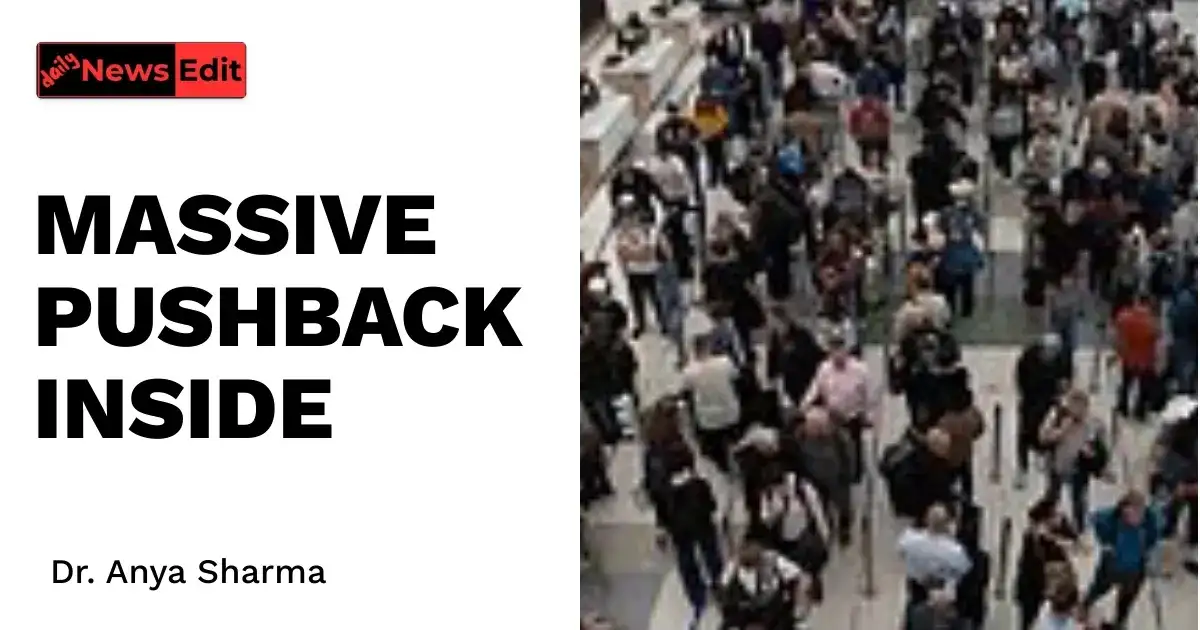
Musk’s supposed generosity emerges as American airports face unprecedented chaos. A government shutdown has left federal workers unpaid, causing wait times at major hubs like Hartsfield-Jackson Atlanta and Los Angeles International to balloon, stranding and frustrating travelers. The focus naturally falls on these essential, uncompensated federal employees.
Musk’s PR Playbook: A Familiar Tune
For those observing Elon Musk’s career, his sudden interest in TSA salaries aligns with a well-established pattern. He often positions himself as a disruptor or problem-solver, but closer examination frequently reveals his actions, however grand, serve his own intricate agenda.
Public reaction has been swift and often scathing. Social media platforms, from X (formerly Twitter) to Reddit, are rife with skepticism. Many users see through what they perceive as a thinly veiled facade, labeling it “peak Musk grift theater.”
“Elon’s not paying shit—it’s a PR stunt to dunk on Trump,” one Reddit user on r/politics remarked, cutting to the perceived core of the matter.
Another voice, from r/antiwork, echoed this sentiment, linking it to Musk’s past actions. His history includes grand gestures that, upon closer inspection, often come with caveats, unfulfilled promises, or a lack of follow-through. This historical context fuels suspicion around his current offer.
The Underlying Motives: More Than Just Generosity
Why would Elon Musk step into such a politically charged vacuum? With him, the answer is rarely straightforward. Cynics offer theories, from potential interest in airport vending contracts to strategic plays for Starlink deals with the TSA, envisioning his satellite internet service becoming integral to airport operations.
“Pay salaries today, privatize tomorrow, fire the peasants,” one particularly cynical theory posits, reflecting deep distrust in Musk’s long-term intentions.
This sentiment underscores a pervasive belief that Musk rarely acts without clear strategic benefit for his expanding empire. Whispers of “deep-state” machinations even circulate, suggesting the offer is a deflection from rumored federal cuts to DOGE (possibly defense spending or Dogecoin). This level of public cynicism shows every Musk move is scrutinized for a hidden agenda.
As Senator Tim Kaine warned, “Don’t be fooled.” Public weariness stems from a history of empty promises and performative gestures that fail to address systemic problems. The public seeks a cure, not just a band-aid.
Government’s Role and Musk’s Interference
The government, despite its current paralysis, is not entirely idle. Governor Kristi Noem of South Dakota previously offered $10,000 bonuses to shutdown veterans, demonstrating federal agencies like the Department of Homeland Security have mechanisms to support personnel. So, why is Musk inserting himself?
This intervention raises questions about unauthorized meddling and the blurring of lines between public service and corporate interests. Is Elon Musk undermining government authority or capitalizing on a national crisis for personal gain? His offer, while superficially benevolent, sets a potentially dangerous precedent. It suggests affluent private individuals can influence public policy, eroding democratic processes. Moreover, it distracts from the core issue: the government shutdown, the root cause of escalating wait times and unpaid salaries.
The Airport Chaos: A Real-World Impact
The government shutdown’s consequences are tangible and deeply impactful. Surging airport wait times affect millions, disrupting individual plans, broader commerce, and the vital tourism industry.
- Hartsfield-Jackson Atlanta International Airport reported significant delays, causing widespread frustration.
- Los Angeles International Airport (LAX) saw wait times exceeding two hours, leading to missed connections.
- Chicago O’Hare International Airport faced similar operational challenges, straining capacity and passenger patience.
- Dallas/Fort Worth International Airport (DFW) struggled to maintain efficiency amidst reduced staffing.
- Newark Liberty International Airport (EWR) experienced major bottlenecks, exacerbating travel woes.
These exasperating delays are not due to TSA worker incompetence. They are a direct result of severe understaffing, as many employees, unable to work without pay, are not reporting for duty. This is a stark consequence of political gridlock, a failure of governance impacting ordinary citizens.
Musk’s offer, while appealing, fails to address this critical root cause. It is, at best, a temporary patch, a fleeting palliative that does little to pressure politicians into resolving the underlying shutdown. By providing a temporary financial stopgap, it arguably lets those responsible for the gridlock off the hook, diminishing the urgency for a sustainable political solution.
The Broader Context of Musk’s Financial Engagements
Understanding Elon Musk’s actions requires placing them within the broader context of his extensive financial engagements. Whether at Tesla, SpaceX, or X, his ventures are invariably driven by strategic financial imperatives and ambitious technological goals. His commitments are massive, focused on growth, innovation, and market dominance, not selfless charity.
For X, his efforts aim to stabilize and monetize the platform. This includes initiatives like “paying” creators through revenue sharing, a strategy to incentivize engagement and content creation, ultimately making X profitable. It is a shrewd business decision, not altruism.
Tesla, under his leadership, continuously announces new Gigafactories globally, each requiring billions in capital expenditures. These are calculated investments in scaling production, expanding market reach, and solidifying Tesla’s leadership in electric vehicles.
SpaceX demands continuous, substantial investment for projects like Starship, the colossal rocket program for lunar and Martian missions. These are capital-intensive, long-term ventures driven by a vision of humanity becoming a multi-planetary species, but they are fundamentally strategic investments in a future economic frontier.
His x.AI venture, developing “truth-seeking AI,” involves significant financial outlays. This aligns with his broader vision for artificial intelligence development and represents a strategic business move within the burgeoning AI sector.
Even ventures like Neuralink and The Boring Company, while pushing technological boundaries, require massive financial backing and are predicated on long-term returns and transformative societal impact. Musk is “paying” for future technological advancements, market disruption, and the expansion of his influence.
His public statements, often accompanied by offers of financial or technological support, such as providing Starlink access in disaster zones, are frequently scrutinized for feasibility and underlying motives. This latest TSA offer is no exception; it fits a pattern of calculated, high-profile interventions serving multiple strategic purposes beyond simple benevolence.
A Calculated Maneuver
Elon Musk’s publicized offer to cover TSA salaries is not an act of unvarnished kindness. Rather, it is a meticulously calculated maneuver to achieve several strategic objectives: generate positive publicity, potentially divert attention from less flattering business aspects, and solidify his image as a powerful, influential figure capable of intervening in national crises. This is less about genuinely solving a government shutdown and more about sophisticated brand building and strategic influence expansion. The true, lasting solution to such political impasses lies not in a billionaire’s temporary fix, but in concerted political action and responsible governance. The public, with its sharp discernment, sees through this facade, and their cynicism, in this instance, is entirely justified. What truly compels change: a temporary bailout, or sustained public pressure on those in power to fulfill their duties?
Source: Google News