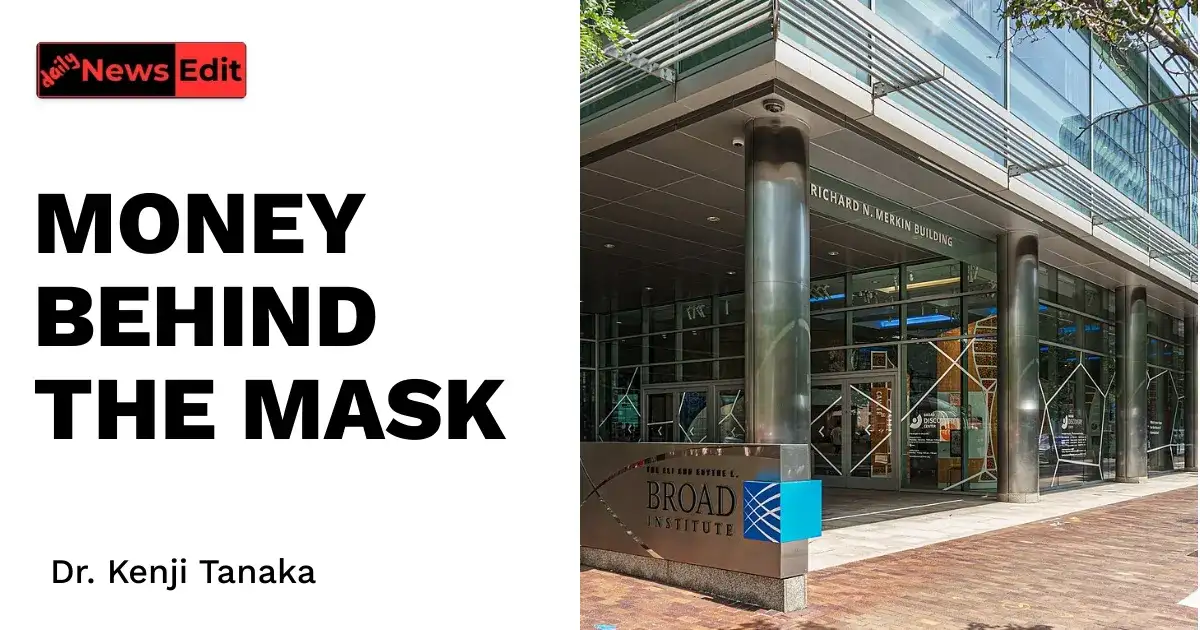

A staggering $1 billion. That’s the sum a single family has now poured into the Broad Institute of MIT and Harvard, pushing their cumulative giving past a milestone almost unfathomable in biomedical research philanthropy. This headline should spark celebration for scientific progress, but here’s what nobody’s telling you: this isn’t just a story about generosity; it’s a stark, uncomfortable spotlight on the increasingly precarious state of scientific funding and the uncomfortable truths about who truly sets the agenda for the future of medicine.
The Billion-Dollar Question: Who Truly Benefits from Hyper-Philanthropy for The Broad Institute?
When a family channels over a billion dollars into one institution, it’s undeniably transformative. For the Broad Institute, this means unparalleled stability and the freedom to chase high-risk, high-reward projects that might never see the light of day under traditional government grant cycles. They can attract the brightest minds, invest in cutting-edge technology, and build infrastructure that would make other institutions envious.
“This extraordinary commitment from the Stanley family is a testament to their unwavering belief in the power of science to transform human health,” said Dr. Todd Golub, Director of the Broad Institute, in a recent statement to STAT. “Their sustained generosity has been absolutely foundational to our ability to pursue ambitious, long-term research that often falls outside the scope of traditional funding mechanisms.”
Sounds fantastic, right? For the researchers at the Broad Institute, it absolutely is. They get enhanced resources, state-of-the-art equipment, and the intellectual breathing room to innovate. Potentially, patients benefit too, down the line, if these ambitious endeavors lead to breakthroughs in understanding and treating diseases like cancer, psychiatric disorders, or infectious diseases.
But let’s be blunt: who *really* benefits here, and at what cost to the broader scientific ecosystem? While the Broad Institute celebrates, dozens, if not hundreds, of smaller, equally vital research institutions struggle to keep their labs open. They fight tooth and nail for every grant dollar, their brilliant scientists often forced to abandon promising avenues of research simply because they lack the financial muscle to compete. This isn’t a level playing field; it’s a winner-take-all scenario where a few well-endowed institutions become scientific behemoths, while others wither on the vine. Does anyone genuinely believe that the most impactful research only happens within the walls of a select few, ultra-funded centers? I certainly don’t.
The Unseen Influence: When Wealth Dictates Scientific Priorities
This level of private philanthropy, while lauded, introduces a provocative question: are research priorities being set by public health needs or by private interests? The family behind this colossal donation for the Broad Institute, the Stanley family, was deeply impacted by psychiatric illness, leading to the establishment of the Stanley Center for Psychiatric Research at Broad. This is a clear, understandable motivation; Ted Stanley’s personal anguish over his son Jonathan’s bipolar disorder directly fueled this incredible giving. It’s a deeply human story, one that resonates with anyone who has seen a loved one suffer.
However, when one family’s personal experience can direct over a billion dollars into a specific research area—psychiatric genetics, in this case—it fundamentally shifts the landscape. It’s not that psychiatric research isn’t crucial; it absolutely is. But what about equally critical, yet less personally resonant, areas that struggle for funding? What about neglected tropical diseases, or public health initiatives that don’t capture the imagination (or the personal tragedy) of a billionaire donor? The reality is, these areas often languish, starved of the resources they desperately need.
This isn’t just about altruism; it’s about influence. Such significant giving undeniably comes with a degree of recognition and, often, the subtle shaping of research agendas. It’s a kind of philanthropic theater, where a wealthy donor averts potential inheritance squabbles and tax burdens by channeling wealth into a “patient-first” narrative. As Jonathan Stanley himself reportedly quipped, a “good chunk…would’ve ended up in my bank account.” This isn’t a cynical attack on the Stanley family’s intentions, which appear genuinely rooted in a desire for progress, but rather an observation on the systemic implications of such concentrated wealth in science. It highlights a system where personal tragedy, however understandable, can become the primary driver of scientific direction, rather than a comprehensive, publicly-debated strategy.
The Public Yawn: Why Don’t We Care More About Science Funding for the Broad Institute?
What’s truly astonishing about this billion-dollar news isn’t the sum itself, but the relative silence surrounding it. No viral backlash, no Reddit firestorms, no X pile-ons. The story barely registers beyond elite bio circles. Why? Because billionaire virtue-signaling fatigue has met science obscurity. We’ve become so accustomed to hearing about massive donations that the sheer scale of this giving almost feels mundane.
Psychiatric research, while vital, isn’t typically culture-war bait. It’s too complex, too nuanced for a quick meme or an outrage tweet. We’ve become desensitized to massive sums of money being thrown at scientific institutions like the Broad Institute, perhaps because the direct, immediate impact on our daily lives often feels distant. The breakthroughs are often years, even decades, away from the clinic, making it hard for the public to feel an immediate connection or urgency.
But this indifference is dangerous. It allows us to ignore the larger implications: the growing disparity in funding, the potential for private interests to steer public good, and the continued underinvestment in public scientific funding like for the Broad Institute. This story should ignite a broader discussion about how scientific research is funded globally, the balance between private and public investment, and whether we’re truly allocating resources where they’re most needed, or simply where the deepest pockets decide. Are we truly optimizing for public health, or for the passions of a select few?
The Broad Institute model, while undeniably successful in attracting and leveraging large-scale private funding, is not a universally applicable blueprint. It’s a reflection of a system that increasingly relies on the largesse of a few, rather than a robust, equitable public investment in science for all. We need to ask ourselves: Is this the future we want for scientific discovery? A future where the most groundbreaking work is held captive by the whims of the ultra-rich, or one where scientific pursuit is a shared, publicly-funded endeavor for the collective good? The answer to that question will define the next century of medical breakthroughs and ultimately, the health of our global population.
Source: Google News