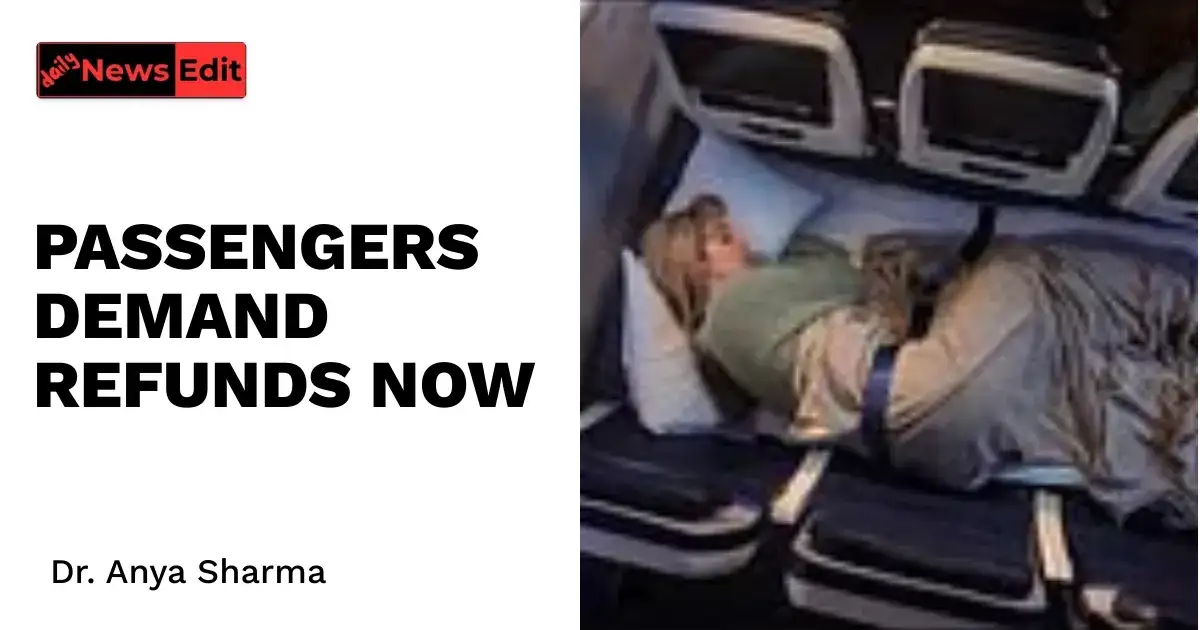

United Airlines’ latest “innovation,” the “Relax Row,” is not merely a novel seating concept; it is a meticulously calculated maneuver that risks undermining passenger trust and exacerbating existing frustrations within the airline industry. Far from a genuine enhancement of the travel experience, this initiative appears to be a cynical attempt to extract additional revenue, particularly from vulnerable demographics like families, under the guise of improved comfort.
This “Relax Row” concept, slated for a 2027 rollout, allows three economy seats to convert into a couch-like bed, ostensibly designed for long-haul flights. While the idea of a lie-flat option in economy might initially sound appealing, a deeper examination reveals a strategy fraught with potential pitfalls and PR challenges.
United’s “Relax Row” — A Questionable Claim to Innovation
United Airlines has positioned itself as a pioneer, claiming to be “first in North America” with this sofa-seat idea. However, this assertion is demonstrably false. Airlines such as ANA have offered similar “Couchii” seats since 2012, and Air New Zealand has its well-established “Skycouch.” United’s marketing, therefore, feels disingenuous, attempting to brand a rehashed concept as groundbreaking. This lack of originality, coupled with an inflated sense of innovation, immediately raises questions about the airline’s transparency and motives.
The public’s response has been swift and overwhelmingly negative. Social media platforms like Reddit, X (formerly Twitter), and TikTok are awash with critical commentary, mockery, and accusations of corporate greed. Passengers, it seems, are not easily swayed by corporate jargon and readily discern the underlying profit motive behind such initiatives.
The Ethical Quandary: Exploiting Parents, Alienating Solo Travelers
At the heart of the widespread criticism is the perceived exploitation of families. Discussions on forums such as r/unitedairlines and r/travel vividly illustrate the desperation of parents seeking comfortable travel options for their children on long flights. United, it appears, is acutely aware of this need and is positioning the “Relax Row” to capitalize on it.
The projected cost of booking an entire “Relax Row” is likely to exceed $1,000 per leg. This price point is exorbitant for what is essentially an economy product, effectively forcing parents to pay a premium for a comfort that many argue should be more accessible, if not standard, on extended journeys. As one user on X, in a thread that garnered over 50,000 likes, succinctly articulated: “Great, now economy is for whales only—or pay premium for what should be standard.” This sentiment underscores a growing frustration with airlines monetizing every conceivable aspect of the travel experience.
The potential implications for solo travelers cannot be overlooked. There is a legitimate concern that the introduction of these “sofa” rows could lead to a reduction in the overall number of standard economy seats. Such a reduction would inevitably drive up prices for everyone else, creating a lose-lose scenario for the average flyer who is already contending with rising travel costs. Does United truly believe this approach fosters goodwill?
A Pattern of Missteps: United’s Checkered PR History
United Airlines possesses a well-documented history of public relations challenges, from the infamous incident of a passenger being forcibly removed from a flight to the “leggy seats” controversy. Each episode has chipped away at public trust and reinforced a perception of the airline prioritizing profit over passenger well-being. The “Relax Row” gambit feels like another iteration of this pattern, suggesting a persistent disconnect between the airline’s corporate strategy and the expectations of its customer base.
While the company attempts to frame this as a family-friendly offering, the public largely perceives it as exploitative. It is seen as a mechanism to extract more money from a demographic—families traveling with young children—that often faces significant financial strain. Introducing another premium charge for what many consider a basic necessity for comfortable long-haul travel is not merely tone-deaf; it risks alienating a crucial segment of its market.
This Instagram post, showcasing the “Relax Row” concept, presents an aesthetically pleasing image. However, as is often the case in the airline industry, the true implications, particularly regarding pricing and accessibility, reveal a less appealing reality.
Beyond Comfort: The Underlying Motive of Revenue Maximization
A deeper analysis of United’s motivations reveals a broader strategy centered on revenue maximization. Critics and online commentators, particularly on platforms like Reddit, suggest that the “Relax Row” could be a Trojan horse. The theory posits that by converting standard economy rows into premium “sofa” options, United might reduce the total number of traditional economy seats, thereby creating space for more lucrative premium cabins. More premium cabins, of course, translate directly to higher profits per flight.
A viral TikTok skit, which garnered 2 million views, humorously dubbed the concept “cuddle economy,” highlighting the absurdity of the branding when juxtaposed with the likely financial implications. Is United truly prioritizing passenger well-being, or is this primarily about optimizing revenue per square foot of cabin space? The prevailing sentiment, supported by historical precedent, leans heavily towards the latter.
Is This Truly an Innovation? A Critical Examination
Let us be clear: the “Relax Row” is not a groundbreaking technological advancement. It is, rather, a re-packaging of an existing concept. Airlines such as Air New Zealand have successfully implemented their “Skycouch” for years, offering a similar solution. United’s attempt to portray this as a revolutionary offering is, frankly, laughable and indicative of a desperate effort to generate positive publicity.
However, the press has largely turned negative, and the public remains unconvinced. Passengers are increasingly sophisticated in discerning genuine innovation from thinly veiled attempts to extract more money. This move, far from building brand loyalty, risks further eroding trust in the United brand, a commodity far more valuable than short-term ancillary revenue.
The Financial Landscape and Future Implications
United Airlines operates within a highly dynamic and challenging industry, contending with fluctuating fuel prices, evolving passenger demand, and ongoing labor negotiations. In this context, the “Relax Row” is undoubtedly a strategy to bolster ancillary revenue—income generated beyond the basic ticket price.
Yet, alienating a significant portion of its core customer base carries substantial risks. If economy passengers feel exploited or unfairly treated, they possess the agency to choose alternative airlines. The long-term damage to brand loyalty and reputation could far outweigh any immediate gains in ancillary revenue. United, therefore, must consider the broader, long-term implications of such a strategy.
The airline industry is fiercely competitive. Passengers today have more choices than ever before. Building loyalty hinges on offering genuinely valuable services at fair and transparent prices. Conversely, imposing exorbitant charges for what many perceive as basic comforts risks transforming the “Relax Row” into a potent symbol of corporate avarice.
A Path Not Taken: Alternative Approaches for United
United could have introduced this concept with greater foresight and sensitivity. For instance, offering the “Relax Row” as a value-added service at a more reasonable price point, or as an upgrade option for loyal customers, might have been met with less resistance. Instead, it feels like a mandatory premium for a common and understandable need.
Transparency regarding pricing and availability is paramount. United must directly address the public’s concerns rather than dismissing the backlash. Ignoring widespread criticism will only exacerbate the situation and further damage its standing. Rebuilding trust, not eroding it, should be the airline’s priority.
The “Relax Row” is not a panacea for passenger discomfort; it is, arguably, a symptom of an industry that frequently prioritizes profit margins over the fundamental needs of its clientele. United Airlines would be well-advised to reconsider its approach, as this launch could prove to be a costly strategic miscalculation.
United Airlines is, in essence, playing a high-stakes game with its corporate reputation. While the “Relax Row” might generate some additional revenue, it is likely to come at a significant and potentially irreparable cost to passenger goodwill. This appears to be a short-sighted maneuver that could, indeed, backfire spectacularly, leaving a lasting negative impression on the flying public.
Source: Google News