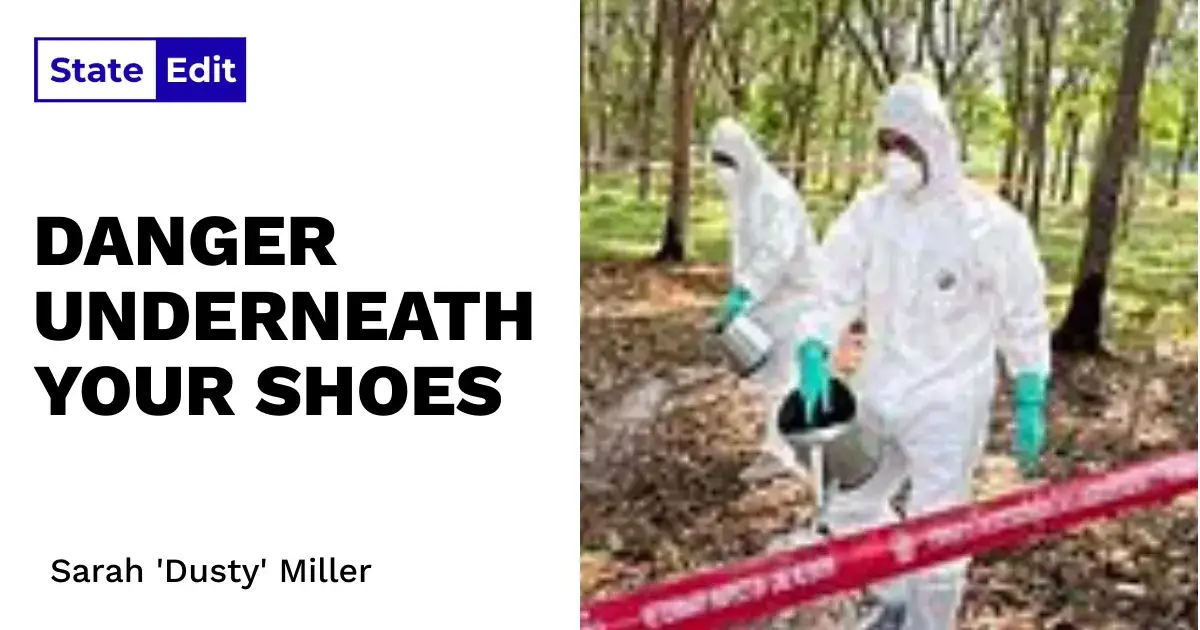

The wind across the Plains carries more than just dust and the scent of turning soil; it carries the weight of history, sometimes unsettling, always present. The notion that deadly anthrax bacteria are dwelling in the soil across 43 states, with scientists warning of potential aggressive outbreaks if that soil is disturbed, isn’t a new revelation to folks who’ve spent their lives working this land. It’s a quiet truth, a deep hum beneath the surface of our daily lives, and it speaks to the enduring, sometimes harsh, realities of living close to the earth.
A Constant Companion Beneath Our Feet found in 43 states
For generations, farmers and ranchers in 43 states like Nebraska, Kansas, and the Dakotas have understood that the land holds secrets. Anthrax, in its dormant spore form, isn’t some foreign invader; it’s a native resident in 43 states in certain areas, particularly where livestock have grazed for centuries. We hear about outbreaks in cattle or deer from time to time, often tied to specific conditions – a dry spell followed by rain, or ground disturbed by heavy machinery. It’s a risk factored into the daily grind, a reminder that nature, for all its bounty, also holds a powerful hand. Consider the 2019 outbreak in South Dakota, where dozens of cattle died, or the sporadic cases reported by the Centers for Disease Control and Prevention (CDC) across various states, often linked to environmental factors. These aren’t isolated incidents; they’re echoes of a persistent challenge.
The warnings for 43 states from scientists about disturbing the soil leading to an “aggressive outbreak” isn’t fear-mongering; it’s a sober assessment of what we already know. Every time a plow turns the earth, every time a new foundation is dug, there’s a chance of stirring something ancient. It’s not about panicking, but about respecting the ground we stand on in 43 states. It’s about understanding the delicate balance between progress and the natural world, a balance that is often more precarious than city folks might imagine. Can we truly pave over history without consequence?
Grounded Wisdom and Resilient Living
What does this mean for the people of the Great Plains? It means continuing to live with a practical awareness of our surroundings. It means veterinarians keeping a close eye on livestock, and farmers understanding the history of their fields. It means a quiet resilience, a willingness to face facts without flinching. We don’t have the luxury of ignoring the land’s complexities. Our lives are intertwined with it, for better or worse. This isn’t a theoretical problem; it’s a tangible one that demands ongoing vigilance and informed practices.
“You learn pretty quick out here that the land gives and the land takes. You respect it, and you learn to live with what’s there, seen and unseen.” – A farmer from rural Iowa.
This isn’t a story of impending doom; it’s a story of enduring wisdom. It’s about the quiet strength of communities that understand the earth intimately. It’s a reminder that beneath the amber waves of grain, beneath the concrete of small towns, there’s a wildness, an ancient power, that demands our respect. And for those of us who call the Plains home, that respect is just another part of the daily rhythm. Ignoring this deep-seated reality would be a fool’s errand. We must continue to live with open eyes, understanding that the land we cherish holds both life and its silent, potent challenges.
Source: Google News