
The chaotic scenes at airport security checkpoints aren’t just an inconvenience; they are an infuriating symptom of Washington’s chronic mismanagement. Despite a recent, much-touted pay raise vote for Transportation Security Administration (TSA) agents, the lines remain an unholy mess, proving a reactive band-aid rarely brings immediate relief.
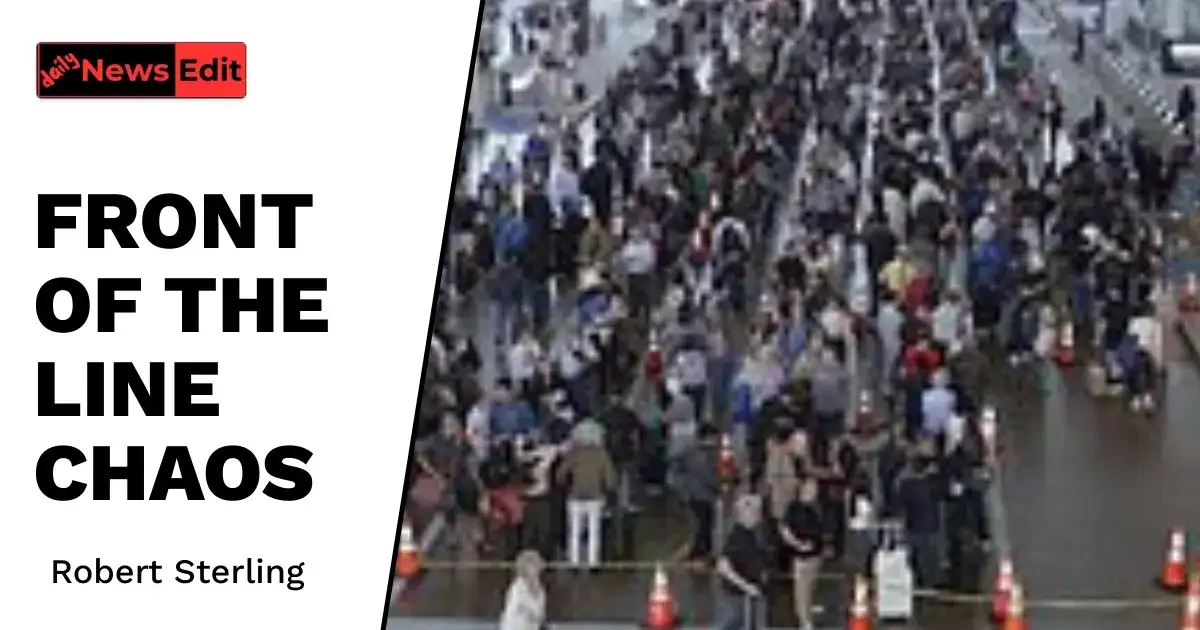
The TSA is currently a national embarrassment, with major hubs like Hartsfield-Jackson Atlanta (ATL), Dallas/Fort Worth (DFW), and Chicago O’Hare (ORD) buckling under the strain. Passengers are missing flights, their travel plans dissolving into frustration and anger. This isn’t just a hiccup; it’s a systemic failure, directly attributable to years of political gamesmanship.
Congress recently patted itself on the back for approving a pay bump for TSA agents. On paper, it sounds like progress. In reality, it’s a classic case of too little, too late, and the situation on the ground vividly illustrates this disconnect.
The Great Airport Gridlock: A Symptom of Deeper Dysfunction
Travelers are reporting excruciating wait times, often exceeding 90 minutes, with some clocking in at a staggering two hours or more. Social media platforms are awash with photographic evidence of serpentine queues, a visual indictment of a system teetering on the brink. Airlines are now advising travelers to arrive a preposterous three to four hours early for domestic flights. This is not normal; it is an untenable situation for a nation that prides itself on efficiency.
The House of Representatives passed the bill on March 25th, ostensibly to elevate TSA pay to parity with other federal workers. The architects of this legislation believed it would be a panacea. Yet, even the most optimistic observers warn that any tangible improvement will take weeks, if not months, to materialize. This projected delay is not merely inconvenient; it is an unacceptable dereliction of duty.
TSA Administrator David Pekoske, in a rare moment of candor, conceded the obvious, stating, “We understand the frustration… it will take time for these changes to fully translate.” But time, as any traveler staring down a missed connection will tell you, is a luxury they simply do not possess.
The Lingering Shadow of Shutdowns: Trump’s Legacy of Chaos
This current debacle is not some spontaneous combustion. Its origins can be traced directly back to the tumultuous tenure of Donald Trump, whose government shutdowns inflicted irreparable damage on the TSA. Agents, deemed “essential,” were forced to work without pay, a morally bankrupt policy that decimated morale and triggered a mass exodus from the agency.
Why would any rational individual remain in a demanding, often thankless job, enduring low pay and the existential dread of financial uncertainty? The current staffing crisis, the very core of this airport gridlock, is a direct, undeniable consequence of those politically motivated shutdowns. Trump’s “wall tantrum” didn’t just halt government functions; it effectively grounded America’s air travel infrastructure for years to come.
The notion that a recent pay vote can instantly erase years of neglect and abuse is not just naive; it’s delusional. It’s akin to applying a flimsy bandage to a gaping, infected wound and expecting a miraculous recovery. The Government Accountability Office (GAO), in its 2024 report, explicitly highlighted high attrition rates within the TSA, citing low pay as the primary culprit. This isn’t a new problem; it’s a systemic cancer that has been metastasizing for years.
The Illusion of Action: Why the Pay Raise Won’t Save Us (Yet)
Congressional Democrats, particularly those who championed the pay raise, are practically preening. Representative Eleanor Holmes Norton, for instance, declared the pay hike “long overdue and essential.” While the sentiment is admirable, the self-congratulatory tone is premature. They believe they’ve solved it. They haven’t.
Even some Republicans, who ultimately supported the measure, are now justifiably scrutinizing TSA management, questioning whether merely throwing money at the problem will suffice. And they have a point. A cash injection, while crucial, doesn’t instantly materialize trained personnel or repair broken trust.
This pay raise, while a necessary step, is arriving far too late to avert the current meltdown. The $1.5 billion allocated over five years won’t magically conjure thousands of new, qualified agents. Training takes time. Onboarding takes time. And while the bureaucratic wheels grind slowly, travelers remain trapped in the purgatory of airport lines.
Behind the Curtain: The Cynical Calculus of Chaos
Do not be swayed by the official narrative. The ubiquitous phrase “weeks to return to normal” is not merely a forecast; it’s a carefully crafted exercise in expectation management, a classic deflection tactic designed to diffuse blame and mitigate public outrage.
Indeed, a growing chorus online is labeling this entire situation a “government psyop.” Their argument, however cynical, is compelling: these unprecedented lines conveniently push more travelers toward expensive, premium services like CLEAR, which promises to fast-track passengers for an annual fee. Is it merely a coincidence that the queues are worse than ever just as these private services gain traction? One has to wonder if the chaos is, in some perverse way, economically beneficial to certain players.
Furthermore, consider the looming specter of the FIFA World Cup in June. The “training lag” excuse, while plausible, feels like a convenient doomsday prophecy. They will find a way to staff up for that global spectacle. They always do. The real truth is far simpler: the system is fundamentally broken. It transcends mere compensation; it’s about how the government values its essential workforce, and how political theater can have devastating, real-world consequences.
The Unquantifiable Cost: Your Time, Your Money, Your Sanity
For the average American, this isn’t just a minor inconvenience. It’s a gut punch. It translates to lost family time, forfeited business opportunities, and the crushing psychological burden of beginning a long-awaited vacation with pure, unadulterated dread.
Airlines, too, are bleeding profusely. Airlines for America (A4A), the industry’s lobbying arm, has unequivocally declared the situation “unsustainable,” urging the TSA to implement solutions with greater urgency. They understand the profound economic damage this chaos inflicts upon their bottom line and the broader economy.
This airport pandemonium serves as a stark, undeniable indictment of government service. It lays bare the catastrophic ramifications when politicians prioritize partisan squabbles over the efficient functioning of vital agencies. It proves, beyond a shadow of a doubt, that the “quick fix” is often anything but quick, and frequently exacerbates the very problems it purports to solve.
Where are the contingency plans? The TSA remains tight-lipped. What is the precise staffing deficit? They’re not saying. This pervasive lack of transparency only serves to fuel public anger and erode what little trust remains.
The Broader Lesson: The True Price of Undervalued Public Service
The TSA’s current predicament is a textbook example of what unfolds when federal employees are chronically underfunded and systematically undervalued. It’s a slow-motion catastrophe where initial, seemingly modest “savings” from low wages balloon into astronomical costs down the line.
High employee turnover necessitates constant, expensive training cycles. Low morale inevitably translates into diminished efficiency and a palpable decline in service quality. Widespread public frustration irrevocably damages the reputation of the entire government apparatus. This isn’t just about the TSA; it’s a cautionary tale for every federal agency, a stark reminder of the interconnectedness of public service.
The current chaos is a direct, unavoidable consequence of a decade marked by political bickering, bureaucratic inertia, and a fundamental disregard for the human capital that keeps the nation running. It’s a monument to shortsightedness, a stark reminder that every action, or indeed, every inaction, carries profound and often devastating consequences.
Looking Ahead: Don’t Hold Your Breath for a Quick Resolution
So, what should the beleaguered traveler expect in the coming weeks and months? More of the same, unfortunately. The “weeks” warning is an implicit directive: you are still on your own. Plan for extreme, soul-crushing delays. Arrive at the airport ridiculously early. And whatever you do, do not, under any circumstances, place your trust in the system as it currently stands.
This isn’t merely a travel problem; it’s a profound political problem. It’s a damning indictment of leadership, a crisis of trust, and a quagmire that shows no discernible signs of a swift resolution.
The interminable airport lines are more than just an inconvenience; they are a grim mirror reflecting the broken political system that governs us. They vividly illustrate how governmental inaction and partisan posturing directly harm ordinary citizens. And until Washington finally gets its act together, prepare yourselves for more “TSApocalypse.”
Source: Google News