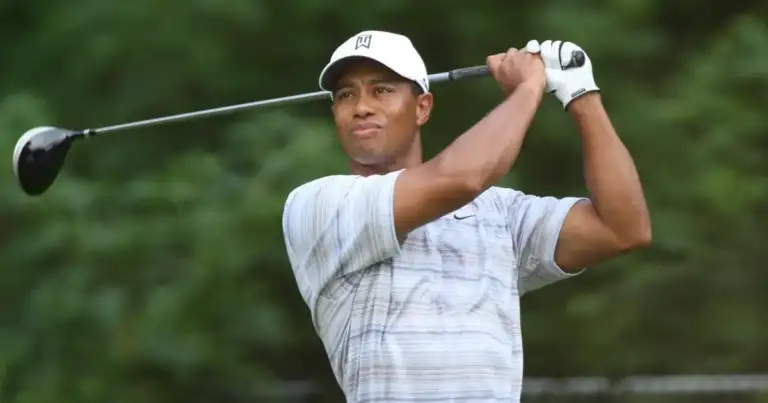
Another day, another Tiger Woods headline that feels less like news and more like a grim, pre-scripted act of a tragicomedy. The golf legend, or what’s left of him, has once again managed to land himself in a Florida ditch, quite literally, culminating in fresh DUI charges that have left the public collectively sighing, not in sympathy, but in utter, exasperated disbelief.
This isn’t just a fender bender; it’s a full-blown rollover crash, a physical manifestation of a career and a public image that seems perpetually stuck in a self-destructive loop. The incident, which unfolded in Florida, saw local authorities swiftly slap Woods with DUI charges, igniting a familiar firestorm of public cynicism and weary resignation.
For anyone with even a passing acquaintance with Tiger Woods’ tumultuous post-prime career, this latest debacle isn’t merely reminiscent of his 2017 DUI arrest; it’s practically a carbon copy, a distressing echo of past transgressions that involved a cocktail of prescription medications and questionable judgment. The script, it seems, remains stubbornly unchanged, much to the chagrin of a public that’s grown tired of the same old song and dance.
Deja Vu All Over Again: The Public’s Weary Eye-Roll on Tiger Woods
The news didn’t just land; it splatted with the dull, predictable thud of a story we’ve all heard too many times before. The public response? A collective, weary eye-roll so profound it could power a small city. This isn’t a shockwave; it’s the gentle ripple of a stone dropped into an already stagnant pond. Tiger Woods, the once-unassailable golf titan, is once again caught in the thorny thicket of a personal crisis, but this time, the well of public sympathy has run drier than a Nevada desert in August.
Social media, that relentless arbiter of public opinion, predictably erupted with a brutal chorus of déjà vu. “Tiger Wood’s back on the script—literally,” one X (formerly Twitter) user quipped, tallying this as crash #3 since his rather spectacular 2021 wreck. The collective wisdom of Reddit’s r/golf community, ever so subtly, dubbed it “prescription painkiller bingo,” a darkly humorous nod to his well-documented history with fusion surgeries and an admitted Vicodin habit. One might wonder if his medicine cabinet has a revolving door.
The narrative, frankly, is beyond stale. It’s fossilized. How many times can we endure the tired refrain of “medication” or “pain management” as a convenient shield? It feels less like an explanation and more like an endless, self-serving cycle. The public, it seems, has finally called bluff. They’re not just seeing a pattern; they’re seeing a disturbing, almost theatrical, repetition that suggests either a profound lack of self-awareness or a cynical disregard for public perception. Which is it, Tiger? Or is it both?
The “Retire Already” Chorus Grows Louder Than a Backswing
The backlash isn’t just fierce; it’s a roaring gale, peaking with the increasingly vocal “just retire already” brigade. Golf forums, those bastions of unfiltered opinion, are savaging his 50-year-old body, cruelly labeling it a “Frankenstein experiment.” The comments pour in like a relentless downpour: “Back surgeries turned him into a zombie driver,” one user lamented. Another, with a pointed lack of subtlety, asked, “When does the PGA ban pill-poppers?” It’s brutal honesty, perhaps, but it’s born of a deep-seated frustration.
The public, it appears, feels profoundly betrayed. They invested their emotional capital in his improbable comeback story, cheering his triumphs with the fervor of true believers. But these repeated, almost ritualistic, incidents are eroding that goodwill faster than a sand trap in a hurricane. It forces them to question everything: Is this a genuine struggle with chronic pain and addiction, or a convenient, endlessly recycled excuse for a celebrity who seems to believe the rules don’t quite apply to him?
This isn’t merely about golf anymore; it’s a searing indictment of a public figure who, despite all the resources and second chances imaginable, seems incapable of staying out of trouble. The public’s patience is not just wearing thin; it’s threadbare. They want him to step away, to deal with his demons in the quiet dignity of privacy, and to stop transforming his personal failings into a public spectacle. Is that too much to ask?
Conspiracy Theories and “Florida Man” Theater: A Cynic’s Delight
In the absence of clear, unvarnished truth, sarcasm and conspiracy theories flourish like weeds in an untended garden. “Alien abduction meds,” one X user quipped, perfectly capturing the absurd lengths some go to rationalize the inexplicable. Another suggested a “PGA cover-up,” a shadowy cabal designed to keep the “goat” relevant, even if it means sweeping a few DUIs under the green. But the dominant snark points elsewhere, directly at what many perceive as a “Big Pharma golf addiction.” “Tiger’s real sponsor is OxyContin,” one particularly cutting comment read, suggesting he’s “crashing to chase the high.” Dark, yes, but it’s a stark reflection of the public’s deep, festering cynicism.
X threads, those digital forums of collective dissection, were quick to flag the reported clean breathalyzer test, juxtaposed with the rather telling detail that Woods reportedly refused a drug test. “Classic Tiger Woods: cooperative till the pee cup,” one user observed, a sentiment that fueled a fresh wave of “roid rage or HGH crash?” conspiracies, conveniently linked to his ongoing TGL league push. Why the refusal? It’s a question that hangs heavy in the air, raising more questions than answers and adding yet another layer to the already thick suspicion.
Reddit sleuths, with their eagle eyes for inconsistencies, quickly pointed out that no drugs were found in the SUV, yet “impairment signs” were reported. They dismissed it as “sheriff spin,” gleefully dubbing the entire charade “Florida Man theater.” Their collective belief? That this carefully orchestrated narrative is designed to dodge something far bigger, something more inconvenient. Is it a convenient narrative, meticulously crafted to control the damage? The public certainly thinks so. They see a performance, a carefully choreographed one at that, and they’re not buying tickets anymore.
The Scripted Redemption Arc That Never Ends, Only Repeats
The cynics among us, and there are many, can practically smell the faint, sickly sweet scent of a scripted redemption arc wafting through the digital ether. “Arrested at 2 pm? Too daytime for real drunks,” one Reddit user posted, their observation cutting to the core of the perceived artifice. They speculate that this is nothing more than “PR for his ‘vulnerable elder statesman’ memoir drop,” a calculated move in the grand chess game of celebrity rehabilitation. This highlights a fundamental truth: the public no longer trusts the narrative. They’ve seen too many carefully constructed celebrity narratives crumble, and they’re increasingly adept at seeing through the glossy veneer of the PR machine.
This incident isn’t just a legal skirmish; it’s a potent cultural commentary, a searing indictment of the intoxicating allure of celebrity, the fickle nature of fame, and the elusive concept of accountability. Tiger Woods has traveled this treacherous road before, each time emerging with a fresh narrative of redemption, a heroic tale of overcoming adversity. But how many times can one person be redeemed? How many chances are truly warranted before the public simply throws up its hands in exasperation?
The media, in its insatiable hunger for spectacle, plays a pivotal role here. They feast on these stories, building up heroes only to gleefully tear them down, then, with a flourish, rebuilding them once more. It’s a cyclical, profitable enterprise, but the public, increasingly savvy and cynical, is beginning to see the strings attached to this elaborate puppet show. The curtain, it seems, is slowly being pulled back.
When Will the PGA Step In? Or Are They Just Spectators?
This isn’t merely Tiger Woods’ problem; it’s a glaring, festering wound for the PGA and, by extension, the entire sport of golf. Their biggest, most recognizable star is repeatedly making headlines, not for his awe-inspiring birdies, but for his arrests, his public embarrassments, and his seemingly endless cycle of personal crises. This reflects poorly, not just on Woods, but on the entire institution, casting a long, dark shadow over the pristine greens and hushed fairways.
The “PGA cover-up” theories, while harsh, stem from a legitimate frustration. Fans crave integrity; they demand accountability, not a continuous stream of flimsy excuses and repeated public humiliations. What message, one must ask, does this send to aspiring young athletes, to the legions of devoted fans, and to the corporate sponsors who pour millions into the sport? Is it one of unwavering principle, or one of convenient silence?
The PGA, if it wishes to maintain any semblance of credibility, must address this. Not with a carefully worded, anodyne statement, but with concrete action. What are their policies for players with repeated incidents of this nature? At what point does personal struggle bleed irrevocably into professional standing? These are not rhetorical questions; they are urgent demands for transparency and a clear demonstration of ethical leadership.
The Enduring Power of Celebrity Downfall: A Cautionary Tale
The human fascination with celebrity downfall is a powerful, almost primal force, a core element of entertainment journalism that Woods’ case exemplifies perfectly. His past DUI incident in 2017 remains a significant, almost mythical, reference point, sparking endless discussions about addiction, pain management, and the intense, often brutal, scrutiny that celebrities endure. It’s a cautionary tale, endlessly retold.
The HBO series “Tiger,” a comprehensive, if at times unsettling, deep dive into his complexities, revisited his past controversies, including that infamous DUI. These productions aim for a nuanced, comprehensive portrait, but they also serve another purpose: they keep the story alive, perpetually engaging the public, for better or for worse. It’s a symbiotic relationship, where the public’s morbid curiosity feeds the media’s narrative, and vice versa.
The public’s perception, ever fluid and fickle, shifts with each incident, each carefully crafted narrative. Once, Tiger Woods was an untouchable icon, a demigod of the greens. Now, he stands as a cautionary tale, a symbol of repeated mistakes, of chances squandered. His story serves as a stark benchmark for discussions about accountability, about the limits of forgiveness, and about how many “second chances” one truly deserves before they simply become another opportunity for self-sabotage.
A Call for Real Accountability, Not Just Another Spin Cycle
This latest incident demands more than just the usual PR spin cycle; it demands genuine, unvarnished accountability. From Tiger Woods, yes, but also from the vast entourage of enablers and handlers who have, for too long, allowed this charade to continue. The public is not just tired of the excuses; they are utterly exhausted by the carefully crafted narratives, the endless stream of justifications. They crave honesty, they demand change, and they want it now.
The golf world, whether it likes it or not, must grapple with the profound implications of this recurring drama. What does it mean for the sport when its biggest name is perpetually embroiled in scandal? It tarnishes the image, it erodes trust, and it raises serious, uncomfortable questions about the values it purports to uphold.
Tiger Woods needs to face the music, not just in a court of law, but in the unforgiving court of public opinion. Tiger Woods needs to demonstrate genuine change, a profound shift in behavior, not just another meticulously staged performance. Otherwise, his once-unimpeachable legacy will be defined, not by his unparalleled triumphs on the course, but by his repeated, almost tragic, falls from grace. The ball, Tiger Woods, is squarely in your court. What will you do with it this time?
Source: Google News