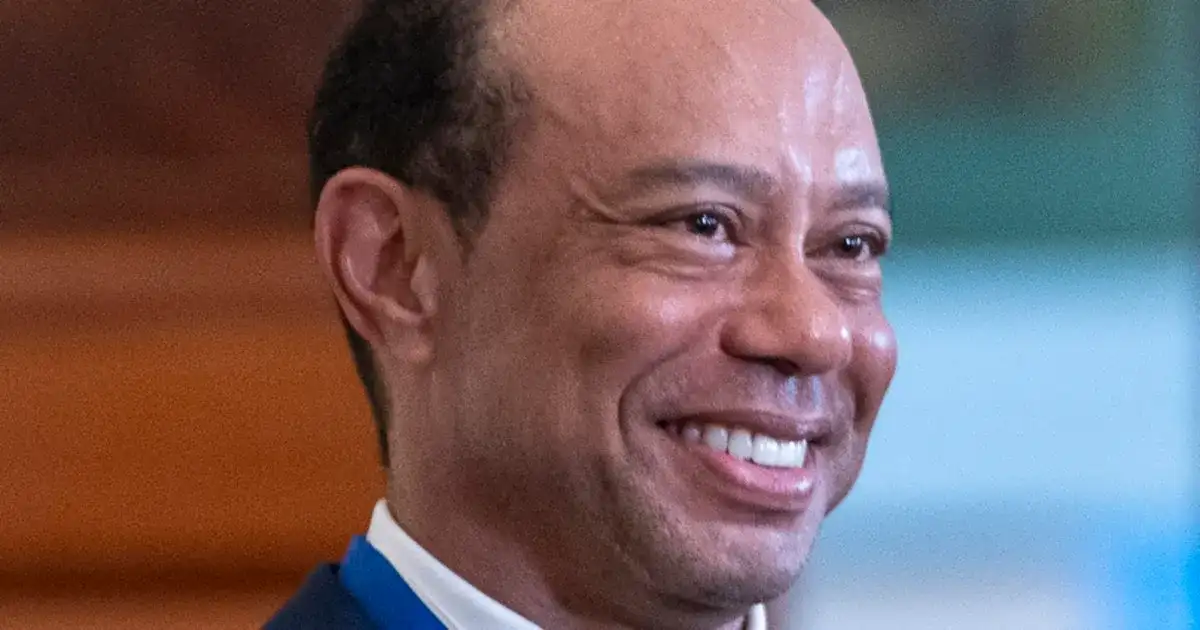

The Secret Service BANNED Tiger Woods from driving Trump’s grandkids. This chilling claim isn’t a breaking news alert from some intelligence agency; it’s a calculated leak, a perfectly timed piece of political theater. It “emerges” now, conveniently after the golf legend’s DUI arrest. This stinks to high heaven of a desperate image scrub for the Trump family, a cynical ploy to manipulate public perception.
We’re being fed a narrative, meticulously crafted to make Donald Trump’s grandchildren seem like precious, vulnerable cargo needing protection from a fallen hero. It’s a deflection, a classic move from the Trump playbook, executed with surgical precision. The timing is too perfect, the framing too blatant. This isn’t about genuine security concerns; it’s about control, about shaping public opinion, and about leveraging the Secret Service’s unimpeachable reputation as a shield for political maneuvering.
The Convenient “Emergence”: A Timely Distraction?
Why now? Why does this alleged “ban” suddenly surface after Woods’ DUI incident? The golf star’s personal struggles are well-documented. His 2017 DUI arrest in Florida, where he was found asleep at the wheel, was public knowledge, plastered across every major news outlet. He pleaded guilty to reckless driving. He entered a diversion program. This isn’t fresh dirt, nor is it a revelation. So, why are we hearing about a Secret Service “ban” today?
It’s simple: political opportunism, a hallmark of the Trump brand. The Trump machine is always looking for angles, for leverage. They need to keep their narrative tight, their brand polished, especially as legal challenges and political campaigns loom. What better way to do that than to position the Trump progeny as innocent, deserving of ultimate protection, even from a sports icon like Tiger Woods? It paints Woods as unreliable, a liability. It paints the Trumps as discerning, careful guardians, almost saintly in their protective instincts. This isn’t the Secret Service proactively releasing classified security data. This is a leak, a whisper, carefully placed to achieve a specific political goal. It’s a distraction from other, less flattering headlines surrounding the former President and his family. The public is supposed to nod along, thinking, “Oh, those poor Trump kids, protected from that reckless Tiger.” It’s a masterclass in misdirection, a narrative sleight of hand that would make a magician blush.
Consider the recent high-profile appearance of Kai Trump with Travis Kelce at Woods’ TGL league. The timing of this “ban” story, surfacing after such an event, begs the question: is this a pre-emptive strike? A calculated move to control the narrative around the Trump grandkids’ interactions with celebrities, ensuring that any future associations are viewed through a lens of parental caution and Secret Service vetting? It’s a meticulously crafted piece of political theater, designed to burnish the Trump family’s image and deflect from their own controversies, proving how easily narratives are twisted in our political landscape.
Secret Service: Shield or Political Pawn?
The Secret Service’s job is protection, a solemn duty they perform with unparalleled professionalism. They guard the President, Vice President, their families, and other high-ranking officials. Their protocols are stringent, their vetting processes exhaustive. Every individual interacting with a protectee undergoes intense scrutiny. If Tiger Woods posed a genuine, immediate threat to Trump’s grandchildren, the Secret Service would act decisively. They wouldn’t just “ban” him from driving them; they’d restrict his access entirely to any event where the children might be present. The notion that a DUI arrest from years ago would trigger a specific “ban” on driving children, yet not a broader restriction on contact, strains credulity to its breaking point.
Was Woods attempting to chauffeur them regularly? Was this a daily occurrence, a persistent threat to their safety? Or is this a hypothetical scenario being spun into a hard fact, a convenient fiction to serve a political agenda? This use of the Secret Service as a narrative prop is deeply concerning. It implies that the agency’s legitimate security concerns can be weaponized for political gain. It suggests that their actions can be reframed and re-released to serve a specific political agenda, undermining the very non-partisan nature the Secret Service is supposed to uphold. They are not a PR firm for political families; they are an elite protection agency, and to suggest otherwise is an insult to their dedication.
As the Washington Post recently highlighted in an article discussing the politicization of federal agencies, “The blurring lines between national security functions and political messaging poses a significant risk to the integrity of institutions like the Secret Service.” This isn’t merely a trivial anecdote; it’s a symptom of a larger, more dangerous trend where the credibility of vital government bodies is eroded for partisan advantage. What happens when the public can no longer distinguish between genuine security concerns and politically motivated leaks? The implications are chilling.
The Trump-Woods Connection: A History of Transactional Alliances
Donald Trump and Tiger Woods have a long, transactional relationship, a partnership built on mutual benefit rather than genuine camaraderie. Woods played golf with Trump multiple times during his presidency, a high-profile endorsement that Trump undoubtedly relished. He received the Presidential Medal of Freedom from Trump in 2019, a clear quid pro quo in the eyes of many political observers. Their association has always been mutually beneficial, at least in appearance. Trump got the celebrity endorsement; Woods got the presidential recognition. It was a classic power play, a masterclass in political optics.
So, why would this “ban” emerge now, seemingly to cast Woods in a negative light relative to the Trump family? Because political alliances are fluid, as fickle as a desert wind. And when a celebrity’s past issues can be leveraged to benefit the Trump brand, they will be. It’s a cold, calculated move, devoid of sentimentality. Remember how Trump embraced Woods after his comeback? Trump tweeted praise, invited him to Mar-a-Lago, basking in the reflected glory of a golfing legend. Now, a past transgression is being exhumed to create a narrative of caution and protection around the Trump grandkids. It shows the transactional nature of these relationships in stark relief. When you’re useful, you’re celebrated. When your past can serve a new purpose, it’s resurrected and weaponized.
This isn’t just about Tiger Woods; it’s about the broader pattern of how the Trump orbit utilizes and discards individuals based on their immediate utility. As a CNN analysis piece once noted about Trump’s relationships, “Loyalty is often a one-way street, and utility is the ultimate currency.” This latest “revelation” perfectly illustrates that philosophy, demonstrating a ruthless pragmatism that prioritizes political gain above all else.
Public Backlash and the Cynical Read: A Manufactured Outrage?
The public isn’t buying this hook, line, and sinker. Social media platforms, from X (formerly Twitter) to Reddit, are ablaze with cynicism, rightly so. People see this for what it is: a transparently fabricated tabloid fever dream, designed to generate outrage and distract from more substantive issues. As one Reddit user sarcastically put it, “Secret Service banning a DUI Tiger from chauffeuring Trump’s spawn? Sounds like QAnon’s wet dream meets Daily Mail fanfic.” It’s a sign of the public’s growing media literacy that such thinly veiled attempts at manipulation are met with derision rather than credulity.
This isn’t a deep dive into security protocols. This is a deep-state psyop of a different kind – a media manipulation tactic designed to control the narrative. The claim that it “emerges” now, after Kai Trump’s recent high-profile appearance with Travis Kelce at Woods’ TGL league, adds another layer of intrigue. Is this a pre-emptive strike? A way to control the narrative around the Trump grandkids’ interactions with celebrities, ensuring that any future associations are viewed through a lens of parental caution and Secret Service vetting?
The online discourse highlights the manufactured nature of this story. “Why now? Post-DUI ’emergence’ my ass—it’s performative outrage to launder Trump’s family as untouchable saints while Woods plays the reckless cuck.” This isn’t just criticism; it’s an indictment of the media landscape, where carefully planted “revelations” are consumed and debated, regardless of their actual veracity or intent. The public is tired of being treated as passive recipients of politically motivated spin. They demand authenticity, and this story, frankly, lacks it in spades.
The Enduring Power of Political Narrative: A Masterclass in Manipulation
This “ban” story, whether entirely true, partially true, or completely fabricated, serves a singular, potent purpose. It reinforces the image of the Trump family as needing protection, as being a target, a narrative that has been central to their political identity. It allows them to control the optics, to dictate how the public perceives their interactions with the world, even with a figure as universally recognized as Tiger Woods. It’s a chilling reminder that in politics, perception isn’t just reality; it’s a weapon.
A well-placed rumor, a carefully leaked detail, can shift a narrative, distract from inconvenient truths, and burnish a tarnished image. And when the Secret Service, an agency synonymous with unwavering protection and non-partisanship, is invoked, it lends an air of legitimacy to even the most outlandish claims. This isn’t about Tiger Woods’ driving record; it’s about Donald Trump’s continued mastery of the media, his unparalleled ability to craft stories that serve his political interests. It’s a cynical move, but an undeniably effective one in the theater of modern politics.
The “ban” on Woods driving Trump’s grandkids is not a security measure; it’s a political maneuver, pure and simple, designed to manipulate public sentiment and control the narrative. And we, the public, are left to dissect the truth from the spin, to discern genuine concern from calculated opportunism. The question is, how long will we continue to fall for these transparent gambits? Or will we finally demand substance over spectacle, truth over manufactured outrage?
Source: Google News