

NASA’s Artemis II: Space Dream or April Fool’s Nightmare?
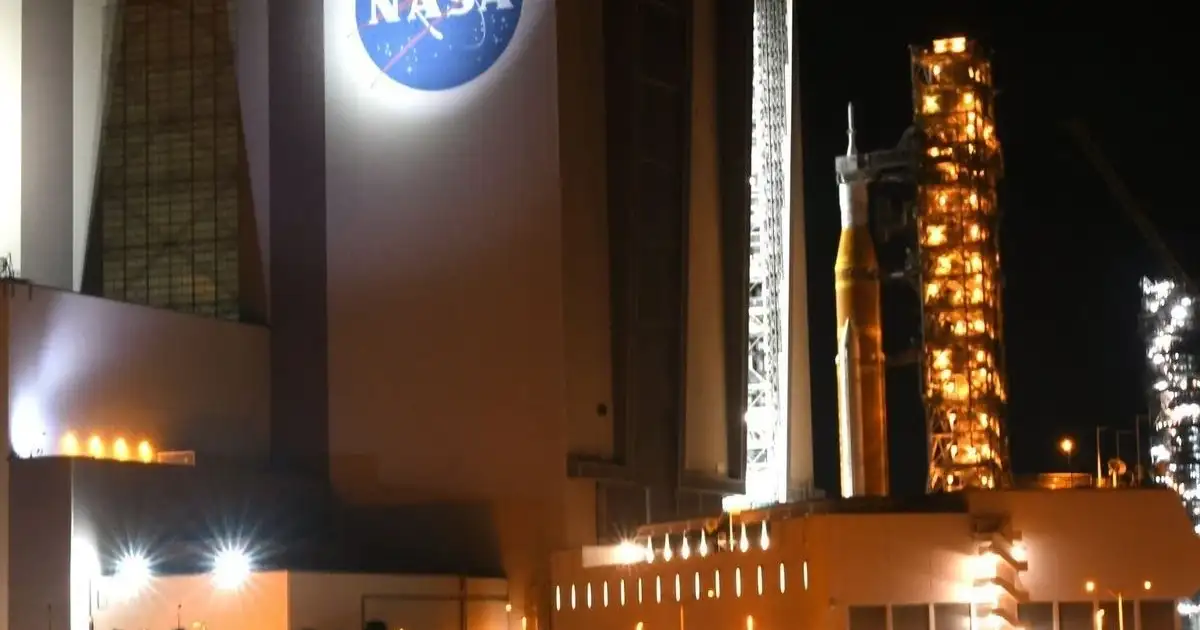
The historic NASA Artemis II launch faces a threat not from a rogue asteroid, but from the crushing weight of public disbelief. The internet roars with accusations that this entire “threat” narrative is nothing more than a calculated hoax, an April Fools’ scam designed to conjure fake peril and drum up buzz. NASA, bless their earnest, star-gazing hearts, desperately wants us to believe that space remains humanity’s ultimate frontier. They’ve paraded their intrepid astronauts at the Peach Bowl and Sugar Bowl fan fests. They even projected a colossal holographic Orion spacecraft onto the field during the Peach Bowl halftime – an audacious move to sell us on the grand vision of Artemis II.The Grandstand Play: NASA’s Gridiron Gambit to Win Hearts and Minds
NASA’s “Touchdown on the Moon” campaign was a grandstand play, a spectacle designed to capture the imagination of a nation often more focused on touchdowns than moon landings. They hitched their cosmic wagon to the roaring engine of college football, a sport steeped in tradition, passion, and tribal loyalty. This was a strategic masterstroke, a calculated gambit to tap into that raw, unbridled energy that electrifies Saturdays in the fall. At the Peach Bowl, a live video feed brought NASA Administrator Bill Nelson directly to the fans, drawing a compelling parallel between the rigorous training of CFP athletes and the unyielding discipline demanded of astronauts. Then, a breathtaking holographic Orion materialized at halftime, a silent, shimmering promise of future voyages. The venerable Rose Bowl hosted interactive VR exhibits, allowing fans to virtually step onto the lunar surface. At the Sugar Bowl and Cotton Bowl, astronauts pressed flesh, signed autographs, and shared their dreams, forging a tangible connection between the celestial and the terrestrial. Seamlessly woven into the fabric of college football broadcasts, sleek visuals of the Artemis II mission intertwined with electrifying game highlights, subtly imprinting the space narrative onto the national consciousness. NASA is not just seeking funding; they are seeking devotion. They yearn for a new generation of space cadets, eyes fixed on the stars, ready to champion their moonshot dreams. This cross-promotional blitz is a fascinating, almost desperate play. It’s akin to a beleaguered baseball manager, bases loaded in the bottom of the ninth, bringing in a pinch-hitter with everything on the line. The pressing question is this: will it connect, or will it be a spectacular, yet ultimately fruitless, swing and a miss?The Fans Strike Back: “Solar Prank” or “Clickbait Psyop”?
The internet, that vast, unruly coliseum of collective consciousness, is having an absolute field day. The initial headline, breathlessly proclaiming a “powerful force striking Earth today,” ignited an outright rebellion among the digital denizens. It screams tabloid fearmongering, a cheap theatrical trick designed to manipulate emotions. On Reddit, within the often cynical halls of r/space and r/nasa, the sarcasm flows like champagne. “Solar flare? More like solar prank,” one user quipped, perfectly encapsulating the prevailing sentiment. They’re quick to point out a genuine solar flare that occurred on March 29, which did indeed cause some minor radio blackouts. “This ‘powerful force’ is just sunspots tickling Earth,” another user wrote, their words dripping with disdain. Not exactly a doomsday scenario, is it? The stark reality is that NASA’s own mission control is “go” for an April 1 liftoff. The chatter online, amplified across countless forums and social media platforms, labels it unequivocally a clickbait psyop. A blatant, almost desperate, attempt to generate buzz, to stir the pot and capture fleeting attention. Why, the public demands, hype peril and impending doom when the rocket’s critical helium fix and its stately rollout are already locked in and proceeding as planned?The Deep State, Distraction, and Delays: A Conspiracy of Convenience?
Some cynics are going even further down the rabbit hole. They see this entire affair as a meticulously choreographed piece of performance art. A “deep state distraction,” they whisper, designed to divert public attention from the inconvenient truth of persistent Artemis delays. Remember the ignominious SLS helium seal flop? The frustratingly frequent battery swaps? The massive, costly February overhaul that left aerospace giants Boeing and SpaceX scratching their heads in exasperation? These are not minor hiccups; these are significant setbacks that have plagued the program, eroding public confidence and pushing back timelines. This dramatic headline, perfectly timed for April Fool’s Day, could, in their view, be nothing less than a smokescreen. A clever, albeit transparent, way to mask NASA’s “last chance” scramble, a desperate attempt to salvage a program teetering on the brink of further postponement. They’re facing potential May slippage, a delay that would undoubtedly spark renewed criticism and scrutiny. X/Twitter, that chaotic maelstrom of instant opinion, is a veritable hotbed of such speculation. “Geomagnetic psyop to tank stocks or prep UFO disinfo?” one user provocatively questioned, illustrating the depths of public distrust. Memes are flying fast and furious. “NASA fixed everything,” users declare with a mixture of exasperation and confidence. The crew is “ready to go,” meticulously trained and poised for their historic journey. So why, they demand, the sudden, theatrical pressing of the panic button?The College Football Industrial Complex and the Final Frontier
Let’s talk about the real powerful force at play here, one far more tangible than any fleeting solar flare: the colossal, ever-expanding college football industrial complex. NASA, a revered government agency, an emblem of scientific pursuit, is now, remarkably, playing in this sandbox. They are actively leveraging the immense power and influence of the CFP committee and the various bowl game organizers, tapping into a wellspring of national passion and commercial might. Consider the titans of the gridiron. The Atlanta Falcons boast heavy hitters like Jack Nelson at tackle and Matthew Bergeron on guard. These athletes understand raw, unadulterated power. But even they, seasoned veterans of countless battles, would likely raise a skeptical eyebrow at this sudden, convenient space drama, this manufactured peril. Similarly, the New Orleans Saints have their own formidable roster of talent. Kelvin Banks Jr., a powerhouse on the offensive line, and Audric Estime, a relentless running back, embody the very essence of dedication and resilience. They, too, might question the wisdom of such a transparently dramatic narrative surrounding a mission of such profound scientific importance. NASA’s shift in public relations strategy is stark, almost jarring. They are undeniably chasing eyeballs, desperate to capture fleeting attention in a hyper-stimulated world. They are trying, with all their might, to inspire a new generation, to rekindle the flame of exploration. But in their pursuit of clicks and viral moments, are they inadvertently sacrificing the very credibility that has been their bedrock for decades?The Truth in the Cosmos: A Fumble in the End Zone
The truth, as it so often is, probably resides somewhere in the vast, murky middle. Space exploration, by its very nature, is an astronomically expensive undertaking. It is fraught with peril, a constant dance on the knife-edge of the unknown. And in a democratic society, sustained public support is absolutely vital for the long-term success of such ambitious endeavors. But the manner in which this “threat” is being spun, this sudden, dramatic proclamation of impending doom? It’s a fumble. A dropped pass in the end zone, a critical error that undermines the genuine wonder, the inherent majesty, of space travel itself. It casts a shadow of doubt over the entire enterprise, prompting people to question the very motives behind the mission. Is NASA crying wolf, desperately attempting to stir emotions and generate headlines? Or are they simply trying to make us look up, to rekindle that innate human curiosity about the cosmos, even if it’s for what many perceive as the wrong, cynical reasons? They are, unequivocally, trying to sell us a dream, a vision of humanity’s future among the stars. The success of Artemis II should not rely on manufactured drama or theatrical scares. It must, instead, stand on the unshakeable foundation of incredible science, the unwavering courage of its brave astronauts, and the sheer, audacious ambition of the human spirit to reach beyond our terrestrial confines. Let us hope that the launch is smooth, a flawless ascent into the heavens. But let us also hope that NASA learns a crucial lesson: to play it straight, to trust in the inherent wonder of their mission, rather than resorting to cheap theatrics.Source: Google News