
Forget what you thought you knew about royal bling; the infamous tiara drama surrounding Meghan Markle’s wedding is back, and this time, it’s not just about a sparkly accessory. Robert Hardman’s latest book, “Charles III: New King, New Court, The Inside Story,” isn’t just rehashing old gossip; it’s laying bare a full-blown power play that reveals the deep fissures within the monarchy.
Hardman’s book, which hit shelves recently, dropped a bombshell, detailing the alleged chaos that unfolded before the Sussexes’ 2018 wedding. The core of it? Meghan reportedly demanded a specific tiara, a request that was met with a swift and unequivocal rebuke from none other than Queen Elizabeth II herself. This wasn’t just a bridezilla moment; it was a clash of wills, a battle for control, and a stark illustration of the monarchy’s unyielding grip on tradition.

The Tiara Tussle: A Royal Power Play
Meghan Markle, preparing for her highly anticipated wedding to Prince Harry, had her heart set on a particular tiara. Rumors, now solidified by Hardman’s account, suggest she desired an emerald tiara. This wouldn’t have been just a “bold choice” in terms of aesthetics; it would have been a seismic statement. It wasn’t about adding a bit of sparkle; it was about defining her entrance into the Royal Family on her own terms.
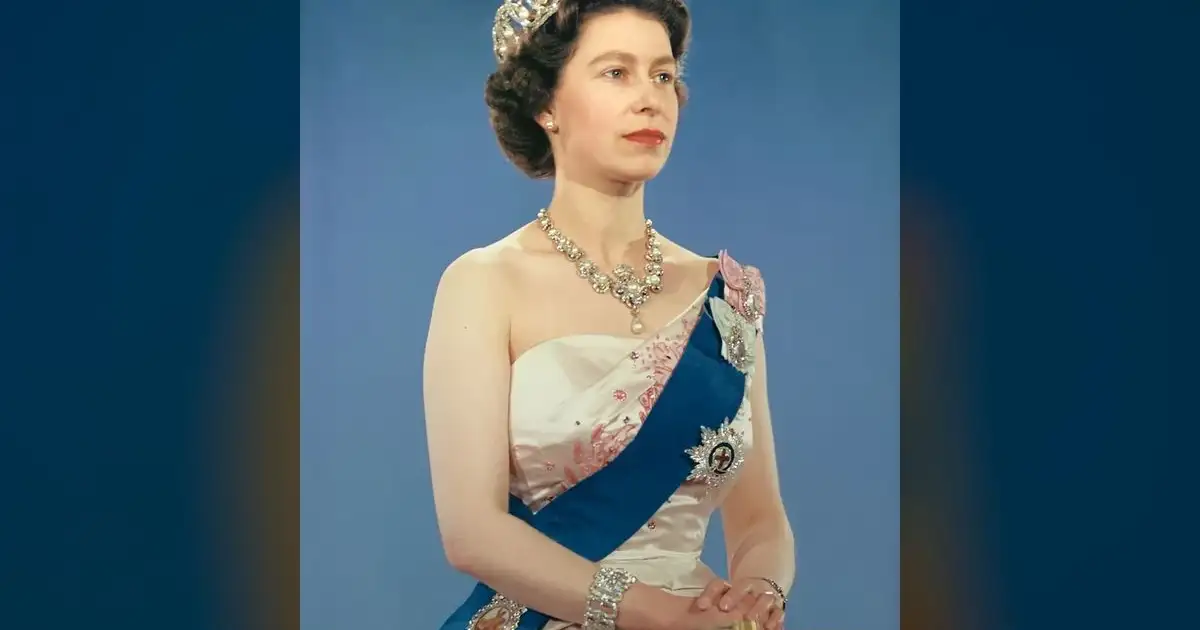
But the Queen, ever the stoic defender of royal protocol, intervened directly. Her message, according to Hardman, was delivered with an icy precision: “Meghan cannot have whatever she wants. She gets what she’s given.” This wasn’t a polite suggestion or a gentle nudge; it was a royal decree, a non-negotiable command from the ultimate authority. It underscored the immutable truth that within the Palace walls, personal preference often bows to institutional will.
In the end, Meghan wore the elegant Queen Mary’s Bandeau Tiara. While undoubtedly a stunning piece, it was not her first choice. This incident, seemingly minor on the surface, quickly became a potent symbol of the burgeoning tensions and fundamental misunderstandings between Meghan and the Palace establishment. It was a harbinger of the storm to come.
Beyond the Bling: Tiaras as Battlegrounds
To dismiss tiaras as mere “pretty trinkets” is to fundamentally misunderstand their role within the British monarchy. They are far more than decorative; they are living historical artifacts, potent symbols of power, lineage, and continuity. The selection of a tiara is never a casual affair; it’s a meticulously considered choice that reflects tradition, status, and, crucially, control.
The tiara Meghan reportedly coveted was the magnificent Greville Emerald Kokoshnik Tiara. Crafted by Boucheron in 1919, this piece is a showstopper, featuring large, striking emeralds set in a distinctive Russian kokoshnik design. It doesn’t just whisper opulence; it shouts history and grandeur. Its bold design and vibrant gemstones would have made an unmistakable statement.
In stark contrast, the Queen Mary’s Bandeau Tiara, created in 1932 and featuring a diamond brooch from 1893, embodies a different kind of elegance. It’s refined, understated, and steeped in established tradition. It’s the safe, classic choice, representing continuity rather than daring innovation.
This wasn’t merely a debate over aesthetics; it was a struggle over who held the keys to the royal vault, both literally and metaphorically. It was about who dictated the rules, who set the tone, and who ultimately controlled the narrative. And in that arena, the Queen, as monarch, was the undisputed arbiter.
The Palace Playbook: Controlling the Narrative
This tiara story isn’t groundbreaking news. It’s a rehash, a polished version of old gossip that has circulated for years. Robert Hardman, a seasoned royal correspondent, hasn’t unearthed a new scandal; he’s simply repackaged it, giving it a fresh coat of paint for a new book release. And let’s be frank, it’s designed for clicks, for headlines, and to keep the royal rumor mill churning.
The Palace, a master of narrative control, often employs such tactics to shape public perception. By highlighting this incident, they effectively paint Meghan as demanding, entitled, and difficult – reinforcing the “outsider” narrative that has plagued her since day one. It’s a classic move in the royal playbook: when in doubt, subtly undermine.
Many savvy royal watchers on social media are already seeing through this thinly veiled strategy, dubbing it “Sussex-baiting theater.” Prince Harry’s own memoir, Spare, already detailed the “obstacles” and frustrations he and Meghan faced. Hardman’s book, rather than offering fresh insights, seems content to rehash these points, framing them in a way that often casts Meghan in an unfavorable light. As one X (formerly Twitter) thread, boasting over 50,000 likes, incisively put it: “Meghan’s the diva demanding emeralds with shady Russian provenance? Queen clapped back ‘you get what I give’? Classic Firm propaganda to paint her as Yank entitlement incarnate.”
This isn’t about objective truth; it’s about perception, about maintaining control over the narrative, and about whose version of events ultimately prevails.
The Unseen Hands: Artisans and Authenticity
In all this drama, the real heroes often get overlooked: the master artisans who meticulously crafted these breathtaking pieces. Their skill, dedication, and artistry are immense, yet they remain largely anonymous, overshadowed by the royal squabbles.
Consider the sheer brilliance of the diamonds and emeralds, the intricate settings, the decades of craftsmanship that went into creating these heirlooms. These aren’t mass-produced baubles; they are bespoke works of art, embodying centuries of heritage and tradition. They are priceless not just for their monetary value, which is immense, but for their historical significance. They represent generations of royalty, a tangible link to a nation’s story.
Shouldn’t we, as discerning readers, demand that the focus occasionally shifts from petty squabbles to the profound beauty and history these objects represent? To reduce them to mere props in a family feud cheapens a truly magnificent legacy.
Style vs. Protocol: A Losing Battle?
Meghan’s desire to personalize her wedding day look, to make a unique statement, was understandable. But this very human impulse inevitably clashed with the rigid, often unforgiving, world of royal protocol. It was a mismatch from the start.
Royal fashion is rarely about personal expression; it is, first and foremost, a statement of state. Every choice, every accessory, is scrutinized, imbued with meaning, and weighed against centuries of precedent. There’s a reason Kate Middleton opted for the safe, traditional Cartier Halo Scroll Tiara for her wedding, and why Princess Diana chose the deeply personal Spencer Tiara, a family heirloom. Both choices, while distinct, fit squarely within established norms.
Meghan’s request, however, pushed boundaries. It challenged the established order, hinting at a desire for individuality that the monarchy, by its very nature, struggles to accommodate. This is precisely why the Queen’s response was so firm; it wasn’t just about a tiara, it was a staunch defense of tradition, a reaffirmation of who truly held the power.
The “So What” for Us
This entire incident, while seemingly trivial, reveals profound truths about the power of symbolism, the intricate dance of royal politics, and the enduring allure of history. In royal circles, fashion is never just fashion; it’s politics, it’s power, it’s a living testament to a nation’s past.
It highlights the inevitable clash between modern individualism and ancient institutions. This friction, as we’ve seen, was not just a fleeting moment; it continues to play out, defining much of the Sussexes’ narrative and their relationship with the wider Royal Family.
The public’s fascination with royal drama endures, and the gossip machine churns relentlessly. But as sophisticated readers, we should demand more. We should ask about the why behind these stories. Was it truly a “demand,” or a simple request misconstrued? Was the “chaos” exaggerated for dramatic effect? These are not just rhetorical questions; they are essential inquiries if we want to move beyond superficial headlines and truly understand the complex dynamics at play. This isn’t just about a tiara; it’s about control, about spin, and ultimately, about who gets to tell the story – and, indeed, who gets to choose the jewels.
Source: Google News