
The specter of another protracted conflict looms large over the United States, as the engagement in Iran, now in its 34th day, continues to unravel without a discernible exit strategy. This escalating situation has not only triggered palpable anxiety among GOP insiders but has also ignited a fervent public backlash, challenging the very foundation of former President Donald Trump’s “America First” doctrine. While claims of a “strongest economy” are touted, the reality for many Americans is a stark contradiction, with soaring gas prices and an increasingly uncertain financial landscape.
Initial U.S. strikes have reportedly targeted and significantly impacted elements of Tehran’s leadership, its naval capabilities, and critical missile installations. However, the efficacy of these actions in achieving long-term stability or deterring further aggression remains a contentious point. More critically, the domestic response has been overwhelmingly negative, with double-digit opposition to the conflict threatening to fragment Trump’s established political base and undermine his future electoral prospects.

“America First” or America Adrift? The Cost of Conflict
Donald Trump ascended to power on the powerful promise of “America First,” a pledge that resonated deeply with a populace weary of foreign entanglements and the financial burdens they imposed. He vowed to prioritize American interests, keeping both lives and resources within national borders. Yet, the current situation presents a stark and troubling paradox: billions are now being funnelled overseas into a conflict that many Americans neither understand nor support. Is this not a direct and profound betrayal of the very principle upon which his political movement was built?
Indeed, the disillusionment is particularly acute among segments of the “Make America Great Again” (MAGA) voter base. These individuals, many of whom are younger and sought economic relief and domestic stability, now feel profoundly cheated. Their votes were cast for affordability and a retreat from endless foreign wars, not for a renewed cycle of interventionism. The chasm between Trump’s once-powerful rhetoric and the current reality of his actions is not merely stark; it is a gaping wound in the fabric of his political credibility.
Consider the private anxieties of battleground strategists, whose frantic messages—”What the hell did he just say?”—underscore a deep concern. They perceive what some are now labeling “Biden-level gaslighting” on the issue of inflation, as the economic realities of this conflict directly contradict claims of national prosperity. This war, far from being an economic boon, is undeniably an economic drain, impacting the everyday lives of American families.
The Digital Echo Chamber: Public Outcry on Social Media
The public’s discontent is not confined to private conversations; it is exploding across digital platforms like Reddit and X (formerly Twitter). Users are not merely criticizing; they are actively “roasting” the former President, painting him as a warmonger and a hypocritical flip-flopper from his proclaimed isolationist stance. The speed and intensity of this digital backlash are unprecedented, reflecting a deep-seated frustration.
For instance, threads on subreddits such as r/politics are experiencing unprecedented activity. A particularly resonant post, “Trump’s Iran grift: Oil stocks pump, we pay at the pump,” garnered over 50,000 upvotes, encapsulating the public’s perception of economic manipulation. Many view the conflict as a classic “wag the dog” scenario, a convenient distraction from pressing domestic failures and an attempt to rally a fractured base. While some sarcastic theories, such as the notion of “performance art for midterms,” circulate, the underlying sentiment is one of profound skepticism and anger. Iran’s initial “crushing” threats seemed to dissipate rapidly, with missile activity reportedly dropping by 90% in Week 1, according to analyses from the Center for Strategic and International Studies (CSIS).
A Path Without a Map: The Absence of an Exit Strategy
The most alarming aspect of the current situation is the conspicuous absence of a coherent strategy for de-escalation or withdrawal. Trump’s recent public address offered zero indication of an exit strategy, instead focusing almost exclusively on boasts about economic strength. This is not the hallmark of responsible leadership; it borders on delusion. True leadership, particularly in times of international crisis, demands a clear articulation of objectives, a pathway to resolution, and a transparent assessment of risks and rewards.
The lack of a defined plan is not merely unsettling; it is terrifying. It signals the very real prospect of a prolonged, costly, and potentially unmanageable conflict. The American public, who ultimately bear the financial and human cost of such endeavors, deserve to know the endgame. What are the specific objectives? What constitutes success? How will this engagement conclude?
Meanwhile, the tangible economic consequences are already being felt. Gas prices are spiking, directly impacting the budgets of working families. How can any political figure credibly claim economic strength when the very policies they pursue inflict such direct financial pain on ordinary citizens? This conflict is not an abstract geopolitical chess game; it is a direct assault on the economic well-being of countless Americans.
Iran’s Strategic Maneuvers and Regional Instability
Iran, for its part, is not a passive actor in this unfolding drama. The recent open letter from Iranian President Masoud Pezeshkian, imploring Americans with the message, “We harbor no hostility,” represents a calculated diplomatic maneuver. This attempt to appeal directly to the American populace, particularly to anti-war factions on the left, is a clear strategy to sow division within public opinion and potentially undermine U.S. resolve. Such tactics highlight the complex, multi-layered nature of this conflict, extending far beyond conventional military engagements.
The ghost of Iran’s Supreme Leader continues to loom large, influencing proxy strikes and maintaining significant regional influence. The ongoing conflict in Yemen, for instance, remains a critical flashpoint. Houthi attacks on shipping in the vital Red Sea, frequently attributed to Iranian backing, continue to disrupt global trade routes and inject further instability into an already volatile region.
- While Houthi attacks reportedly saw an 80% reduction last week, the underlying threat to maritime security persists, demonstrating the fragility of any temporary calm.
- In response to these provocations, the United States and the United Kingdom have launched fresh retaliatory strikes in Yemen, illustrating the persistent cycle of violence and counter-violence that defines this geopolitical standoff.
- This continuous escalation, marked by tit-for-tat actions, shows no discernible sign of abating, raising serious concerns about regional stability and the potential for broader conflict.
It is crucial to remember that the foundations for the current hostilities were significantly laid by the Trump administration’s “maximum pressure” campaign. While ostensibly designed to curb Iran’s destabilizing activities, its legacy is a complex web of heightened tensions and a diplomatic vacuum that continues to shape the present dangerous trajectory.
The Enduring Shadow of the Nuclear Question
Perhaps no aspect of the U.S.-Iran relationship is more fraught with danger than Iran’s nuclear program. The Joint Comprehensive Plan of Action (JCPOA), a multilateral agreement designed to constrain Iran’s nuclear ambitions, is effectively defunct. Trump’s unilateral decision to withdraw from the JCPOA was a pivotal moment, widely criticized by international allies and, arguably, a catalyst that reinvigorated Iran’s pursuit of nuclear capabilities. This withdrawal not only dismantled a meticulously negotiated diplomatic framework but also re-imposed stringent sanctions, pushing Iran further into isolation and potentially accelerating its nuclear development.
The potential for military action against Iranian nuclear facilities, whether overt or covert, remains a chilling reality. Reports of clandestine operations, often attributed to entities like Israel, are ongoing, suggesting a desperate attempt to slow or disrupt Iran’s progress through non-conventional means. These “attacks” are frequently intelligence-based, highlighting a shadow war being waged beneath the surface of public diplomacy.
The diplomatic stalemate created by the JCPOA’s collapse is profoundly dangerous. It has stripped away layers of international oversight and trust, leaving the world with fewer tools to manage a potentially existential threat. The path forward on this critical issue is unclear, and the risks of miscalculation are terrifyingly high.
Trump’s Lingering Impact on Global Foreign Policy
Even outside the Oval Office, Donald Trump’s past actions and his continued rhetorical influence cast a long and unsettling shadow over U.S. foreign policy. His consistent preference for confrontation over diplomacy, and his often-unpredictable pronouncements, keep the possibility of renewed “attacks” and escalated tensions firmly in the global consciousness. This unpredictable element injects a constant state of anxiety into international relations.
Discussions about a potential future Trump presidency are therefore not merely speculative; they are critical considerations for global stability. Would he revert to an even more aggressive “maximum pressure” campaign? Or might he, surprisingly, engage in direct, high-stakes talks? These are not academic questions; they are policy dilemmas that directly impact the geopolitical landscape and the prospects for peace.
The United States and Iran remain locked in a complex geopolitical competition, a struggle that manifests through proxy conflicts, cyber warfare, and the persistent threat of direct confrontation. The assassination of Qasem Soleimani under the Trump administration, for example, continues to resonate as a defining moment, shaping current threat perceptions and informing the strategic calculations of all regional actors. This historical context is vital for understanding the present volatile situation.
A Reckless Trajectory Demands Re-evaluation
This current engagement in Iran is not merely ill-advised; it is a reckless endeavor, conspicuously lacking allied buy-in and international legitimacy. Trump’s historical threats to withdraw from NATO, a cornerstone of Western security, further exacerbate this isolation, weakening the very alliances that could provide stability in times of crisis.
In an era where the global economy remains fragile and interconnected, this conflict introduces yet another layer of profound instability. It is a dangerous path, not only for American interests but for the broader international community. The ripple effects of prolonged conflict, economic disruption, and humanitarian crises are far-reaching and potentially catastrophic.
The American public is unequivocally weary of endless wars and the immense sacrifices they demand. They crave solutions, not an endless cycle of conflict. The current situation is simply unacceptable. It demands an immediate, comprehensive re-evaluation, a clear articulation of a path to peace, and a decisive move away from mere boasts and escalating tensions. The time for strategic clarity and responsible leadership is now, before this dangerous trajectory leads to irreversible consequences.
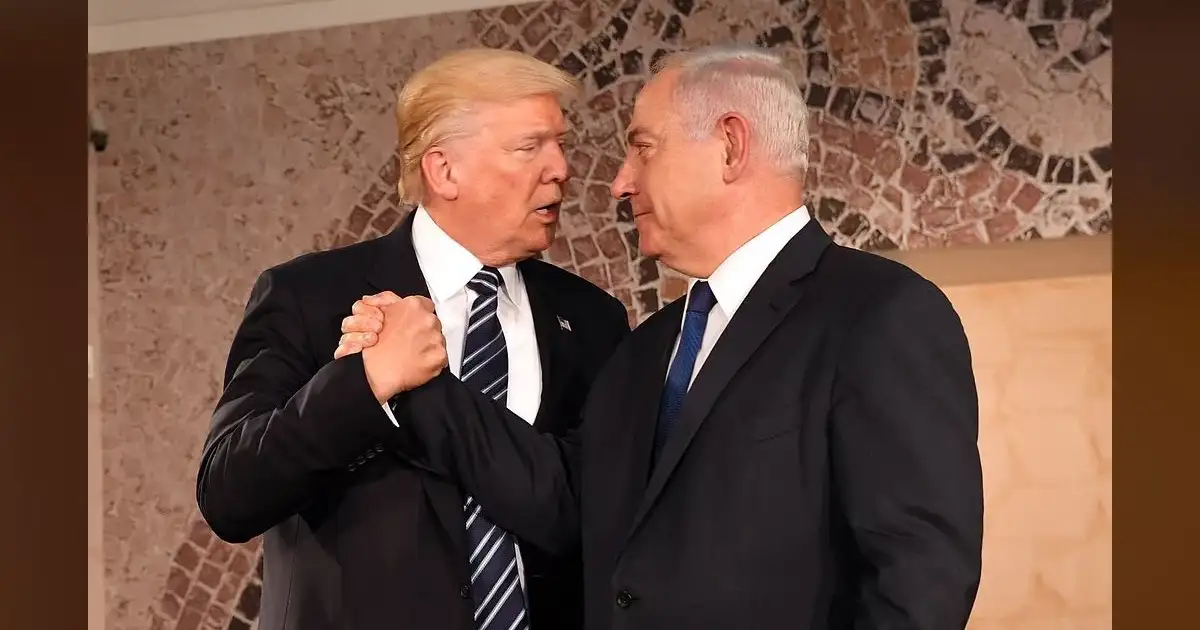
Photo: Photo by U.S. Embassy Jerusalem on Openverse (flickr) (https://www.flickr.com/photos/46886434@N04/34460980460)
Source: Google News