
The abrupt dismissal of the top U.S. Army general by Defense Secretary Pete Hegseth amidst an active war with Iran is not merely a personnel change; it is a profound destabilization of military leadership at a moment of extreme geopolitical fragility.
General Randy George, the U.S. Army Chief of Staff, was unceremoniously removed from his post through an initiative spearheaded by Hegseth. This seismic shift occurred while U.S. forces are deeply embroiled in conflict with Iran, a nation whose regional influence and nuclear ambitions present an ongoing, complex challenge to global security.

This decision, executed with startling speed and minimal explanation, raises urgent and unsettling questions about the integrity of military leadership, the morale of service members, and the very fabric of American national security. The timing, frankly, could not be more perilous.
Hegseth’s Dangerous Purge Amidst War
Defense Secretary Pete Hegseth’s decision to fire General Randy George, the highest-ranking U.S. Army officer, in the middle of an escalating conflict with Iran, transcends a simple administrative adjustment. It represents a reckless gamble with the nation’s defense apparatus and its standing on the global stage.
This extraordinary move unfolds as U.S. forces are actively confronting Iranian proxies and direct threats, with the elite 82nd Airborne Division reportedly deploying to the region. Such a period demands unwavering, steady leadership, not the chaos sown by political purges. General George, a Biden appointee, was slated to serve until 2027. His sudden ouster, therefore, carries the unmistakable scent of political motivation, raising concerns that loyalty to a specific political faction is being prioritized over proven competence and institutional stability.
The action has predictably ignited a firestorm of criticism, with many observers interpreting it as Hegseth’s aggressive attempt to reshape the military’s top echelons to align with a particular ideological agenda. The implication is chilling: that adherence to a political line has become a more valuable commodity than strategic acumen or battlefield experience.
The Unvarnished Facts: A Leadership Vacuum in Crisis
On April 6, Defense Secretary Pete Hegseth announced the immediate removal of General Randy George, the U.S. Army Chief of Staff. This decision was delivered without any substantive explanation beyond a vague reference to a “leadership change,” a euphemism that offers little comfort in a time of war.
This firing marks at least the 13th general removed under Hegseth’s tenure, a pattern that critics have frequently labeled as ideologically driven “woke” purges. The timing of this particular dismissal is especially alarming, given that the United States is now in its fifth week of an active and increasingly volatile conflict with Iran. This is not a theoretical exercise; American lives are on the line.
Adding to the already tense atmosphere are reports that former President Trump has publicly vowed to “bomb Iran back to the Stone Age.” Such incendiary rhetoric, coupled with the instability at the pinnacle of military command, creates an environment where the military, which desperately needs cohesion and clear direction, is instead plunged into disarray.
Why This Matters: Instability at a Critical Juncture
The removal of the Army’s top general during wartime sends a profoundly damaging message, both domestically and internationally. It signals deep instability within the military command structure, eroding the vital confidence that soldiers and allies place in their leadership. How can troops effectively execute complex operations when the ground beneath their command structure is shifting so violently?
The public reaction has been swift and unequivocally harsh. A prevailing sentiment suggests that General George was dismissed for political reasons, perhaps for resisting the more aggressive strategies favored by the current administration or for opposing a potentially catastrophic escalation of ground troops. If true, this sets a dangerous and profoundly undemocratic precedent.
The military, by its very nature and constitutional mandate, should be insulated from partisan political interference. Its singular mission is to defend the nation, not to serve as a pliable tool for political agendas. This firing, however, strongly suggests the latter, raising serious questions about the politicization of one of America’s most critical institutions.
The Public Outcry: “Trump’s Game of Thrones” Unfolds
Social media platforms have erupted with outrage and cynical commentary. Users on Reddit’s r/politics and r/worldnews subreddits have dubbed the situation “Trump’s Game of Thrones cosplay,” speculating that George may have resisted illegal orders or opposed Trump’s controversial anti-NATO stance. The sheer volume and intensity of these discussions underscore a deep public unease.
Major news outlets, including The New Republic and ClickOrlando, have prominently featured the “ouster in the middle of war,” framing it as an act of reckless chaos. This is not merely journalistic sensationalism; it reflects a genuine and widespread concern among the populace that national security is being jeopardized by internal political maneuvering.
The notion that military generals can be summarily dismissed for reasons of political loyalty is chilling. It fundamentally undermines the bedrock principles of military professionalism, meritocracy, and non-partisanship. Our soldiers, who pledge their lives to the nation, deserve leadership chosen for its strategic brilliance and integrity, not its political fealty. Our nation, facing complex global threats, deserves nothing less.
“Hegseth wants Army bros who’ll salute his beard, not think,” quipped one Reddit user, encapsulating the cynical view prevalent online. “Firing chaplains too? Praying away the war crimes.” Such sarcastic yet pointed remarks highlight the deep-seated mistrust and cynicism this move has generated among a significant segment of the public.
This situation extends far beyond the fate of General George. It is a critical litmus test for the future of military leadership, the preservation of a non-partisan defense force, and the principle of civilian control over the military without undue political meddling. This move, regrettably, establishes a profoundly dangerous precedent that could reverberate for decades.
Impact on Morale and Readiness: A Critical Erosion
Morale within the armed forces is an intangible yet utterly crucial factor, particularly during active combat operations. This sudden and unexplained firing of the Army’s highest-ranking officer can have a devastating impact on it. Soldiers, already facing immense pressure, may begin to question the motives and stability of their leadership, leading to doubt and disunity.
As the 82nd Airborne Division deploys to a volatile region, they require clear, consistent, and unwavering command. This action injects a profound sense of uncertainty into the chain of command, which can directly hinder operational effectiveness and, most critically, put lives at unnecessary risk. The focus of the military should be unequivocally on the mission at hand – winning the war and protecting national interests – not on internal political purges.
This diversion of focus, this internal fracturing, is unacceptable. It represents a direct compromise of national security for what appears to be purely political gain.
The “Deep State” Narrative vs. Reality: A Distorted Lens
Predictably, some ardent MAGA supporters have attempted to defend the move, framing it as a necessary step in “draining the deep state swamp” and rooting out perceived disloyal elements. Yet, even within this cohort, there are whispers of concern regarding the timing and potential ramifications.
The ongoing conflict with Iran is a grave and multifaceted challenge. The potential for exploiting internal Iranian dissent or military desertions requires a clear, unified, and strategic approach. This chaos at the top of the U.S. Army command directly impedes the development and execution of such an approach, effectively handicapping our forces at a critical juncture.
This is not about draining a swamp; it is, more accurately, about consolidating power and demanding unquestioning loyalty, even if it comes at the steep cost of military effectiveness and national security. The true “deep state” threat, in this context, might be the politicization of institutions designed to be apolitical guardians of the nation.
A Dangerous Precedent for the Future
This event establishes a profoundly dangerous precedent: that military leaders can be dismissed for political disagreement rather than for incompetence or misconduct. Such an action politicizes the armed forces, rendering them vulnerable to the capricious whims of partisan politics and potentially undermining their constitutional role.
A strong and effective military relies on independent, experienced leadership – generals who possess the courage and integrity to speak truth to power, even when that truth is inconvenient, and to do so without fear of career-ending reprisal. This firing fundamentally undermines that essential principle, creating a chilling effect on future military leaders who might otherwise offer candid, objective advice.
The long-term consequences of this politicization could be severe: a less effective, less capable military, prone to making poor strategic decisions influenced by political expediency rather than sound judgment. Ultimately, it could endanger American lives and compromise the nation’s ability to defend itself and its interests on the global stage.
What Happens Next? The Unsettling Unknown
The immediate future for the U.S. Army and its leadership remains profoundly uncertain. Who will replace General George? Will the selection prioritize competence, strategic vision, and battlefield experience, or will it be based primarily on political loyalty and ideological alignment? This question hangs heavy over the military, creating an atmosphere of apprehension and distrust.
The U.S.-Iran conflict continues to escalate, with stakes that are incredibly high and consequences that could ripple across the globe. In such a volatile environment, stability, clear command, and unified purpose are not merely desirable; they are absolutely paramount. This recent move, however, has delivered precisely the opposite, injecting instability and doubt into the very heart of America’s defense.
This incident serves as a stark and sobering reminder that the military must remain fiercely independent of partisan politics. Its sacred mission is to protect the nation and its citizens, not to serve as a tool for political masters or ideological agendas. This recent event is not just a disservice to General George; it is a grave disservice to that fundamental principle and to the men and women who serve under its banner.
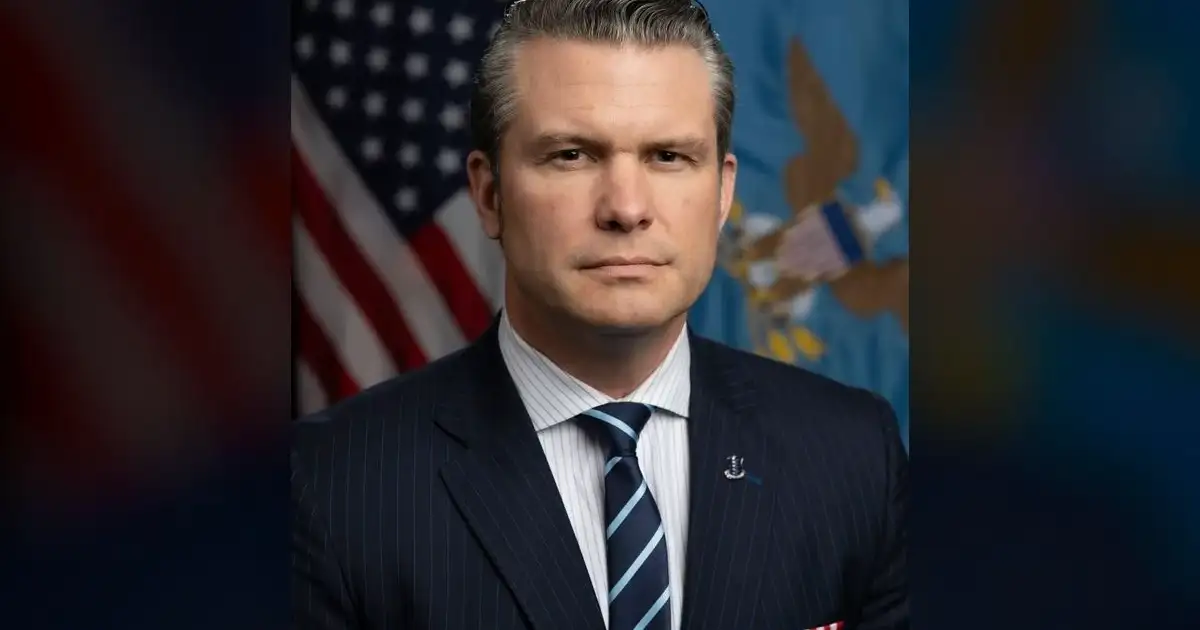
Photo: Chad McNeeley
Source: Google News