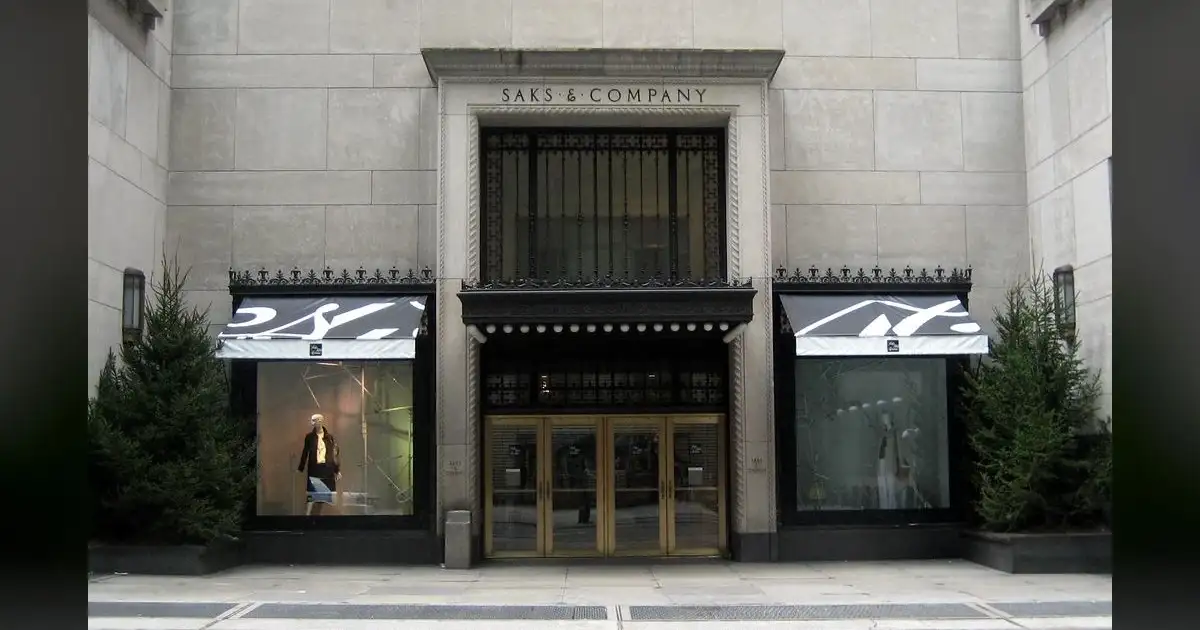

Saks Global just secured a $500 million lifeline. But let’s be real: this isn’t a comeback story. It’s a desperate play to keep a dying luxury brand on life support, a financial tourniquet applied to a hemorrhaging business model.
The company, parent to Saks Fifth Avenue and Saks.com, announced the financing on April 2, 2026. This cash infusion allows them to claw their way out of Chapter 11 bankruptcy, a filing made in late 2025. The bankruptcy court has since approved the deal, clearing the path for Saks Global to emerge, with the financing structured as a mix of new equity and converted debt.

Bailout or Bust? The Bitter Truth About Luxury Retail’s Illusion of Recovery
Don’t let the corporate speak fool you. This $500 million is not a magic wand. It doesn’t fix the fundamental, structural issues plaguing Saks Global. This is a temporary reprieve, at best, a fleeting moment of financial stability before the next inevitable downturn. It’s a classic move in the private equity playbook: prop up a failing enterprise just long enough to extract value, often at the expense of long-term viability.
The real story isn’t the money; it’s the gaping disconnect between Wall Street’s financial wizardry and the grim reality of Main Street consumer behavior. Or, in this case, between corporate press releases brimming with manufactured optimism and the cold, hard facts of a dying retail sector.
Mainstream media, ever eager for a positive spin, hails this as a “milestone.” They dutifully parrot CEO Geoffroy van Raemdonck’s bland platitudes about “luxury customer devotion.” What a joke. Devotion to what, exactly? A relic of a bygone era?
Public reaction online, however, tells a far more honest and brutal story. It’s cynical, it’s scathing, and it’s almost certainly right.
The Public Is Not Fooled: Social Media’s Scathing Verdict
Reddit users on r/wallstreetbets, known for their unfiltered takes, are calling it “zombie retail,” an entity “propped up by bondholder bailouts.” They’re not wrong. This isn’t organic growth; it’s artificial respiration.
One user on r/LuxuryFashion mercilessly mocked the corporate euphemism “optimized footprint.” That’s corporate-speak for shuttering 24 Saks stores, a strategic retreat disguised as efficiency. It’s a bloodbath, not a revival. It’s a desperate attempt to stem losses, not to innovate.
“Luxury customers? The ones fleeing to Shein and TikTok drops?” another Redditor sneered. That cuts deep because it’s the uncomfortable truth. Young luxury consumers, the demographic every brand is desperate to capture, simply don’t care about the dusty grandeur of old-school department stores. Their loyalty lies with digital-first brands, sustainability, and authentic experiences, not cavernous, impersonal retail temples.
X (formerly Twitter) is equally savage. Influencers like @RetailRagnarok call it “Chapter 11 theater,” arguing that bondholders are merely funding a “dead model.” They point to a staggering 20% luxury sales plunge year-over-year, citing data from CNBC. This isn’t a hiccup; it’s a full-blown crisis, a clear indicator that the traditional luxury department store model is fundamentally broken.
TikTok videos, with their characteristic blend of humor and biting social commentary, parody van Raemdonck. AI deepfakes show him hawking clearance racks from a dumpster. It’s dark humor, yes, but it reflects a widespread public sentiment: Saks Global is perceived as a brand in decline, struggling to maintain relevance in a rapidly evolving market.
The Financial Shell Game: Who Wins, Who Loses?
Let’s strip away the PR gloss and break down the financials. Saks Global was drowning in over $2 billion in debt. Now, they have an additional $500 million injected. While this reduces the immediate debt burden, it represents a significant haircut for creditors and underscores the precariousness of the company’s financial health.
The new financing package aims to restructure this debt and provide working capital. But let’s be clear: it does absolutely nothing to address the fundamental flaw in their business model. It’s like rearranging deck chairs on the Titanic while the iceberg looms larger.
So, who truly benefits from this elaborate financial maneuver?
- Existing Creditors: They get some money back, which is undoubtedly better than nothing. For them, it’s a salvage operation, an attempt to recoup what they can from a bad investment.
- Saks Global Management: They keep their jobs, their opulent offices, and their vision alive, at least for now. This bailout buys them time, but without a radical strategic pivot, it’s merely a stay of execution.
- Private Equity Firms: These are the true beneficiaries. They stand to make a fortune if Saks somehow manages a miraculous turnaround. But that’s a monumental “if,” a gamble predicated on a belief in a phoenix rising from the ashes of retail decline.
And who loses in this high-stakes game?
- Shareholders: Their equity was wiped out. Tough luck. This is the harsh reality of bankruptcy for original investors.
- Smaller Creditors: Many won’t get paid in full, absorbing significant losses while larger institutions are prioritized.
- The Brand’s Integrity: It’s diminished with every bankruptcy filing, every bailout, every public display of financial distress. The allure of luxury is intrinsically linked to exclusivity and stability, both of which Saks has severely compromised.
This isn’t a success story. It’s financial engineering at its most cynical. It’s private equity trying to squeeze blood from a stone, hoping to extract value from a retail model that has long passed its prime.
“This was a tough negotiation, but ultimately, all parties recognized the value in keeping Saks alive. The challenge now is to translate financial stability into market relevance, and that’s a far more complex equation.” – Anonymous source close to bankruptcy proceedings, April 2, 2026, as reported by The Guardian.
“Market relevance” is indeed the key. And that’s precisely what Saks Global is missing, and what this bailout fundamentally fails to address.
The Ghost of Luxury Past: A Cautionary Tale Repeated
This isn’t new territory. We’ve seen this tragic play unfold countless times before in the retail sector, a grim parade of once-dominant brands succumbing to obsolescence:
- Barneys New York (2019, 2020): Bankrupt, sold off its intellectual property, closed stores. A complete failure to adapt, a cautionary tale of clinging to an outdated vision of luxury.
- Neiman Marcus (2020): Also filed Chapter 11, emerging with less debt but still struggling to find its footing in a post-pandemic, digital-first world. Their journey is a stark reminder that debt reduction alone is not a panacea.
- Sears/Kmart: A multi-decade death spiral, punctuated by multiple bankruptcies. Their story serves as the ultimate cautionary tale for any retailer unwilling to evolve.
The pattern is chillingly clear. Financial fixes, no matter how substantial, are utterly meaningless without fundamental business transformation. Saks Global is still clinging to an outdated model, a brick-and-mortar behemoth trying to survive in a cloud-native world.
Declining foot traffic is a colossal problem. Industry reports, including those from Reuters, show double-digit percentage drops for luxury department stores globally. People simply aren’t going to malls or flagship stores with the same frequency. The allure has faded, replaced by the convenience and curation of online platforms.
Saks.com does show stronger performance, a glimmer of hope in an otherwise bleak landscape. But is a robust e-commerce presence enough to offset the systemic decline of its physical stores? Probably not. The digital success needs to be integrated into a cohesive, innovative omnichannel strategy, not treated as a separate, compensatory entity.
What Innovation Does Saks Really Need? Beyond the Balance Sheet
This bailout, while addressing immediate financial concerns, utterly ignores the profound strategic issues. Where is the bold plan for AI-driven personalization that anticipates customer desires before they even articulate them? What about truly immersive in-store technology that transforms a shopping trip into an unforgettable experience, rather than a mere transaction? How about genuine, seamless omnichannel strategies that blend the digital and physical into a coherent, compelling brand narrative?
Saks needs to attract Gen Z and younger millennials, the demographic that will define the future of luxury. These consumers demand authenticity, sustainability, and unique, personalized experiences. They don’t have brand loyalty to dusty old department stores; they have loyalty to values, to innovation, and to brands that resonate with their digital-native sensibilities.
This financing package, as detailed in reports from the Wall Street Journal, doesn’t detail any concrete strategic shifts. It’s all about financial restructuring, a desperate attempt to shore up the balance sheet. That’s not just a huge mistake; it’s a fatal flaw. It’s a refusal to acknowledge the seismic shifts occurring in consumer behavior and the broader retail landscape.
The future of luxury retail is not more debt. It’s not just a fancy website. It’s about reinventing the entire experience, from product sourcing and ethical supply chains to personalized service and community engagement. It’s about becoming a destination for discovery, not just consumption.
A Mirage, Not a Milestone: The Inevitable Reckoning
Saks Global’s $500 million financing is a mirage. It creates the illusion of recovery, a fleeting moment of respite. In reality, it merely delays the inevitable. It’s a testament to the power of financial engineering to prolong the life of an ailing enterprise, but it does nothing to address the underlying disease.
The company needs a radical overhaul. It needs to shed its old skin, discard its antiquated notions of luxury, and embrace the future of retail with genuine innovation and a fearless willingness to disrupt its own model. It needs to become a leader in the next generation of luxury, not a museum piece.
This isn’t a new chapter for Saks Global. It’s just a longer, more agonizing paragraph in a very sad story. How long can they keep pretending that financial bandages can heal terminal strategic wounds? The market, and increasingly, the consumer, are watching, and their patience is wearing thin.
Photo: Photo by wallyg on Openverse (flickr) (https://www.flickr.com/photos/70323761@N00/456167672)
Source: Google News