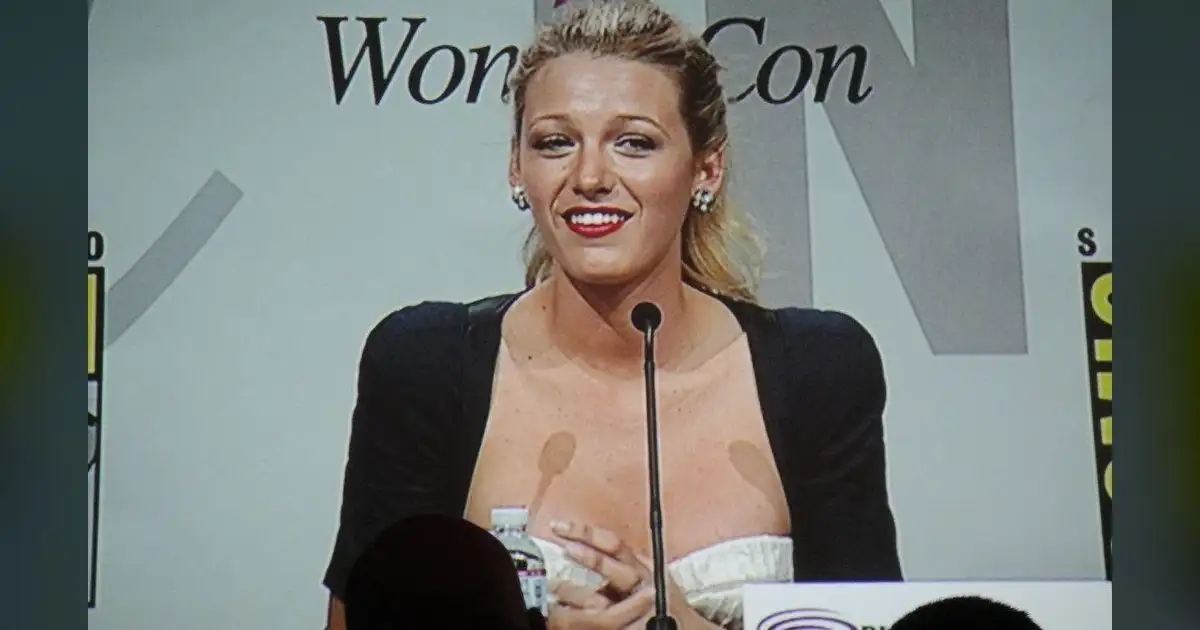

Blake Lively has unleashed a five-page, 77-bullet-point “bragging letter” that reads less like a legal document and more like a fever dream. This isn’t just a misstep; it’s a full-blown celebrity self-immolation, performed with a theatrical flourish usually reserved for a Shakespearean tragedy.
The document, allegedly intended to assert her “immense” power in an ongoing legal spat with Justin Baldoni’s team, has instead unleashed a torrent of public outrage. Critics online are performing a collective, digital vivisection, particularly given her recent claims of being a victim of “toxic masculinity”—a narrative that now rings hollow.

Blake Lively’s “Immense” Power Trip Explodes in 77 Bullet Points of Pure Cringe
Blake Lively’s five-page “bragging letter” has not just backfired; it has detonated with the force of a thousand suns, leaving a crater of public ridicule in its wake. This 77-bullet-point manifesto, dispatched to Justin Baldoni’s team, proves Hollywood narcissism isn’t merely alive and well; it’s thriving, mutating, and now, apparently, writing its own manifestos.
The document was reportedly part of her legal case against Baldoni, a strategic maneuver that has instead ignited an internet inferno. Social media isn’t just “ripping Lively apart”; it’s gleefully dismantling her carefully constructed persona, piece by agonizing piece, for this breathtakingly tone-deaf display of ego unbound.
The Manifesto of Delusion: A Cringe-Worthy Masterpiece
To call this a mere letter would be an insult to stationery everywhere; this is a “cringe manifesto” of epic proportions. Lively’s team, presumably with a straight face, dispatched this literary marvel to Baldoni’s camp amidst their ongoing legal feud.
The letter’s supposed purpose? To underscore her “immense” star power. Its actual effect? The precise opposite, revealing a star so disconnected from reality, she might as well be orbiting a different galaxy.
The digital town square, specifically X (formerly Twitter) and Reddit threads, is a brutal landscape where mercy is a foreign concept. Millions of impressions clock savage takedowns, with users on r/popculturechat (boasting over 45,000 upvotes) dubbing it “peak Hollywood narcissism.” The memes are already legendary, with bullet points like “#17: I am the sun around which PR orbits” being mercilessly parodied. “This is delusional diva bingo,” one user succinctly put it, and frankly, it’s hard to argue with such an astute observation.
The public reaction is not merely swift; it’s a merciless, unblinking glare. People aren’t just “not buying” the carefully curated image anymore; they’re actively rejecting it, spitting it out like a bad taste in their collective mouth. This letter didn’t just pull back the curtain; it ripped it down, revealing something far less appealing than the polished, witty persona we thought we knew.
Hypocrisy Under Fire: The Victim Card Backfires
Lively is now facing a brutal backlash, not just for her self-aggrandizement, but for the glaring hypocrisy it reveals. She has positioned herself as a victim of “toxic masculinity” in her legal battles, yet this document showcases her flexing A-list clout in what appears to be an attempt to bully Baldoni.
This isn’t just a “bad look”; it’s a full-blown reputational catastrophe. “She’s bragging about her ‘power’ while suing for emotional distress? Make it make sense,” tweeted @PopCrave, a sentiment that garnered over 2 million likes, underscoring the widespread incredulity.
The message is clear: the public perceives a chasm-sized disconnect between her declared victimhood and her demonstrated power play. Even feminists on TikTok are flipping their stance, with many now calling this episode a prime example of “white feminist entitlement.”
This argument, gaining significant traction, suggests that such actions undermine genuine MeToo cases by blurring the lines between legitimate grievances and weaponized privilege. When one claims victimhood while simultaneously wielding immense power, the credibility of their claims takes a significant hit, and rightfully so.
Baldoni stans, previously a niche demographic, are now rallying with renewed vigor, sharing alleged receipts of Lively’s on-set diva demands and gleefully dubbing the letter the “self-own of the decade.” It’s a title well-earned, as the letter itself functions as a weaponized self-portrait, designed to intimidate but ultimately serving only to expose.
The Digital Aftermath: A PR Disaster of Epic Proportions
This entire episode isn’t just a PR disaster; it’s a masterclass in how to obliterate one’s public image in the digital age. In today’s hyper-connected world, where every tweet is immortal and every document can be leaked, nothing truly stays private.
Especially not a five-page document meticulously detailing your own “immense” powers. The internet, a notoriously unforgiving beast, sniffs out insincerity from a mile away, and this letter reeked of it.
The public emergence of this letter has not merely shattered; it has pulverized any illusion of relatability Lively once cultivated. Once perceived as a charming, witty presence, she now appears shockingly out of touch, a celebrity so insulated by her own fame that she’s lost all sense of perspective.
Even her famously playful social media banter with Ryan Reynolds suddenly feels hollow, a carefully constructed façade that now seems to mock the very idea of authenticity. It’s difficult to laugh at meticulously crafted jokes when you’ve just waded through a litany of self-congratulation that would make a Roman emperor blush.
This isn’t merely about one celebrity’s spectacular miscalculation; it speaks to a broader, more insidious issue within Hollywood. The relentless, almost pathological need for self-promotion, the blurring lines between genuine authenticity and cynical branding – Lively’s letter is a stark, unflattering reminder of the industry’s often-ugly underbelly, a place where ego frequently trumps genuine talent or public goodwill.
Conspiracy Theories and Staged PR: The Hollywood Machine at Work?
While the mainstream media grapples with the sheer audacity of it all, some corners of the internet are buzzing with alternative theories. Fringe communities on 4chan and Reddit’s r/Fauxmoi are speculating wildly.
“Is this a staged PR war?” one user pondered, a theory gaining traction with 10,000 upvotes. “Baldoni leaked it to flip the script—Lively’s team wrote it as a negotiation bluff, but it bombed.” While it might sound like a plot from a particularly convoluted Netflix series, such machinations are hardly unprecedented in Hollywood.
Others mock it as “method acting gone wrong,” a satirical jab at the idea that this could possibly be a calculated move that spectacularly misfired. It’s certainly possible, given the industry’s penchant for elaborate, if sometimes misguided, strategies. But if it was, it failed with such resounding finality that the outcome is pure, unadulterated public ridicule, a fate arguably worse than any legal setback.
The document itself remains a fascinating, if deeply disturbing, artifact. What kind of person, one must ask, meticulously compiles 77 bullet points about their own “immense” power? What does such an exercise reveal about their perception of reality, their understanding of human interaction, or their grasp of basic humility? It screams delusion, a loud, echoing shout from the echo chamber of celebrity.
The “It Ends With Us” Case Takes a Nosedive
The legal case against Justin Baldoni, already fraught with complexity, just got infinitely more complicated for Lively. This letter, intended as a powerful legal broadside, has instead become a boomerang, turning public opinion decisively against her.
Judges and juries, despite their best efforts to remain impartial, are not immune to the pervasive currents of public sentiment. This document, far from bolstering Lively’s position, has weakened it immeasurably.
The accusations of “toxic masculinity” now ring with a hollow, almost cynical tone. They sound less like genuine grievances and more like a convenient shield, particularly when juxtaposed with her own aggressively self-promotional, almost domineering, behavior as laid bare in the letter. This document, a self-inflicted wound of epic proportions, will undoubtedly be weaponized against her. It is, quite simply, a gift wrapped in a bow for Baldoni’s legal team.
The film adaptation of It Ends With Us, already facing scrutiny and a degree of fan skepticism, now finds itself embroiled in a fresh wave of controversy. This incident only adds fuel to the fire, raising uncomfortable questions. Will audiences still connect with Lively’s performance, or will they forever see the specter of the “cringe manifesto” dancing in the background, overshadowing any artistic merit?
The Celebrity Brand: A Fragile Construct Built on Sand
Celebrity brands are not robust fortresses; they are fragile constructs, built on the shifting sands of public perception and maintained by an almost obsessive level of careful curation. Lively’s brand, once perceived as aspirational, fun, and effortlessly chic, is now irrevocably tarnished.
This letter didn’t just expose an ego; it laid bare a raw, unvarnished, and deeply off-putting sense of self-importance. Her entrepreneurial ventures, such as the sparkling beverage brand Betty Buzz, might very well suffer collateral damage.
Consumers are increasingly discerning, demanding authenticity and relatability from the brands they patronize. A celebrity who brags about her “immense” power and then claims victimhood might not resonate with a public yearning for genuine connection, not self-proclaimed royalty.
This isn’t merely a misstep; it’s a strategic blunder of colossal proportions. It reveals a profound misunderstanding of contemporary public relations, a field where transparency and humility are increasingly paramount. In an age of instant information and relentless scrutiny, this letter was anything but transparent; it was an attempt to dictate terms, to control a narrative through sheer force of ego. And it failed, spectacularly.
What Does This Mean for Hollywood? A Cautionary Tale
This incident should serve as a chilling cautionary tale for Hollywood, an industry often accused of being deeply out of touch. It starkly illustrates the profound dangers of unchecked ego, the insidious disconnect between celebrity and reality.
Stars, cocooned in their gilded bubbles, frequently forget how they are perceived by the outside world, mistaking their manufactured fame for innate superiority. The fine line between healthy self-promotion and outright arrogance has not merely been crossed; it has been obliterated.
Lively has become a meme, a punchline in a global joke. For a celebrity, this is a fate arguably worse than anonymity, a public shaming that lingers far longer than any fleeting controversy.
The incident forces a critical re-evaluation of the very nature of celebrity power. How much “power” do these figures truly possess? Is it an inherent quality, or is it a privilege granted, and easily revoked, by the public? This letter suggests Lively believes it’s the former. The public’s resounding reaction, however, suggests it’s unequivocally the latter. And the public, fickle and unforgiving, can take it away just as quickly as it was bestowed.
A Lesson in Humility, Delivered with a Searing Burn
This entire saga is a brutal, public lesson in humility, delivered with the searing burn of a thousand internet comments. Blake Lively may indeed wield “immense” power within the cloistered confines of Hollywood.
But outside those gilded gates, in the vast, unforgiving arena of public opinion, her own words have become her biggest, most damaging enemy. The fallout from this letter will not simply dissipate; it will linger, a persistent shadow that will undoubtedly define her public image for years to come.
It serves as a stark, unforgettable reminder that even the biggest stars, those seemingly invincible figures of modern mythology, can fall. And sometimes, all it takes is 77 bullet points of pure, unadulterated cringe to bring them crashing back to Earth.
Source: Google News