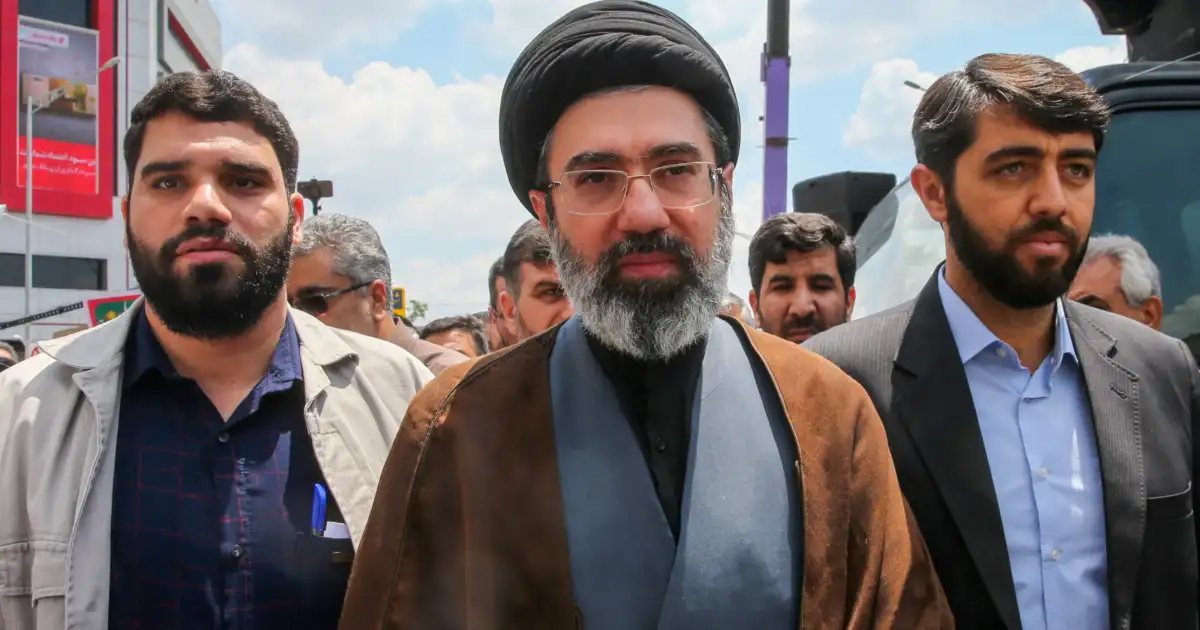

The intelligence memo declaring Iran’s new Supreme Leader, Ayatollah Mohammad Bagher Ghalibaf, “unconscious” in Qom is not merely intelligence; it is a brazen act of psychological warfare, a transparent attempt to gaslight the American public and pave the way for further geopolitical mischief. This is propaganda, pure and unadulterated, designed to manipulate perception and justify escalation.
This conveniently timed leak doesn’t just smell rotten; it reeks of desperation and calculated deceit. It’s a classic play from the well-worn intelligence playbook, dusted off and deployed with all the subtlety of a sledgehammer. The message is clear: Iran is crumbling from within, its leadership in disarray, ripe for exploitation. But anyone with a modicum of critical thinking can see through this charade.

The “Unconscious Leader” Ploy: A Tired Tactic, Reheated
An unnamed intelligence memo, conveniently devoid of verifiable sources, claims Ghalibaf is incapacitated, supposedly unable to run a “war-torn” country. This bombshell drops just days after the death of his predecessor, Ayatollah Ali Khamenei. The timing isn’t just perfect; it’s suspiciously, almost comically, perfect. This isn’t coincidence; it’s orchestration.
This report surfaced within the last 48-72 hours, citing an unnamed memo whose authenticity is not just questionable but outright dubious. It screams of a setup, a pre-packaged narrative designed to achieve specific geopolitical objectives. Let’s break down the convenient bullet points:
- Who: Ayatollah Mohammad Bagher Ghalibaf.
- What: Reportedly “unconscious” and unable to govern.
- Where: The holy city of Qom, Iran.
- When: Within days of assuming the mantle of Supreme Leader.
- Why: To destabilize Iran, say the memo’s shadowy proponents.
But let’s be brutally honest: this isn’t about Ghalibaf’s health, nor is it about the welfare of the Iranian people. This is about shaping public opinion, laying the psychological groundwork for something far more sinister. It’s about manufacturing consent for future interventions, dressed up as benevolent assistance to a “collapsing” nation.
The Public Sees Through the Smoke and Mirrors – Are You Listening?
Thankfully, the public, particularly those who haven’t swallowed the mainstream media’s narrative whole, isn’t buying this nonsense. Social media platforms like Reddit and X are ablaze with skepticism, users rightly calling it a “psyop theater.” They see it for what it is: a desperate, transparent move by those who benefit from chaos.
As one perceptive user on X (formerly Twitter) succinctly put it, “Mojtaba’s ‘coma’ is just a deepfake vacation.”
The sarcasm is palpable, and for good reason. People are weary of these transparent tricks, these fabricated stories designed to manipulate their perceptions. They recognize a propaganda piece when it’s shoved down their throats.
Why now? Why this specific, critical juncture? President Trump has been making increasingly strong statements regarding Iran, and we are undeniably in a state of active, albeit undeclared, conflict. This “leak” serves a clear, undeniable purpose: to justify further escalation, to soften the ground for more aggressive posturing, and to convince us that Iran is weak, vulnerable, and begging for intervention. It’s a classic bait-and-switch, and we’d be fools to fall for it.
The Real Beneficiaries of This “Leak”: A Circle of Vultures
This alleged incapacitation doesn’t serve the Iranian people; it serves very specific, self-interested groups. It’s not about stability; it’s about power, and the vultures are circling.
Hardline factions within the Revolutionary Guard Corps (IRGC) stand to gain immensely. A perceived power vacuum allows them to consolidate control, to shape policy without the oversight of a strong, unified leader. This strengthens their already formidable grip on the nation, pushing Iran further into the embrace of its most extreme elements.
External adversaries like the US and Israel also benefit from this narrative. A weakened Iran is not just an easier target; it’s a justification for increased pressure, for more sanctions, for more covert operations, and for greater interference in its internal affairs. It’s a green light for those who seek to destabilize the region for their own strategic gains.
The true victims, as always, are the Iranian populace. They face increased instability, a further erosion of their already precarious daily lives. This “news” only adds to their misery, diverting attention from their legitimate grievances and focusing instead on elite power games. The focus should be on their suffering, their aspirations for freedom and dignity, not on manufactured crises designed to serve external agendas.
History Repeats: Health Scares and Succession Struggles – A Perpetual Cycle
Iran has a long, fraught history of these kinds of rumors. The declining health of Ayatollah Khomeini led to intense maneuvering behind the scenes. Ayatollah Khamenei’s various health scares consistently sparked speculation and infighting. The system, by design, is opaque, and this opacity breeds conspiracy, whispers, and deliberate disinformation.
The Assembly of Experts, theoretically responsible for selecting the Supreme Leader, operates under a shroud of secrecy. Their actions, their deliberations, and their ultimate decisions are rarely transparent. This alleged health crisis merely highlights that inherent opacity, exposing how fragile the system can be, or, more accurately, how easily it can be manipulated by powerful factions both within and outside Iran.
This “unconscious leader” narrative is not new; it’s an old trick, a well-worn tactic used to sow doubt, to justify aggression, and to prepare the ground for intervention. We have seen it before, and we are seeing it again. To ignore the pattern is to invite disaster.
The “War-Torn” Narrative: A Convenient, Dangerous Label
The memo’s casual labeling of Iran as “war-torn” is not just vague; it’s deliberately misleading. What does “war-torn” actually mean in this context? What specific conflicts are we talking about? What is the actual, measurable impact on the Iranian people? This phrase is thrown around with reckless abandon, a convenient catch-all to paint a picture of perpetual chaos.
This vague, generalized term allows for broad, sweeping generalizations that strip away nuance and context. It paints a picture of a nation in utter disarray, a narrative that makes intervention seem not just palatable but necessary. It softens the ground for more military action, more sanctions, and more suffering. It’s a linguistic weapon, wielded to justify aggression.
The mainstream media, often complicit in this charade, frequently ignores the specifics, the human cost, and the complexities of the situation. They simply repeat the label, turning “war-torn” into a self-fulfilling prophecy, a justification for whatever geopolitical machinations are being cooked up. This isn’t just lazy reporting; it’s dangerous rhetoric that fuels conflict and obscures the truth.
The “So What” For Ordinary People: Your Wallet, Your Peace of Mind
Why should you, the ordinary citizen, care about Ghalibaf’s alleged coma? Because this isn’t some distant, abstract issue. It impacts your wallet, your peace of mind, and global stability in profound ways.
- Regional Instability: Iran is not an isolated island; it is a pivotal player in one of the world’s most volatile regions. Instability there inevitably cascades into chaos elsewhere, leading to more conflicts, more refugee crises, and more human suffering.
- Oil Markets: Iran remains a significant oil producer. Any uncertainty, any perceived threat to its stability, sends shockwaves through global oil markets, driving up prices. You pay more at the pump, your groceries cost more, and your cost of living skyrockets. This is not theoretical; it is economic reality.
- Human Rights: Power struggles and external pressures invariably lead to increased repression. Ordinary Iranians, already struggling under a rigid regime, face even worse conditions. Their voices are silenced, their freedoms curtailed, and their aspirations for a better future are crushed under the weight of geopolitical maneuvering.
- Nuclear Program: The Supreme Leader is the ultimate arbiter of Iran’s controversial nuclear program. Any leadership change, especially one fueled by manufactured crises, could drastically alter its trajectory, with colossal international implications for proliferation and regional security.
This isn’t merely an Iranian problem; it’s a global problem with tangible consequences for everyone. And we are being fed a convenient, easily digestible story designed to obscure the truth and manipulate our consent.
The Illusion of Unity Shattered: A Game of Thrones in Qom
This report, whether fabricated or rooted in a kernel of truth, shatters an illusion: the illusion of a stable, unified Iranian leadership. It exposes the cracks, reveals the vulnerabilities, and lays bare the intense power struggles that define the Iranian political landscape. It’s a high-stakes “Game of Thrones” playing out in the holy city of Qom, with clerics, generals, and shadowy intelligence agencies vying for control.
In this brutal game, the common people are nothing more than pawns, their plight ignored, their suffering deemed secondary to the machinations of power. This intel memo is not a piece of information; it is a weapon, meticulously designed to create doubt, to justify aggressive actions, and to manipulate public opinion. We must not, under any circumstances, fall for it. We must question the narrative, demand verifiable truth, and reject the manufactured consent being foisted upon us.
This is a naked, unapologetic attempt to manipulate public opinion and pave the way for further intervention. Don’t let them get away with it. Demand better, demand truth, and refuse to be a pawn in their dangerous game.
Photo: Photo by Khamenei.ir on Openverse (wikimedia) (https://commons.wikimedia.org/w/index.php?curid=47424781)
Source: Google News