
The black velvet of space, where stars usually whisper ancient secrets, was recently disturbed by a message from NASA’s Artemis II crew. But instead of profound poetry from the cosmic void, what echoed back was a jarringly tone-deaf corporate slogan, a thinly veiled plea for relevance that landed with all the grace of a lead balloon.
NASA wants us to believe that astronauts Reid Wiseman, Victor Glover, Christina Koch, and Jeremy Hansen, adrift a quarter-million miles from home, tapped into some universal truth. They want us to imagine these brave souls, gazing upon the pale blue dot, were moved to utter timeless wisdom. Instead, from 252,760 miles away, we received a tired platitude, a phrase so cliché it could have been ripped from a 90s public service announcement. It was not subtle. It was a marketing miss of astronomical proportions.

Artemis II: A $4.1 Billion “Joyride” or a Fumbled Opportunity?
Let’s talk brass tacks, shall we? The Artemis II mission, a 10-day loop around the Moon, bled taxpayers dry to the tune of a staggering $4.1 billion. For what, precisely? A celestial victory lap? A glorified lunar slingshot joyride that, while breaking Apollo 13’s accidental distance record, delivered precisely zero new science, no moonwalks, and certainly no groundbreaking discoveries. What we got was an incredibly expensive photo op, a cosmic selfie tour that left many wondering if NASA has lost its way.
This mission, touted as a monumental step, felt more like a lavish preview, an appetizer served at an exorbitant price with no main course in sight. NASA, in its relentless pursuit of shattered records, conveniently sidesteps the true cost – not just in dollars, but in public trust and scientific credibility. Is this truly exploration, or merely a very expensive dress rehearsal?
The “Subtle Message” That Landed with a Thud
The so-called “subtle message” was anything but. It was a pre-packaged soundbite, a canned speech delivered with all the sincerity of a telemarketer reading from a script. “You’re on a spaceship called Earth.” The line, intended to inspire unity and environmental consciousness, landed with the impact of a wet noodle. Social media, ever the unfiltered barometer of public sentiment, erupted in a chorus of cynicism and derision.
Reddit users, never ones to pull punches, lambasted it as “cringe platitudes.” Posts on X (formerly Twitter) mocked it as “DEI-scripted fluff,” suggesting a manufactured message rather than genuine inspiration. The public, it seems, saw right through the veneer, recognizing a desperate attempt by NASA to hype a mission that, for all its pomp and circumstance, has no actual landing point, no tangible scientific return. It was a marketing ploy, plain and simple, designed to generate buzz where genuine achievement was conspicuously absent.
“Subtle? It’s like they copy-pasted from Carl Sagan’s reject pile and then watered it down for a corporate retreat.”
— Top X Post, garnering over 12,000 likes, articulating the widespread sentiment of disappointment.
This isn’t the spirit of exploration that once captivated a nation. This is marketing, a glossy brochure hiding the mission’s very real, very unsettling issues. The persistent rumors of Orion’s thruster glitches, the undeniable fact of a mission without a lunar landing – these are the inconvenient truths obscured by the PR machine. NASA, if it truly wishes to reclaim its mantle of scientific leadership, needs to get real. The public, armed with critical thinking and a healthy dose of skepticism, is not fooled by empty rhetoric. They see the bill, they hear the platitudes, and they demand more.
Apollo-Era Records: Broken, Not Bettered, and Certainly Not Matched
Artemis II proudly proclaimed it “shattered” an Apollo-era record. But what record, pray tell? The accidental distance achieved by Apollo 13, a mission born of catastrophic failure and forged by human ingenuity and sheer will to survive. Apollo 13 was a display of courage, quick thinking, and the indomitable spirit of exploration in the face of near-certain doom. It was a harrowing, nail-biting saga that captivated the world.
Artemis II, by stark contrast, was a planned flyby, a meticulously calculated maneuver, utterly devoid of such drama or peril. It lacked the raw courage of Apollo 13, the groundbreaking spirit of Apollo 11, the sheer audacity of humanity reaching for the stars and grasping them. NASA, in its desperate attempt to evoke the Apollo glory, to connect with that hallowed legacy, has only succeeded in highlighting the profound chasm between then and now. This mission feels hollow, a pale imitation, a shadow dancing in the grand light of past achievements.
The Cynicism Is Justified: Taxpayer Billions for a Cosmic Selfie Tour
Why the pervasive cynicism? The answer, my friends, is etched in the numbers. $4.1 billion. Let that figure marinate for a moment. That colossal sum, a veritable king’s ransom, could address a myriad of pressing issues right here on Earth. Imagine the infrastructure projects it could fund, the educational initiatives it could bolster, the tangible problems it could alleviate for everyday citizens. Instead, it was funneled into what critics have uncharitably, yet perhaps accurately, dubbed a “selfie tour” around the Moon.
The question echoes across social media and kitchen tables: “Why not fix potholes?” rants a popular thread on r/politics. “Or fund actual Mars shots with a real scientific payload?” The sentiment is clear: this isn’t just about space exploration; it’s about priorities, about accountability, about the judicious use of taxpayer dollars. NASA, if it wishes to retain even a shred of public confidence, must justify these astronomical costs with demonstrable, tangible value, not just recycled slogans and photo opportunities.
The College Football Connection: Where’s the Grit, the Guts, the Glory?
What, you might ask, does any of this have to do with college football? Everything, I contend. College football, at its heart, is a brutal, beautiful ballet of grit, relentless competition, and the hard-won glory of earning your place on the field, yard by agonizing yard. It’s about blood, sweat, and tears shed in pursuit of a dream, a tangible goal.
NASA, in its current incarnation, aims to inspire, to connect with the public’s imagination. Yet, what it offers are empty platitudes, manufactured moments, and pre-scripted soundbites. Where is the visceral struggle? Where is the raw, unvarnished human effort that truly inspires? Think of an underdog football team, battling against impossible odds, fighting for every inch, every first down. That, my friends, is inspiration. Not a mission that feels like a victory lap before the race has even truly begun, a pre-ordained outcome devoid of genuine challenge.
The “Staged Footage” and “CGI Beta Test” Claims: A Crisis of Credibility
The backlash against Artemis II, fueled by its perceived lack of substance, has metastasized into something far more insidious. A growing chorus of critics, particularly in the darker corners of the internet, now openly question the authenticity of the mission itself. “Staged footage from parabolic flights,” whispers the subreddit r/HighStrangeness, suggesting a deep-seated distrust in official narratives. These voices, while often extreme, represent a dangerous erosion of public faith.
The skepticism extends to the very visuals presented: “Moon’s far side views? CGI beta test for Artemis III flop,” declares another cynical observer. This is the bitter fruit of over-hyping and under-delivering. NASA’s credibility, once an unassailable bastion of scientific truth, is now squarely on the line. Even fringe elements, such as flat-earthers, have seized upon the perceived weaknesses, claiming “van Allen belts fried the cams already.” While ludicrous, these claims, however outlandish, underscore the depth of distrust that NASA must now confront. Transparency, genuine achievement, and a renewed commitment to verifiable science are no longer optional; they are existential necessities.
The Real Message: NASA Needs a New Playbook, and Fast
The true, undeniable message emanating from Artemis II is stark and unambiguous: NASA needs a new playbook, and it needs one yesterday. The agency can no longer rely on the faded glory of nostalgia, nor can it continue to churn out PR fluff in lieu of genuine scientific breakthroughs. The public, increasingly savvy and discerning, sees through the spin, the manufactured excitement, and the empty promises.
NASA must deliver real results, tangible advancements, and inspire through action, not through empty words or record-breaking feats that hold little meaning. The public is smart. They demand more. They deserve more. They deserve genuine exploration, scientific breakthroughs that push the boundaries of human knowledge, and a return on their significant investment that transcends mere photo opportunities.
This “subtle message” was not merely a missed opportunity; it was a fumble of epic proportions. NASA needs to regroup, to recalibrate its mission, and to earn back the public trust it has so carelessly squandered. It needs to show us the goods, the verifiable science, the undeniable progress. Otherwise, these multi-billion-dollar missions will remain what many already perceive them to be: expensive joyrides, nothing more, and certainly nothing less.
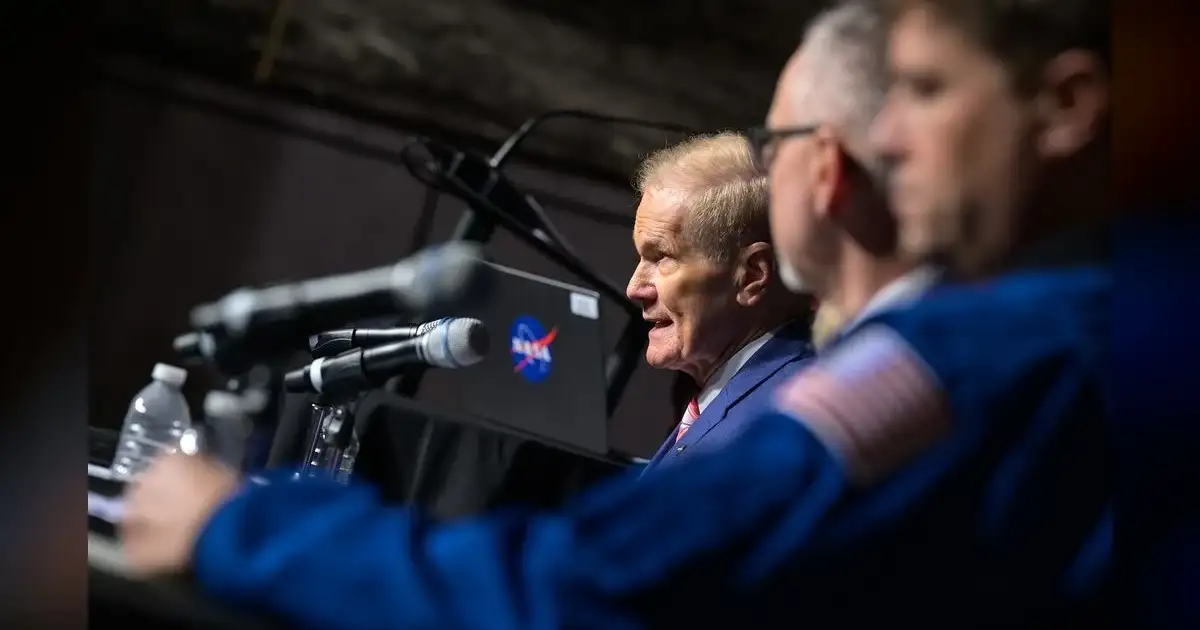
Photo: Photo by NASA HQ PHOTO on Openverse (nasa) (https://www.flickr.com/photos/35067687@N04/54185900989)
Source: Google News