
The conservative movement, often characterized by its outward unity, is currently grappling with a profound internal conflict. This clash is starkly illuminated by Tucker Carlson’s recent, scathing critique of former President Donald Trump’s Easter message.
This isn’t merely a political disagreement; it’s a fundamental clash over leadership, faith, and the very soul of American conservatism, with global implications.

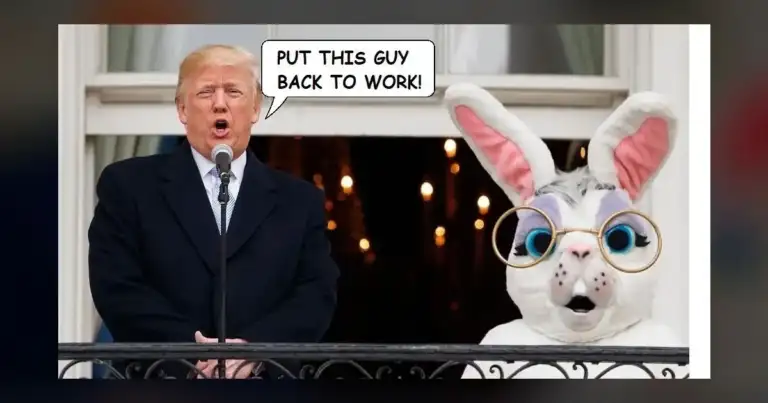
President Trump’s recent Easter statement, delivered via Truth Social, ignited this firestorm. His post, an expletive-laden broadside against Iran and its leadership, notably included the phrase “Praise be to Allah.”
This seemingly innocuous inclusion, particularly on a Christian holiday, immediately sparked intense controversy and served as the catalyst for Carlson’s unprecedented rebuke.
- President Trump’s Easter Message: An expletive-laden post on Truth Social.
- Target: Iran and its leadership, amidst escalating geopolitical tensions.
- Controversial Phrase: Included “Praise be to Allah,” raising questions about religious context and intent.
- Date: Easter Sunday, March 31, 2026, adding a layer of religious significance to the political statement.
- Platform: Truth Social, President Trump’s preferred social media platform, ensuring direct communication with his base.
This incident transcends the typical political squabble. It lays bare a growing ideological chasm within the Republican Party, pitting unwavering loyalty against a more principled, albeit critical, stance.
Carlson’s critique is not just a challenge to Trump’s rhetoric; it’s a direct assault on his perceived authority and a demand for moral accountability from conservative leadership.
Carlson’s Blistering Rebuke: “We Are Not God”
Tucker Carlson’s response was both immediate and unsparing. He dedicated a significant portion of his broadcast to meticulously dissecting Trump’s words, culminating in the powerful declaration, “We are not God.”
This was far more than a theological debate; it was a strategically executed political broadside, aimed squarely at what Carlson perceived as Trump’s hubris and the dangerous conflation of divine will with political objectives.
Carlson articulated a profound discomfort with the notion of any leader, no matter how influential, invoking religious authority in the context of geopolitical conflict. He questioned the morality of weaponizing faith for vengeful ends, a stance that resonated deeply with a segment of conservative viewers who prioritize spiritual integrity over political expediency.
This forced a critical conversation about the boundaries of leadership, faith, and the proper role of religious language in public discourse.
“When you start talking about God’s will in terms of geopolitical conflict, you’ve gone too far. We are not God,” Carlson stated forcefully, his voice imbued with conviction. “No leader, no matter how powerful, should ever claim divine mandate for war. Such pronouncements are not only blasphemous but profoundly dangerous.”
While Carlson has previously offered nuanced critiques of Trump, this direct and public denunciation marks an unprecedented escalation in their relationship. It signals a potential realignment within the conservative media landscape, where even the most steadfast allies are now willing to challenge the former President.
MAGA World Explodes: Loyalty Tested and Fractured
The reaction from President Trump’s fervent base was, predictably, immediate and visceral. Loyalists across Truth Social and X launched a furious counterattack against Carlson, branding him a “Judas” and a “deep state grifter.”
This outpouring of indignation underscores the intense, almost cult-like, personal loyalty that Trump commands, where any criticism, regardless of its merit, is often perceived as an act of betrayal.
Many within the MAGA movement quickly highlighted Carlson’s long history of staunch support for Trump, viewing his recent critique as an unforgivable defection. “Tucker defended Trump daily for 11 years, now this? Glowie confirmed,” one widely circulated X post declared, reflecting the all-or-nothing mentality that often characterizes Trump’s political machine.
The term “glowie” is a derogatory slang term for an undercover agent or informant, suggesting Carlson is a plant working against Trump.
Tucker defended Trump daily for 11 years, now this? Glowie confirmed.
— SomeMAGAGuy (@someMAGAguy) March 31, 2026
The palpable anger emanating from this segment of the conservative electorate reveals the inherent difficulty, and indeed the political peril, of criticizing Trump from within the movement. Any deviation from the established narrative is often met with swift and severe condemnation, hindering internal debate and potentially undermining party unity at a crucial juncture.
The Iran Context: War on Easter and the Peril of Conflation
President Trump’s controversial Easter message was not delivered in a vacuum. It emerged amidst rapidly escalating tensions with Iran, a nation with which the United States and Israel had recently engaged in military strikes on February 28, 2026.
This ongoing conflict, particularly concerning the strategic Strait of Hormuz, provides a critical backdrop to Trump’s rhetoric and Carlson’s subsequent outrage.
Trump’s post, by linking a solemn religious holiday with aggressive military action and invoking a phrase associated with Islam, created a dangerous conflation of faith and state power. This blurring of lines is precisely what incensed Carlson, who argued that such rhetoric not only risks alienating religious conservatives but also dangerously escalates an already volatile international situation.
The Middle East is a powder keg, and such religiously charged language, particularly from a former U.S. President, can have unpredictable and severe consequences.
While the conflict in the Middle East demands careful diplomatic navigation, President Trump’s rhetoric, in Carlson’s view, only serves to add fuel to an already raging fire. Carlson’s critique, therefore, extends beyond mere political disagreement; it touches on the profound theological and ethical implications of using religious language to justify or even glorify geopolitical aggression.
He questioned the wisdom, and indeed the morality, of such aggressive and religiously charged pronouncements from a figure of immense political influence.
Beyond the Headlines: The “AI Grift” and “Psyop” Theories
The public reaction to Trump’s Easter message and Carlson’s response was further complicated by a wave of wild speculation and conspiracy theories. Many online, particularly on platforms like Reddit and various social media forums, questioned the very authenticity of Trump’s post.
Some posited that it was an “AI grift,” suggesting artificial intelligence was used to generate the controversial content, while others labeled it a “White House psyop,” implying a deliberate psychological operation designed to manipulate public opinion. This pervasive skepticism highlights a deep and troubling mistrust in traditional media and official narratives.
Compounding this confusion, malicious actors and scammers quickly capitalized on the event, creating and disseminating fake videos, doctored images, and fabricated messages. This deliberate misinformation campaign further blurred the lines between reality and deception, making it increasingly difficult for the public to discern truth from falsehood.
The readiness with which people embraced the idea that Trump’s post might be a fabrication is profoundly telling, reflecting a cynical view of contemporary politics where manipulation is often assumed to be at play. This erosion of trust in information sources poses a significant threat to informed public discourse and democratic processes.
The Schism: A New Conservative Divide?
Carlson’s bold move could very well signal the genesis of a new, profound schism within the conservative movement. This is not simply a disagreement over policy; it is a fundamental battle for the very soul of conservatism itself.
Is the movement defined by unyielding, unquestioning loyalty to a single individual, even when that individual’s actions or words contradict long-held conservative principles? Or is it about upholding core values and ethical standards, even when doing so requires challenging powerful figures?
Carlson has meticulously cultivated an image as an intellectual provocateur and a fearless truth-teller, often positioning himself as a voice of reason against perceived establishment narratives. His direct attack on Trump’s Easter message aligns perfectly with this persona, allowing him to present himself as a principled leader willing to challenge even the most sacred cows within the conservative ecosystem.
He is, in essence, attempting to lead a segment of the conservative movement away from what he perceives as blind allegiance towards a more ideologically grounded approach.
This emerging split is far from theoretical; it carries tangible political consequences. A fractured conservative base could significantly impact future elections, potentially reshaping the Republican Party’s internal dynamics and its broader electoral strategy.
The internal struggle for direction and definition is now undeniably out in the open, and its reverberations will likely be felt for years to come.
Consequences for Global Affairs: A Unified Front Undermined
This internal American political drama, while ostensibly domestic, carries significant international implications. President Trump’s statements, particularly those concerning nations like Iran, are scrutinized meticulously by global allies and adversaries alike.
They serve as crucial indicators of American intent and stability, and any perceived internal discord can have far-reaching effects.
Carlson’s public critique, by exposing deep divisions at the highest echelons of conservative thought, inevitably weakens America’s unified front on the global stage. It signals to international observers that there is a lack of consensus, potentially complicating foreign policy initiatives and emboldening rival nations.
The world requires clear, consistent, and coherent leadership from the United States, particularly in times of heightened geopolitical tension. This public spat, however, offers neither, instead fostering an environment of uncertainty and unpredictability.
Such internal disarray is particularly detrimental given the ongoing and volatile conflict in the Middle East. A perceived lack of unity within the U.S. political establishment can be exploited by adversaries, making diplomatic resolutions more challenging and potentially escalating existing conflicts.
The stability of global affairs often hinges on the perceived strength and cohesion of major powers, and this public disagreement undermines that perception.
What’s Next for Trump and Carlson? The High-Stakes Gamble
This direct confrontation places both President Trump and Tucker Carlson at a critical crossroads. President Trump now faces a significant challenge to his moral authority and his undisputed leadership within the conservative movement.
His response, or lack thereof, will be closely watched by his base and his critics alike.
Carlson, on the other hand, has taken a high-stakes gamble, risking alienation from a substantial portion of his audience who remain fiercely loyal to Trump. His decision to prioritize what he views as principled criticism over unwavering allegiance could either elevate his standing as an independent voice or marginalize him within the broader conservative media landscape.
Will Trump retaliate with his characteristic ferocity, perhaps through a Truth Social tirade? Or will Carlson double down on his critique, further solidifying his position as a dissenting voice? The coming weeks will undoubtedly reveal the true depth and potential permanence of this ideological divide.
This is not merely a battle for ratings or influence; it is a profound struggle for the future direction of American conservatism.
This incident has exposed a raw nerve within the Republican Party, touching upon fundamental questions of religion, power, war, and moral leadership. It forces a reckoning over who ultimately defines the conservative movement and its values.
This public clash, therefore, might not just be a fleeting news cycle; it could very well mark the beginning of a significant political realignment, the consequences of which will resonate for years to come.
Source: Google News