
The spectral shadow of Jeffrey Epstein, a name synonymous with depravity and elite complicity, once again stretched across the American consciousness this week, not through fresh revelations, but a calculated denial. It began with Megyn Kelly, a journalist whose career has been forged in the crucible of public scrutiny, tearing into former First Lady Melania Trump. Her vehement, almost performative, denial of any association with the late financier sparked not reassurance, but immediate fury and a profound, widespread public distrust that felt less like surprise and more like a weary sigh.
Kelly’s fiery comments erupted after a statement from Melania Trump, delivered through a spokesperson on , unequivocally rejected any ties to Epstein. The former First Lady’s team framed this unexpected declaration as a necessary response to a “recent surge in online speculation,” a vague justification that only served to reignite the very rumors it sought to extinguish, connecting her to Epstein’s infamous, predatory circle.

Megyn Kelly, never one to shy from a confrontation, especially when it involves the Trump orbit, wasted no time. On her daily SiriusXM program, “The Megyn Kelly Show,” she didn’t just question; she excoriated the timing. Why now, she demanded, was such a definitive denial suddenly imperative? She branded the statement “bizarre” and “shocking,” words that, coming from Kelly, carry a particular weight. Her voice, sharp and incredulous, echoed the public’s immediate skepticism.
“Why now?” Kelly stated, her tone dripping with suspicion. “This statement is completely out of left field. It feels like someone is trying to get ahead of something.”
She didn’t merely suggest the timing was suspicious; she practically hammered it into the public square as an undeniable truth. Her words, delivered with characteristic conviction, immediately ignited a firestorm across social media, pulling the enduring shadow of the Epstein scandal back into the harsh glare of the present moment. This public showdown between two prominent figures forced a fresh, cynical look at the public’s deep-seated distrust of high-profile denials, especially those that feel so conspicuously timed.
The Echo Chamber of Cynicism: A Scripted Spectacle?
The internet, a boundless repository of collective skepticism, did not merely “explode” with eye-rolling cynicism following Kelly’s remarks; it collectively recoiled. Netizens, with their characteristic blend of wit and vitriol, branded the entire saga a “scripted circus,” a meticulously orchestrated distraction designed to bury bigger, more pressing scandals. The reaction was swift, brutal, and remarkably unified in its suspicion.
On Reddit, the digital coliseum of public opinion, users savaged Kelly with a ferocity usually reserved for political rivals. They dismissed her as a “has-been grifter chasing relevance,” her “dumbfounded” rant nothing more than “performative outrage” perfectly timed for podcast clicks. The question wasn’t just why Epstein was being dragged up now, but who benefited from it, especially when the specter of Iran’s nukes currently dominated global headlines, a far more existential threat than a decade-old scandal.
X, formerly Twitter, erupted in a cacophony of sarcastic threads and biting memes. One viral post, retweeted thousands of times, cut to the cynical heart of the matter:
“Melania’s ‘shock statement’ is peak damage control theater. Epstein files drop crumbs, she denies like it’s 2019, Kelly plays faux-shocked referee. Coincidence?”
This wasn’t just commentary; it was an indictment of a public sphere perceived as little more than a stage for political theater. Another widely shared meme depicted Melania not as a former First Lady, but as a Stepford wife puppet, her eyes vacant, her expression fixed. The caption, “PR lesson? More like deep-state script flip to distract from President Trump’s Iran bluster,” perfectly encapsulated the public’s profound suspicion. People felt manipulated, their intelligence insulted, as if a magician were waving one hand while the other worked a more insidious trick.
The backlash, while splitting along partisan lines, united in its overarching suspicion. Diehard MAGA supporters, ever vigilant against perceived slights to the Trump family, rushed to Melania’s defense. They painted her as a “victim of deep state smears,” accusing Kelly of “betrayal,” branding her a “Fox reject turned Never-Trump snake.” For them, Kelly’s critique was not journalism, but a continuation of old feuds, a political hit job designed to destabilize the former First Family.
Meanwhile, left-leaning users, usually at odds with the Trump camp, found a rare moment of schadenfreude, cackling at the infighting. They theorized the entire spectacle was a calculated “Trump family operation” designed to launder any potential Epstein ties before they could fully emerge. One popular theory, circulated with a knowing wink, suggested, “Why now? To preempt unsealed docs proving Melania modeled for Maxwell’s yacht parties.” The cynicism, from both sides, was not just palpable; it was an oppressive weight, smothering any possibility of genuine discourse.
Even on TikTok, the realm of ephemeral trends and viral clips, Kelly’s segment was amplified, often overlaid with clown filters or dramatic sound effects. Comments poured in, not just calling it “bizarre,” but adding a trenchant critique of the media economy: “Nah, it’s the grift economy: revive dead pedo drama for ad revenue while real news (Iran strikes) gets memory-holed.” The consensus was chillingly clear: the timing felt manufactured, a puppet show designed to divert the public gaze from more uncomfortable truths.
The Geopolitical Chessboard: Iran and Calculated Distractions
The public’s immediate, almost visceral, question was not merely “Why now?” but “Why this now?” The timing of Melania Trump’s statement and Kelly’s subsequent, equally explosive reaction felt deeply, almost obscenely, suspicious, especially given the current geopolitical climate. The United States, far from enjoying a period of peace, found itself actively engaged in a significant military conflict, a reality that cast the Epstein drama in a particularly stark light.
Since , the United States and Israel have launched a series of strikes against Iran, an ongoing armed conflict that has escalated dramatically. The Strait of Hormuz, a chokepoint for a significant portion of the world’s oil supply, has become a major flashpoint, a volatile arena where the stakes are not just regional, but global. This is not a minor skirmish; it is a war, with all its attendant anxieties and potential for catastrophic escalation.
Against this backdrop of imminent global instability, many online commentators found it utterly impossible to believe the timing of the Epstein story was random. They pointed to the gravity of the US-Iran War 2026, a conflict that rightly dominates news cycles and affects global stability. Yet, a decade-old scandal, one that had largely faded from the daily headlines, was suddenly front and center, demanding attention. It felt less like news breaking and more like a narrative being forcefully injected.
The public’s theory of a “deep-state script flip” gained undeniable traction, not just as a conspiracy, but as a plausible explanation for the bewildering priorities of the news cycle. They believed the Epstein drama was a deliberate, cynical distraction, aimed squarely at diverting attention from President Trump’s foreign policy decisions and the escalating conflict he was presiding over. “It’s classic misdirection,” one Reddit user posted, articulating a widespread sentiment. “They’re trying to control the narrative, plain and simple.”
The notion that powerful figures manipulate news cycles to serve their own agendas is, regrettably, not new. However, the intensity of this particular reaction was striking, underscoring a deep, corrosive erosion of public trust. People no longer passively consume information; they dissect it, searching for hidden agendas, for the strings attached to the puppet show. They are not just skeptical; they are actively suspicious, conditioned by years of political maneuvering and media sensationalism.
The ongoing conflict with Iran is a matter of life and death, involving military action, geopolitical strategy, and the very real threat of global economic upheaval. The public, with a collective groan, wondered why such a pressing, existential issue would suddenly take a backseat to a scandal that, while horrific, felt like a ghost from the past. They saw the Epstein story as a convenient diversion, a carefully deployed smoke screen designed to diffuse public scrutiny from the war drums beating louder and louder.
Kelly’s Calculated Re-Entry: A Play for Relevance?
Megyn Kelly’s career, a rollercoaster of high-profile triumphs and equally public departures, has always been defined by her ability to command attention. Her current role on SiriusXM keeps her in the public eye, but her ferocious reaction to Melania’s statement was widely interpreted not as genuine shock, but as a calculated, almost theatrical, move to boost her own relevance in a crowded media landscape.
“Kelly is a has-been grifter chasing relevance,” a commenter on X wrote, a sentiment echoed across platforms. Users didn’t just accuse her of “performative outrage”; they analyzed it, suggesting it was perfectly “timed for podcast clicks,” a cynical assessment that painted Kelly as an opportunist, exploiting a sensational topic for personal gain. This view, harsh as it was, reflected a broader distrust of media personalities who blur the lines between journalism and entertainment.
Kelly’s history with President Trump is undeniably complex, marked by famous clashes during the 2016 campaign and her high-profile departure from Fox News. For many online observers, her current commentary was not a new development, but a continuation of old feuds, a strategic maneuver to remain in the spotlight by engaging with a narrative she knew would generate buzz. Was she genuinely “dumbfounded” by Melania’s statement, or was she leveraging a sensational topic, one with proven clickbait potential, to her advantage? The public, jaded by years of media cycles, overwhelmingly concluded it was the latter, viewing it as a strategic play to capitalize on a salacious story and generate maximum engagement for her show.
The “grift economy” theory, a pervasive critique of modern media, found fertile ground here. The argument is simple: controversy sells. It drives engagement, increases listenership, and ultimately, generates revenue. Regardless of the underlying truth or journalistic integrity, the spectacle itself becomes the product. Kelly, in this unforgiving view, was simply playing the game, a seasoned veteran expertly navigating the treacherous waters of public opinion to ensure her own continued visibility and profitability.
Her past as a prominent journalist, a figure once seen as a formidable interviewer, lends her a certain credibility. But the public’s current mood is one of profound skepticism, a suspicion that extends to even the most established voices. They suspect hidden motives, doubt authenticity, and view every strong stance through a lens of calculated self-interest. Kelly’s strong stance, instead of being seen as righteous indignation, was often viewed as precisely that: calculated, a precisely aimed dart in the ongoing, never-ending media war.
Melania’s Defense: A Desperate Pre-emptive Strike?
Melania Trump’s statement denying Epstein links was not merely scrutinized; it was dissected with surgical precision, widely dismissed as “peak damage control theater.” For many, it felt less like a genuine clarification and more like a desperate, pre-emptive strike against future revelations, a frantic attempt to get ahead of a story before it consumed her. The timing, once again, was the critical, damning detail.
The Epstein files, a Pandora’s Box of names and insidious details, have been slowly unsealed, a drip-drip of information that keeps the scandal alive and, crucially, keeps powerful figures perpetually on edge. This slow, agonizing release of documents creates an atmosphere of constant apprehension, where every new name, every new detail, sends ripples of fear through the elite. Melania’s statement, in this context, felt less like a defensive posture and more like a desperate, pre-emptive offensive, a bid to control her own narrative before it was irrevocably shaped by others.
One prevalent theory suggested she was trying “to preempt unsealed docs,” documents that might potentially implicate her, or, perhaps more subtly, simply place her in uncomfortable proximity to Epstein’s orbit. The public, fueled by years of speculation and unanswered questions, constantly anticipates new revelations, eagerly searching for connections, for the missing pieces of a grotesque puzzle. The former First Lady’s sudden, uncharacteristic public denial only intensified this speculative frenzy.
The viral “Stepford wife puppet” meme, with its chilling implication of manipulation, perfectly reflected this view. It suggested Melania was not acting independently, driven by her own concerns, but was instead following a “deep-state script,” a narrative designed to distract from President Trump’s actions regarding Iran. It was, in this cynical interpretation, a crude attempt at narrative control, a desperate gambit to deflect attention from a brewing international crisis.
Melania Trump, since leaving the White House, has largely maintained a private, almost reclusive, life. Her sudden re-emergence with such a definitive denial, especially one concerning a scandal from years past, raised eyebrows across the political spectrum. It felt profoundly out of character for her, a public figure known for her enigmatic silence, and this deviation from her usual demeanor only fueled public suspicion. People wondered, with a mixture of curiosity and dread, what compelled her to speak out now, after so long.
Was she truly worried about new, unfounded speculation? Or was there a more concrete, imminent threat lurking in the shadows? The public’s cynical take leaned heavily towards the latter, viewing her statement as a strategic, calculated move designed not just to protect her personal image, but, more importantly, to safeguard the meticulously constructed Trump brand, a brand that thrives on an aura of invincibility and moral rectitude, however illusory.
The Lingering Stain: Epstein’s Shadow and Unfinished Justice
The Jeffrey Epstein scandal continues to cast a long, malevolent shadow, a testament to the enduring power of his network of powerful friends and associates. His name remains a source of morbid fascination, a symbol of elite impunity, and the ongoing release of documents ensures the story, and the public’s demand for accountability, remain very much alive.
Epstein’s crimes were not just horrific; they were a grotesque betrayal of trust, facilitated by connections that reached the highest echelons of society. This chilling reality has created a fertile ground for suspicion, a deep-seated belief that powerful people operate above the law. Any mention of his name, even in a denial, instantly ignites debate, raises questions about who knew what, and when, and fuels a collective hunger for answers that have long been denied.
Melania Trump’s denial, irrespective of its veracity, serves to drag the focus back to this dark, unsettling chapter. It forces a re-examination of old claims, allows new theories to emerge, and, most importantly, reminds the public that many powerful figures have yet to face true accountability. The public is not just hungry for answers; they are desperate for justice for Epstein’s victims, a justice they feel has been perpetually delayed, if not outright denied.
The fact that a scandal of this magnitude can still generate such intense reactions years later is profoundly telling. It speaks volumes about the lasting impact of Epstein’s actions, the deep wounds he inflicted, and the public’s pervasive distrust of elites who seem to perpetually evade consequences. This episode highlights a bigger, more systemic issue: a pervasive feeling that justice has not been fully served, that too many questions remain unanswered, and that the powerful often escape the reckoning that awaits ordinary citizens.
Therefore, any new development, even a seemingly innocuous denial, is met not with acceptance, but with a heavy dose of skepticism, viewed through a lens of profound suspicion. The Epstein files are still being processed, still yielding new information, and this ongoing, agonizing process keeps everyone on edge. It keeps the media, and crucially, the public, vigilant, perpetually searching for any new piece of the puzzle, any crack in the edifice of silence that has protected so many.
A Bipartisan Consensus of Cynicism
The public reaction to this story, a tempest in a teapot that quickly became a hurricane of speculation, was truly fascinating. It revealed a rare, almost unsettling, moment of bipartisan agreement, a convergence of sentiment usually reserved for national tragedies. Both sides of the political spectrum, typically locked in ideological combat, expressed a deep, corrosive cynicism. Their reasons, however, differed as sharply as their political allegiances.
MAGA diehards, ever the loyal defenders of the Trump brand, defended Melania with fierce, unyielding conviction. They saw her as a victim, a target of relentless persecution. They accused Kelly of being a “Never-Trump snake,” a traitor to the conservative cause, believing her attack was part of a larger, insidious “deep state” effort designed to undermine the Trump family and, by extension, the movement they represented. For them, Melania’s denial was an act of courage, Kelly’s critique an act of betrayal.
On the other hand, left-leaning commentators, usually quick to condemn anything associated with the Trump orbit, also expressed a profound cynicism. They offered no defense of Melania; instead, they “cackled at the infighting,” viewing it as an internal struggle, a desperate attempt by the Trump camp to clean up its own messes. They theorized it was a “Trump family op,” a carefully orchestrated charade designed to pre-emptively sanitize any potential Epstein ties before they could be fully exposed, a cynical maneuver in a long game of political chess.
Despite their divergent political allegiances, both groups, in a rare moment of unity, agreed on one fundamental truth: the entire spectacle was a performance. They saw it not as genuine news, but as a strategic maneuver, a carefully constructed narrative designed to control public perception and distract from more pressing issues. This shared cynicism, this collective belief in manipulation, speaks volumes about the current state of public discourse.
It suggests a collective loss of faith in public figures, a pervasive distrust of their motives, and a widespread belief that most high-profile events are staged, designed to serve ulterior agendas. This unity in suspicion is a powerful, perhaps even terrifying, indicator. It suggests a public that feels constantly fed a curated version of reality, a version meticulously crafted to serve specific, often hidden, political and economic agendas. The trust, once a cornerstone of democratic discourse, has eroded to a point of near non-existence.
The Peril of Perpetual Outrage: A Fractured Reality
This incident, the Megyn Kelly-Melania Trump-Epstein saga, is far more than just another political spat or a fleeting media controversy. It is a stark, unsettling symptom of a larger, more insidious problem plaguing our public sphere: the relentless, suffocating saturation of perpetual outrage. Every day brings a new scandal, every public statement is met with immediate condemnation, and this constant, exhausting drama has profound, corrosive consequences for the health of our democracy.
It relentlessly erodes public faith in institutions, making it increasingly difficult to discern truth from fiction, fact from fabrication. When everything is branded a “scripted circus,” when every public figure is suspected of ulterior motives, nothing feels real, nothing can be trusted. This environment, poisoned by suspicion and performative indignation, makes it incredibly difficult for genuine journalism to thrive, for nuanced discussions to take root, or for critical issues to be addressed with the seriousness they demand.
The “grift economy,” a term that perfectly encapsulates the current media landscape, thrives on this constant churn of controversy. Sensationalism generates clicks, outrage drives engagement, and this creates a self-perpetuating feedback loop. Media personalities are incentivized to produce more drama, to fan the flames of outrage, and the public, bombarded by this relentless assault on their senses, becomes desensitized, exhausted, and ultimately, deeply cynical.
The challenge for real journalism, for those committed to truth and accountability, is immense. How does one report on genuinely important events, on wars and economic crises, when the noise of manufactured outrage drowns out all else? How does one cut through the deafening din of social media, rebuild trust in an era of weaponized information, and foster a public capable of critical thought? This episode, with its immediate, cynical reception, shows just how deeply ingrained the skepticism has become, how thoroughly distrust has permeated the collective consciousness.
When a former First Lady denies links to a notorious pedophile, it should, by all rights, be a serious, newsworthy story, demanding careful investigation and sober analysis. When a prominent journalist questions the timing of such a denial, it should be met with thoughtful consideration. But instead, it is met with a collective sigh, a knowing nod, and an instant assumption of ulterior motives. The gravity of the subject matter is lost in the performance, subsumed by the pervasive belief that everything is a game, a manipulation.
This constant state of suspicion, this ingrained cynicism, is not just disheartening; it is dangerous. It prevents real conversations, stifles genuine inquiry, and makes it harder to address the critical, often uncomfortable, issues that truly matter. It leaves the public feeling exhausted, manipulated, and ultimately, disengaged, convinced that the truth is always hidden, always obscured by layers of deceit.
The Megyn Kelly-Melania Trump-Epstein saga is a stark, almost brutal, reminder of our current media reality. It is a world where every public statement is dissected, not for its content, but for its perceived hidden agenda, where trust is scarce, and where every headline, every pronouncement, is viewed with a heavy, almost unbearable, dose of skepticism. The real cost, the profound tragedy, is a public that no longer believes anything, a populace adrift in a sea of manufactured outrage, unable to discern the genuine from the performative. What becomes of a society when its citizens can no longer trust their own eyes and ears?
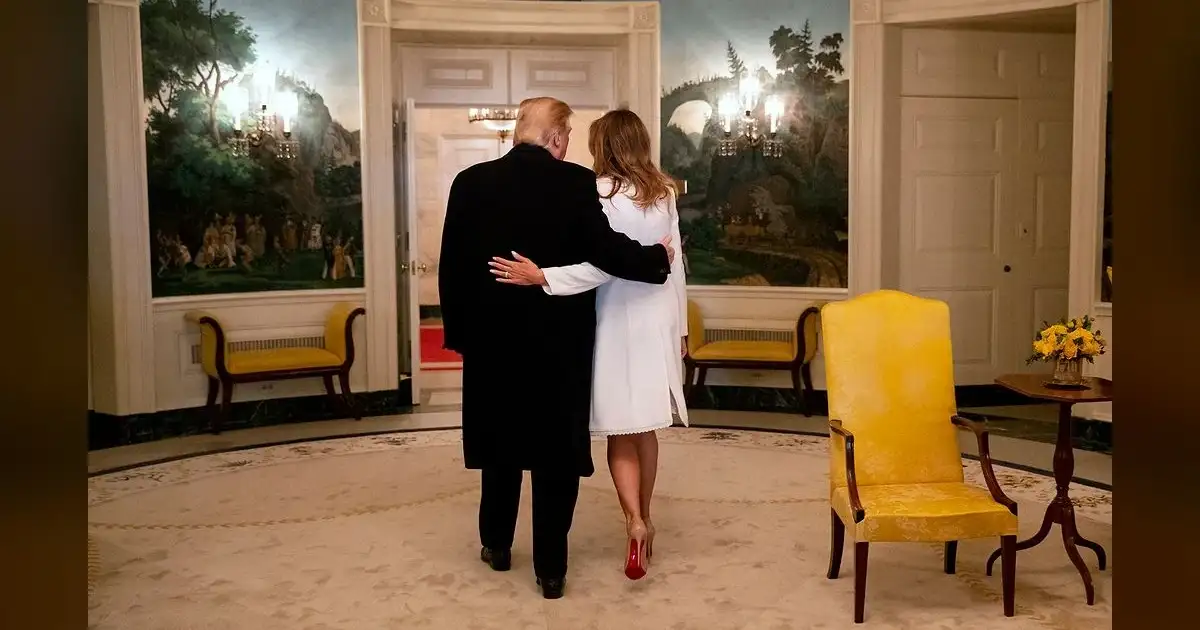
Photo: Photo by The White House on Openverse (flickr) (https://www.flickr.com/photos/148748355@N05/40449499963)
Source: Google News