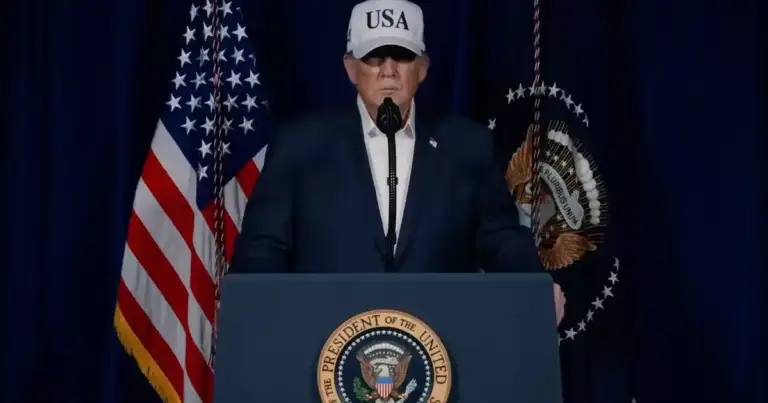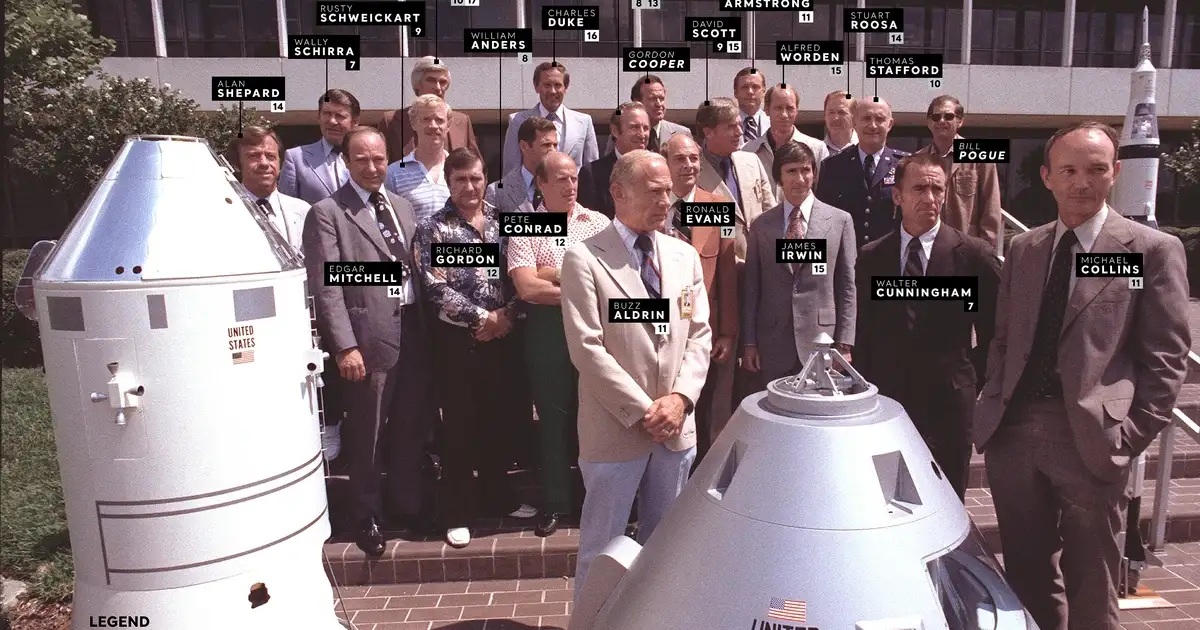

In a move as predictable as it was transparent, former President Donald Trump recently unveiled a tranche of what his administration touted as “UFO files.” The centerpiece was an Apollo 17 astronaut‘s decades-old observation of “Fourth of July fireworks” in space. Yet, despite the grand fanfare, the public’s reaction wasn’t awe, but a collective, resounding shrug—perhaps even a cynical eye-roll.
This grand reveal was less about genuine disclosure and more about distraction. It served as a desperate, transparent play for attention in a news cycle increasingly hostile to the former President. The internet’s verdict is clear: a colossal yawn, confirming that the promise of alien revelations has once again devolved into a heavily redacted letdown, a familiar tune in the Washington political orchestra.

The “Fireworks” Flop: A Recycled Non-Mystery
The newly unsealed files hinged largely on astronaut Harrison “Jack” Schmitt’s observations from the historic Apollo 17 mission in 1972. Schmitt reportedly described “jagged angular fragments” that appeared like fireworks. On paper, this phrase might conjure images of extraterrestrial technology or phenomena beyond our comprehension.
This sounds exciting, a tantalizing whisper from the vacuum of space.
However, the scientific community didn’t just quickly shoot it down; they had already debunked it decades ago. Scientific consensus long ago settled on mundane explanations for such sightings. Experts have consistently attributed these “fireworks” to common space phenomena: micrometeoroids impacting the spacecraft, shedding debris, or ice particles flaking off and catching the sunlight. These are not alien craft; they are the cosmic dust and detritus of space travel, explained and understood since the very missions themselves.
The online forums were brutal in their assessment. Reddit’s usually eager r/UFOs and r/conspiracy communities, often hotbeds of speculation, instead lit up with brutal takedowns and exasperated sighs.
Users pointed out this kind of observation has been explained for decades, not just since 1972, but practically in real-time by mission control. It was old news, repackaged with a fresh coat of political paint, designed to look like a groundbreaking revelation when it was merely a dusty artifact pulled from the archives.
Public Cynicism Reigns Supreme: The Digital Backlash
The online reaction to Trump’s “historic” UFO files release wasn’t just skepticism; it was a spectacle of cynicism and eye-rolls, a collective groan from a public weary of political theatrics. People simply aren’t buying the hype, and for good reason.
One top Reddit post, garnering a staggering 12,000 upvotes, sneered,
“Apollo 17 ‘fireworks’? That’s just space debris or lens flares – we’ve known this since 1972.”This comment perfectly encapsulates the public’s deep skepticism and their frustration at being fed information they perceive as recycled, or worse, deliberately misleading. They feel, rightly, that they are being treated to old information presented as a fresh scoop.
Users meticulously dissected the descriptions of “jagged angular fragments.” They immediately recognized obvious micrometeoroids or ice particles, not confetti from an alien party.
The mystery, if it ever existed beyond a fleeting observation, quickly evaporated under the glare of collective online scrutiny. The notion that these were anything other than natural or man-made space detritus was dismissed out of hand.
The r/skeptic community, ever vigilant, piled on, calling Trump’s declassification “90% redacted drivel.” They also noted, with a mix of amusement and disdain, that the release included recycled Apollo pictures, hardly groundbreaking material for a world hungry for genuine disclosure. This wasn’t a peek behind the curtain; it was a re-run of a show nobody asked for.
The Trump Playbook in Action: Distraction as Statecraft
This entire “UFO files” stunt doesn’t just smell like a calculated move; it reeks of it. It is a classic maneuver designed to shift attention, but from what pressing issues? That, for any seasoned political observer, is always the real question.
What critical developments or inconvenient truths was this spectacle intended to obscure?
The administration feigned transparency, attempting to project an image of pulling back the curtain on long-held secrets. Yet, the documents themselves are largely blacked out, rendering them virtually useless for any serious inquiry. This isn’t transparency; it is pure transparency theatre, a performance designed for optics rather than substance. The irony, of course, is that the heavy redactions only fuel further suspicion, rather than assuaging it.
X (formerly Twitter) quickly transformed into a sarcasm slaughterhouse. The hashtag #TrumpUFOFiles trended not with serious discussion, but with a torrent of memes, many depicting Trump wearing a tinfoil hat.
The humor was cutting, indicative of a populace that saw through the flimsy facade. It wasn’t just mockery; it was a collective expression of disbelief and frustration.
One particularly popular tweet, retweeted over 50,000 times, quipped,
“Finally, proof aliens love fireworks Or it’s Doocy’s desk prank.”This pithy remark perfectly captured the public mood, framing the entire event as a joke, a diversionary tactic unworthy of serious consideration. It underscored the widespread perception that this was nothing more than political mischief.
Even some conspiracy theorists, usually eager to embrace any hint of hidden truths, found themselves on the defensive. They cried “deep state sabotage,” questioning why there were “no Grays” or undeniable proof of alien contact. But even their ardent claims were often “ratioed” by regular users, who found the idea that it was “staged Fox theater” far more plausible. This widespread skepticism, even among those predisposed to believe in government cover-ups, points to a deep, pervasive distrust in the narrative being peddled.
Expert Dismissals and the Real Agenda: Beyond the Hype
The backlash extends far beyond the digital echo chambers of social media. Serious experts, those who genuinely understand the science and the political machinations, are dismissing the release for what it truly is: a distraction, plain and simple.
Renowned astrophysicist Neil deGrasse Tyson weighed in via CBS clips, predictably dismissing the notion of “physics-violating aliens” based on such flimsy evidence. He stated the obvious truth: there is no new, credible evidence here to challenge our understanding of the universe. Tyson, a consistent voice for scientific rigor, merely echoed what any informed person already knew.
More damningly, former AARO head Sean Kirkpatrick – an individual who was literally at the forefront of the Pentagon’s efforts to investigate unidentified aerial phenomena – called the entire exercise an “administration distraction.” This is a crucial detail. An insider, someone intimately familiar with the inner workings of Washington and the intelligence community, is openly calling out the play. Kirkpatrick knows how Washington works, how narratives are crafted, and how smoke and mirrors are deployed. His dismissal carries significant weight, stripping away any pretense of genuine disclosure.
The public fury is palpable, fueled by the gap between promised transparency and delivered obfuscation. One online comment, widely shared, summed it up best:
“Transparency my ass – War.gov/UFO is a ghost site wit.”This highlights the profound hypocrisy. The very website meant to provide information, to be the beacon of openness, is reportedly bare, a shell, a phantom. It’s not just a lack of information; it’s a deliberate emptiness, an insult to anyone genuinely seeking answers.
The Cost of Political Smoke Screens: Eroding Trust
This entire charade comes with a far more insidious cost than just wasted bandwidth. Not in dollars, but in the precious currency of public trust. The administration promised transparency, a bold step into the unknown. Instead, it delivered heavy redactions, recycled material, and a transparently cynical political maneuver.
When the government cries wolf about aliens with such flimsy evidence, people eventually stop listening. They tune out. They become increasingly cynical not just about UFOs, but about any official pronouncement, even those concerning real, pressing issues. This is the inherent danger of political stunts: they desensitize the public and erode the credibility essential for effective governance.
The focus on “fireworks” and supposed alien fragments serves as a convenient distraction from far more pressing matters. The ongoing US-Iran War 2026, a conflict with profound geopolitical implications, is a real and dangerous reality. The Strait of Hormuz remains a volatile flashpoint, threatening global energy supplies and stability. These are issues that directly affect everyday Americans, impacting their economy, security, and future. Yet, while these critical events unfold, the headlines are chasing UFOs, a trivial pursuit by comparison.
This is classic Washington. Create a spectacle, generate noise, divert attention, and hope people don’t notice what’s truly happening behind the curtain. But the public, increasingly savvy and jaded, is smarter than that. They see the play, and they are growing weary of the performance.
What Happens Next? The Lingering Aftermath
This UFO files release will not change minds. It will not unite the country. Instead, it will simply fuel more distrust, adding to the ever-growing pile of reasons why many Americans feel alienated from their political leadership. Trump’s most ardent base might cheer it on as a win, seeing it as him fighting the “deep state” or exposing hidden truths. For them, it reinforces a narrative of a leader unafraid to challenge the establishment, regardless of the substance.
But for the vast majority of Americans, it’s just another side show, another example of Washington playing games while real problems fester. The public wants tangible solutions, leaders who address economic anxieties, healthcare crises, and geopolitical instability. They do not want to hear about space debris, especially not old news presented as groundbreaking. They demand substance, not spectacle.
This release will fade quickly from the news cycle, remembered not as a moment of enlightenment, but as another failed attempt to control the narrative. The political cost of such maneuvers is not just high; it’s cumulative. It erodes faith in government, in institutions, and in the very concept of objective truth. And that, for any nation, is a far more dangerous unknown than any distant light in the sky.
Source: Google News