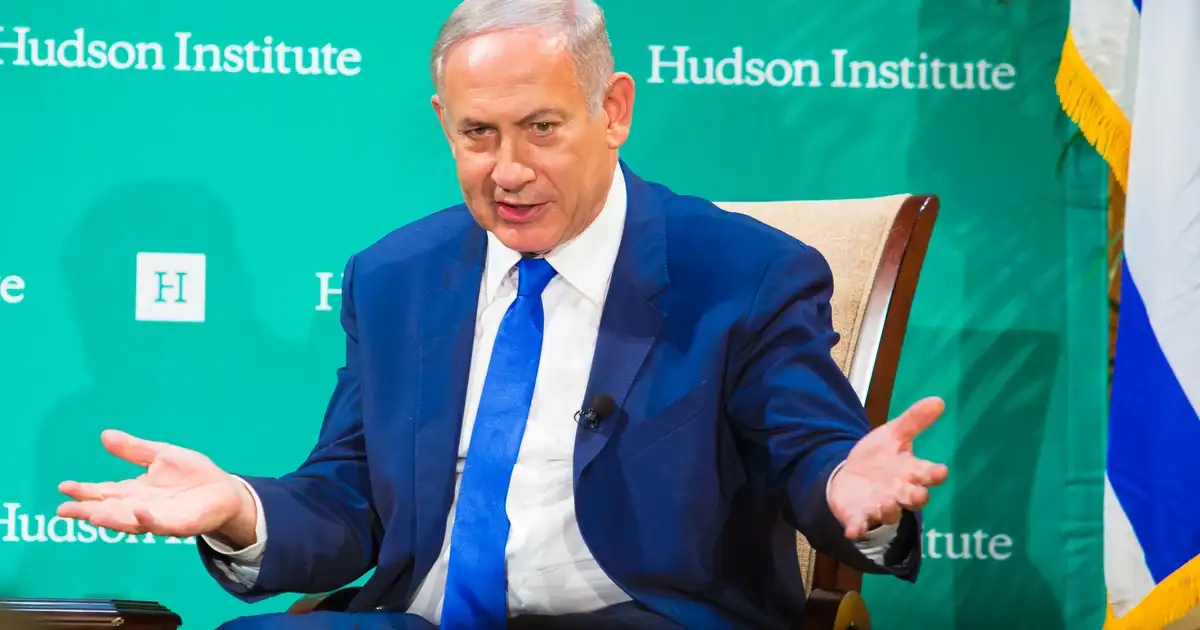

Forget diplomatic niceties. Benjamin Netanyahu just blindsided President Donald Trump with a geopolitical blitz, sending global oil prices spiraling and directly hitting every American’s wallet. This isn’t just a tactical strike; it’s a full-on assault on Washington’s Middle East strategy, igniting a powder keg with immediate, painful consequences at the gas pump.
The Israeli Prime Minister has thrown down the gauntlet. On May 8th, Netanyahu didn’t just deliver a televised address; he drew a line in the sand, unequivocally doubling down on Israel’s “absolute right to self-defense.” His declaration – “we will act alone if necessary” – wasn’t merely a message; it was a direct, unapologetic challenge hurled squarely at Washington. This defiance followed reports of Israel pushing ahead with military operations in a disputed border region, a blatant disregard for US calls for restraint. The message is clear: Israel plays by its own rules.

By May 9th, the alarm bells were deafening within the US State Department. Officials, cloaked in anonymity, voiced “deep concern” over Jerusalem’s “unilateral approach” – diplomatic speak for “we’re furious.” A senior White House aide didn’t just “slam” Netanyahu’s actions; they branded them “unhelpful” to regional stability, a damning indictment. Make no mistake: the bedrock of this alliance is fracturing under the strain.
The Diplomatic Interception
Then came the decisive blow on May 10th. Israel’s UN Ambassador, Gilad Erdan, didn’t just torpedo a proposed US-backed UN Security Council resolution; he blew it out of the water. Erdan didn’t mince words, labeling it “insufficient” and “detrimental to Israel’s long-term security.” This wasn’t a mere policy disagreement; it was a public, humiliating rejection of President Trump’s painstakingly crafted diplomatic efforts to forge a new security framework in the region. A direct slap in the face, delivered on the global stage.
The fallout? Immediate and brutal. Global energy markets reacted like a quarterback fumbling at his own goal line, the ball bouncing straight into the opposition’s hands. Brent crude oil futures didn’t just surge; they rocketed by a staggering 3.8%, closing at a painful $92.15 per barrel. West Texas Intermediate (WTI) futures were right there with them, spiking 4.2% to hit $87.90 per barrel. Analysts aren’t guessing; they’re pointing directly to the heightened Middle East geopolitical risk as the undeniable cause. Fears of a wider regional conflict or — God forbid — disrupted supply routes are no longer abstract concerns; they are staring us down, front and center.
Netanyahu’s government, as predictable as a blitz on third-and-long, frames this defiance as an absolute necessity. They assert Israel faces unique, existential threats that demand an uncompromising stance. To them, compromising security for the sake of international consensus is a non-starter. This independent posture, they declare, isn’t just a preference; it’s the only viable strategy to deter relentless adversaries. It’s a calculated gamble, but one Netanyahu clearly believes he must make.
Trump’s Strategy Under Fire
Let’s be clear about “Trump’s Iran peace proposal.” It’s not some neatly folded formal treaty. It’s the bare-knuckle strategy forged after his administration’s controversial 2018 withdrawal from the Joint Comprehensive Plan of Action (JCPOA) – the Iran nuclear deal he famously called “the worst deal ever.” This was the “maximum pressure” campaign, a relentless economic squeeze. The singular goal: bludgeon Iran back to the table for a “better deal” addressing its nuclear program, ballistic missiles, and destabilizing regional activities. This was President Trump’s meticulously crafted playbook for regional stability.
But now, that playbook isn’t just unraveling; it’s being torn to shreds right on his watch. Iran has brazenly accelerated nuclear enrichment, pushing closer to a weaponized capability. Its regional proxy activities have ramped up with alarming intensity. The current administration, under President Trump, isn’t just struggling; it’s flailing to revive any credible diplomatic path. Netanyahu’s latest defiance isn’t just exposing cracks; it’s blowing gaping holes in the entire strategy.
President Trump himself, ever the vocal critic, has already taken to the podium, issuing statements that implicitly – and sometimes explicitly – declare his “maximum pressure” campaign the only effective strategy. He insists the current instability is proof positive his approach was the right one. But here’s the inconvenient truth: this instability is unfolding now, with him in office. This isn’t a former president watching from the comfortable sidelines; this is the sitting President, the architect of the JCPOA withdrawal, grappling directly with the raw, volatile consequences of his own long-standing policy. The chickens, as they say, are coming home to roost.
This current, alarming instability – the surging oil prices, the escalating rhetoric – is not incidental; it is a direct, unavoidable consequence. The breakdown of the JCPOA, combined with a glaring absence of a coherent, comprehensive strategy to manage Iran’s burgeoning influence, has created this dangerously volatile environment. And Netanyahu’s latest moves? He’s not just pouring gasoline on the fire; he’s tossing in a lit match.
Who Scores in This Mess?
So, when the regional chessboard gets violently flipped, who truly scores? Netanyahu, without question, is playing directly to his domestic base. Facing ongoing legal challenges and stubbornly declining approval ratings, a hardline stance – a bold, defiant show of “acting alone” – is a political lifeline. It’s a calculated move to consolidate his right-wing support, a political touchdown at home, even if it means sacrificing diplomatic points and international goodwill abroad. For Netanyahu, domestic survival trumps global consensus every time.
The Trump administration isn’t just frustrated; they’re fuming. Netanyahu’s actions aren’t just undermining diplomatic efforts; they’re actively sabotaging Washington’s attempts to stabilize the region. They risk isolating Israel on the international stage, a strategic blunder. The US desperately needs a unified front to manage these complex, existential challenges. Instead, they’re saddled with a rogue player, running plays from an entirely different playbook.
Other regional actors aren’t just watching; they’re holding their breath, analyzing every single move. Some Arab states, those who bravely normalized relations with Israel, will undoubtedly view this as profoundly destabilizing, a betrayal of nascent trust. Others will simply see continued, dangerous volatility, forcing them to frantically recalculate their own security plays. Let’s be blunt: nobody, absolutely nobody, wins when the entire region is a powder keg, ready to explode.
For ordinary Americans, the impact isn’t just undeniable; it’s a painful reality check. Those surging oil prices translate directly, brutally, into higher gas costs at the pump. Your daily commute? Suddenly a heavier burden. Transportation costs for every single good you consume? They climb, inevitably. Ultimately, everything you buy gets pricier, eroding your hard-earned dollars. This is a direct, unavoidable hit to the wallet, a hidden tax courtesy of high-stakes Middle East maneuvering. It’s a bitter pill to swallow.
“Israel will always retain the absolute right to self-defense. We will act alone if necessary to protect our people and our future.” — Benjamin Netanyahu, May 8, 2026 (The Jerusalem Post)
Netanyahu is drawing a line in the sand. He’s telling the world, and especially Washington, that Israel will prioritize its own perceived security above all else. This isn’t about partnership; it’s about control.
“We are deeply concerned by the lack of coordination and what appears to be a unilateral approach from Jerusalem at a critical juncture for regional stability.” — Unnamed US State Department Official, May 9, 2026 (via Reuters)
The US State Department is signaling a breakdown in trust. They expected coordination. They got defiance. This kind of public friction weakens the entire alliance. It sends a message of disunity to adversaries.
“This proposed resolution is insufficient and, frankly, detrimental to Israel’s long-term security. We cannot accept a framework that does not adequately address the threats we face.” — Gilad Erdan, Israeli UN Ambassador, May 10, 2026 (via CNN)
Erdan’s rejection of the UN resolution is a direct challenge to President Trump’s diplomatic authority. It’s a public refusal to play ball on a global stage. This isn’t just a policy difference; it’s a statement of independent intent.
The Gridiron Verdict
This entire situation is a brutal, high-stakes exhibition of geopolitical hardball, played without gloves. Netanyahu is running his own audacious game, leveraging regional instability not just for domestic gain, but for political survival. He’s making a dangerous bet: that President Trump’s administration, already struggling with the catastrophic unraveling of its own Iran strategy, is too preoccupied, too weakened, to push back with any real force. The oil market, as always, remains the unforgiving scorekeeper, reflecting every twitch of fear, every tremor of uncertainty, with surging prices that hit home.
The real motive? Raw power, unadulterated leverage, and a stark declaration of independence. Netanyahu wants to prove he’s indispensable, that Israel not only calls its own shots but dictates the tempo, regardless of who occupies the Oval Office. President Trump, meanwhile, is caught in a strategic bind: how does he stabilize a region where his own policies have sown the seeds of chaos, and his closest, most critical ally is openly, brazenly challenging his authority? The American consumer, as always, is caught squarely in the crossfire, forced to pay higher prices for gas – a painful, tangible cost of this high-stakes, dangerous political theater. This isn’t just diplomacy gone wrong; it’s a strategic meltdown.
So, the burning question remains: Can President Trump regain control of this spiraling narrative, reasserting American leadership in a region he himself destabilized? Or will Netanyahu continue to run his own audacious plays, further igniting the Middle East and delivering even harder, more punishing blows to American wallets? The clock is ticking, and the stakes couldn’t be higher.
Photo: Shealah Craighead
Source: Google News