
The air itself has become a weapon. Across the Upper Midwest and Northeast, millions of Americans are not just told to stay indoors; they are trapped, breathing air saturated with lung-penetrating toxins. This isn’t a distant crisis playing out on cable news; it’s a suffocating reality unfolding right outside their windows, right now.
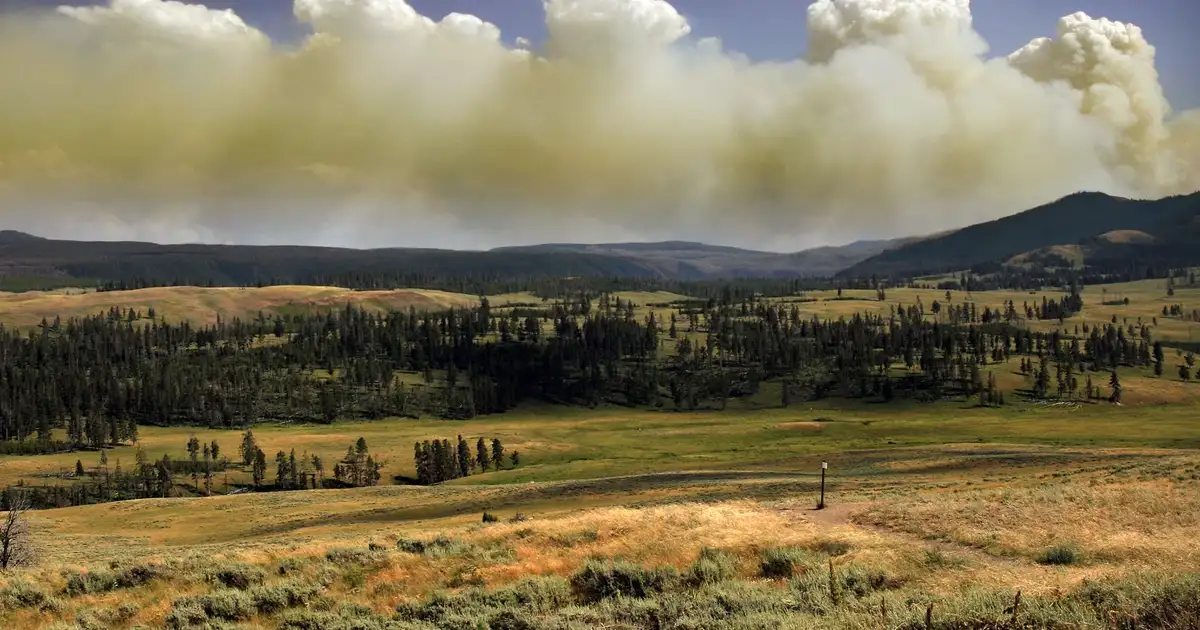
Dense plumes of wildfire smoke from central Canada have not merely ‘choked’ the region; they have laid siege to it. Air quality index (AQI) readings, once a mere statistic, have become a daily terror, spiking above 250 in major urban centers like Chicago and Milwaukee, with sustained ‘very unhealthy’ and ‘hazardous’ levels exceeding 180 across broad swathes of the affected states. This isn’t just ‘fine particulate matter’; it’s PM2.5, microscopic assassins invading every breath.
The alerts began on June 3, 2026, and have persisted for over a week, impacting an estimated 50 million Americans. Parts of Michigan, Wisconsin, and Illinois were first impacted, but the toxic haze has spread, turning skies orange.
Local health departments issued unprecedented warnings for sensitive groups. This is not a minor inconvenience; it is a direct, sustained assault on public health, demanding an urgent, robust federal intervention that has been conspicuously absent.
D.C.’s Deafening Silence on a Clear and Present Danger
While millions of Americans gasp for air, their lungs burning with every breath, Washington D.C. remains conspicuously, almost criminally, silent. The nation’s capital, usually so quick to grandstand on perceived threats, has offered nothing but a deafening void.
Where is the urgent federal response? Where is the President’s voice, the cabinet’s action, the very machinery of government designed to protect its citizens?
This isn’t just about a few bad days of air; this is about repeated, intensifying environmental events that are rapidly becoming the new normal. These Canadian wildfires are not some novel phenomenon; they are a recurring, escalating problem. Yet, the strategy to protect American lungs remains stubbornly reactive, a pathetic exercise in crisis management rather than proactive prevention.
The establishment in D.C. loves to talk about grand policy, crafting intricate legislation and engaging in endless debates. But when it comes to a simple, fundamental right like clean air, action is not just slow; it’s non-existent. The everyday American, trapped indoors, pays the ultimate price for this political paralysis.
“We are witnessing a slow-motion public health catastrophe, exacerbated by a federal government that seems utterly disconnected from the reality on the ground. Advising people to close their windows is not a strategy; it’s an abdication of responsibility. We need leadership, not platitudes, and we needed it yesterday.”
Her frustration echoes across the affected communities, highlighting the growing chasm between Washington’s rhetoric and America’s reality.
The Real, Suffocating Cost to Americans
This toxic air carries a steep, undeniable cost that extends far beyond mere discomfort. It is a direct hit to public health, with fine particulate matter burrowing deep into the lungs, triggering severe respiratory distress, exacerbating chronic conditions like asthma, COPD, and heart disease, and potentially leading to long-term health complications. Emergency room visits for respiratory ailments have spiked by an alarming 30% in some affected areas, according to local hospital reports.
But the impact doesn’t stop at physical health. Children and the elderly, our most vulnerable, are effectively imprisoned indoors.
Schools cancel outdoor recess, sports leagues halt, and community events vanish, disrupting the very fabric of daily life. Parents are forced to make impossible choices, weighing the simple joy of outdoor play against the insidious threat of poisoned air. What kind of future are we building when a breath of fresh air becomes a luxury, a risk?
The economic toll is equally devastating. Small businesses relying on outdoor foot traffic – cafes, street vendors, tourism operators – face crippling losses, estimated in the tens of millions of dollars daily.
Construction workers, agricultural laborers, and delivery drivers are forced to choose between their livelihood and their health, facing serious, immediate risks. Productivity plummets, and healthcare costs will inevitably skyrocket, burdens placed squarely and unfairly on working families and strained public services.
This isn’t some abstract climate debate confined to academic papers. This is a tangible, immediate threat that forces real Americans to stay locked in their homes, impacting their livelihoods, their health, and their very peace of mind.
The Blame Game and the Buck-Passing Charade
The smoke originates in Canada; that much is undeniable. It’s the convenient, easy answer for those looking to deflect blame. But what is the long-term, proactive plan for managing these increasingly frequent and severe cross-border environmental threats?
The Trump administration, with its self-proclaimed mandate for efficiency and decisive action, needs to address this directly, not just with rhetoric, but with tangible results.
President Donald Trump established the Department of Government Efficiency (DOGE) with the explicit promise of streamlining federal operations and cutting through bureaucratic red tape. So, where is DOGE in this crisis? Is it coordinating a robust, multi-agency federal response? Is it engaging in high-level diplomatic negotiations with Ottawa to develop a joint strategy for wildfire prevention and mitigation? Or is it merely another D.C. acronym, failing to deliver when Americans need it most?
This isn’t just a local issue for state governments to grapple with in isolation. This is a national emergency, a continental environmental catastrophe. It demands federal leadership, not hesitant suggestions. It requires robust diplomatic solutions with our northern neighbor, not polite inquiries. The establishment often kicks the can down the road, offering vague promises and forming endless committees. But when Americans can’t even open their windows without risking their health, that’s not good enough. The time for talk is over; the time for accountability is long overdue.
What Happens Next? More of the Same Inaction?
The immediate, dismal ‘solution’ is depressingly familiar: wait for the winds to shift, pray for rain in Canada, and hope the toxic clouds dissipate. But this isn’t a strategy; it’s a desperate reliance on luck, a gamble with the health of millions.
What happens when the next wave of smoke inevitably rolls in, as climate models predict it will, with increasing frequency and intensity?
Will Washington finally treat this as the national emergency it is, rather than a regional inconvenience? Will there be substantial federal funding allocated for advanced air quality monitoring systems, not just reactive alerts, but predictive capabilities?
Will there be coordinated international efforts, not just with Canada, but across North America, to invest in aggressive wildfire prevention, rapid response teams, and sustainable land management practices? Or will we be condemned to another cycle of alerts, inaction, and the slow poisoning of our citizens?
The health of millions of Americans depends on real answers, not hollow assurances. It requires more than just advising people to close their windows. It demands concrete policy, strategic investment, and diplomatic pressure that matches the scale of the threat.
The political class needs to understand the profound, personal impact of this crisis. It’s not just a statistic in a briefing binder; it’s people’s lives and their children’s futures.
It’s the very air they breathe every single day. This crisis lays bare a fundamental, unforgivable truth: the government’s most sacred duty is to protect its citizens. When the very air they breathe becomes a toxic threat, that protection has not merely failed; it has collapsed.
The question is no longer ‘what will D.C. do about it?’ but rather, ‘how much longer will D.C. get away with doing nothing?’ The time for platitudes is over. The time for action, for accountability, is now.
Source: Google News