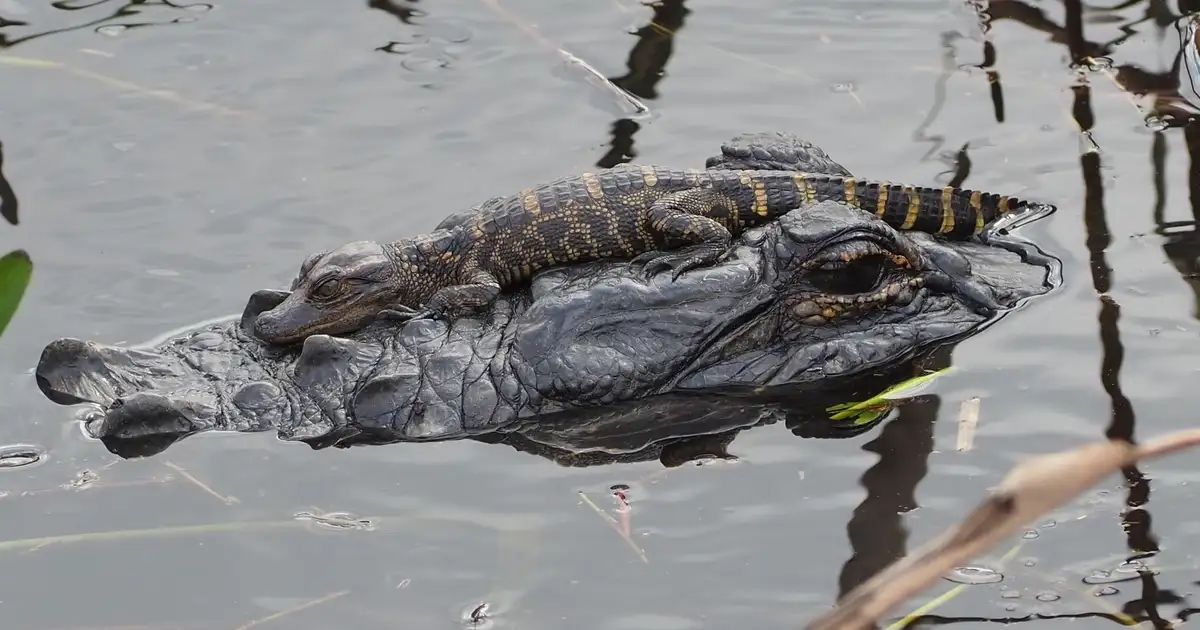

A seven-foot leviathan, not a student, was the latest uninvited guest to roam the grounds of Lake Nona High School in Orlando last Thursday morning. This wasn’t a drill, nor a typical summer sight; it was a bona fide alligator, spotted by a maintenance worker, turning a quiet campus into an unexpected wildlife exhibit. And let’s be honest, a 7-foot gator on campus is far more captivating than any summer homework assignment.
Florida’s Uninvited Guests: A Growing Reality
The FWC Nuisance Alligator Program was activated, a trapper rolled in, and the gator was safely removed within a couple of hours. No drama, no injuries.
Just another Tuesday in Florida, right? Wrong. While school officials praised the quick action, and FWC offered the usual platitude that alligators “explore new areas,” let’s cut through the politeness. This isn’t just a quaint “Florida experience” anymore; it’s the predictable, escalating consequence of unchecked ambition and a state hell-bent on paving over paradise.
Let’s talk numbers, because they paint a starker picture than any glossy tourism brochure. Florida is home to an estimated 1.3 million alligators.
The FWC fields a staggering 15,000 to 18,000 nuisance calls a year, removing 7,000 to 8,000 gators annually.
These aren’t just mythical swamp monsters; they are displaced residents. They are wandering into your backyards, your golf courses, and yes, with alarming frequency, your kids’ schools.
“Our maintenance team acted quickly and responsibly, ensuring the area was clear before contacting us,” stated Dr. Eleanor Vance, Principal of Lake Nona High School. “We are grateful to the Orange County Sheriff’s Office and FWC for their immediate and professional response. This is a good reminder for everyone in our community to be aware of their surroundings, especially near water.”
Awareness is fine, Dr. Vance. But what about accountability?
The “Red Marker” Verdict: Development’s Tab
Let’s be brutally honest. This isn’t just about an alligator looking for a new pond; it’s about a state devouring its own natural heritage. This is what happens when Florida builds faster, and with less foresight, than any responsible government should allow.
We pave over wetlands, drain vital natural habitats, and then feign shock when the original residents—the apex predators of this ecosystem—show up to see what all the concrete fuss is about.
Developers, backed by insatiable local governments hungry for tax revenue, are making a killing pushing sprawling subdivisions deeper into what used to be wild Florida. The “nuisance” alligator program isn’t a solution; it’s a glorified band-aid, a reactive measure to a systemic, self-inflicted wound.
Schools, particularly in Central Florida’s relentlessly booming corridors, are routinely erected right next to retention ponds or repurposed wetlands—areas that are, make no mistake, prime gator territory. While individual schools might install a fence or educate staff, there is no serious, binding state legislation mandating true “alligator-proofing” for these vulnerable sites.
Why? The answer, as always, is simple and cynical: it would cost money, slow down the relentless march of development, and cut into developer profits. It’s far easier, and cheaper, to simply call FWC after the fact and dismiss it as “just part of living in Florida”—a convenient excuse for willful neglect.
The brutal truth is, these incidents will not just become more common; they will become an inescapable daily reality. Every new housing tract, every new shopping center bulldozed into Florida’s dwindling natural areas, is a direct, open invitation for wildlife to show up on our doorsteps.
The financial incentives for developers to expand are not just enormous; they are astronomical, and the political will to genuinely protect habitats is virtually non-existent. So, yes, expect more gators on campus, more frantic calls to FWC, and more hollow talk about “coexistence” that conveniently ignores the undeniable fact that we are the ones doing the encroaching—and paying the price.
This isn’t a natural phenomenon; it’s a man-made crisis. And until Florida’s leaders summon the courage to truly balance unchecked growth with urgent ecological reality, the gators will continue to be our sharp-toothed, scaly prophets, reminding us, with every appearance, exactly who was here first and who truly owns this land.
Source: Google News