
Indiana is drowning, literally. Six people are dead, including a 4-year-old boy, swallowed by what officials glibly label “once-in-a-lifetime floods.” This isn’t merely a weather report; it’s a gut punch to the heartland, a brutal indictment of our collective complacency in the face of escalating environmental threats and crumbling infrastructure.
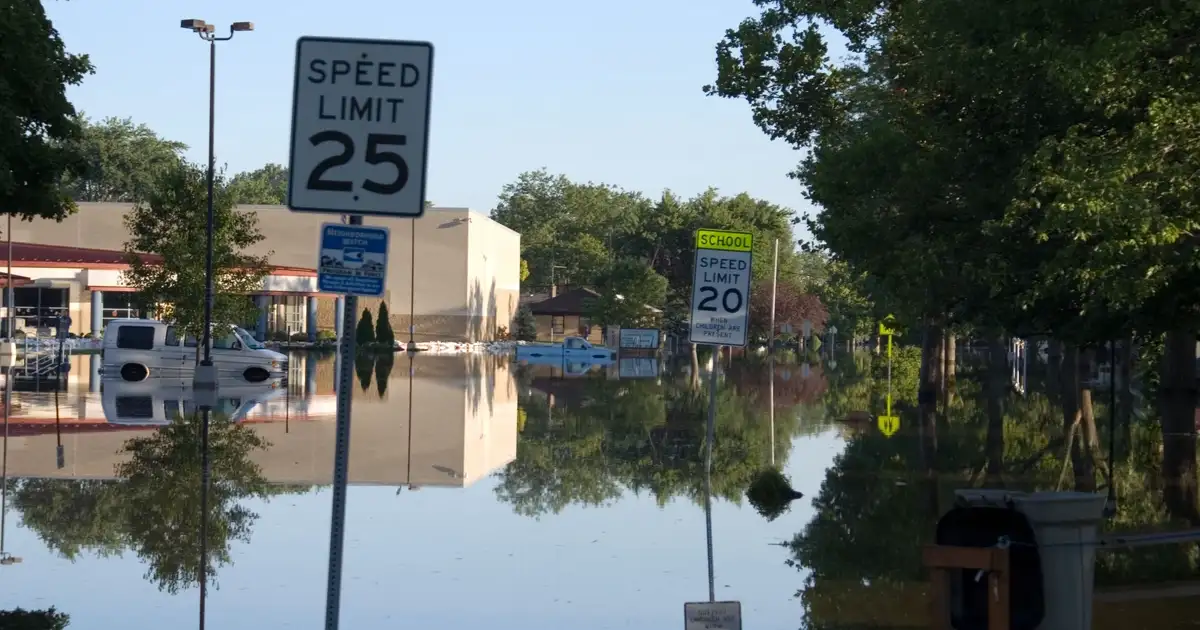
Raging waters, spurred by an unprecedented deluge of over 15 inches of rain in less than 48 hours, have engulfed homes, businesses, and entire communities.

Towns like Martinsville and Spencer now resemble lakes, their streets transformed into treacherous rivers. Thousands of residents have been displaced, and hundreds needed immediate rescue in a frantic 48-72 hour window.
The devastation spans central and southern Indiana. It leaves a trail of ruined infrastructure, shattered lives, and a state of emergency that feels tragically familiar.
The Illusion of “Once-in-Lifetime”
Officials, with a predictable lack of imagination, call these “once-in-a-lifetime floods.” That phrase rings hollow, a tired cliché used to deflect responsibility and minimize the true scale of our predicament.
How many “once-in-a-lifetime” events can one region, one nation, one planet, endure before we admit this is our lifetime? This isn’t a statistical anomaly; it’s a terrifying new normal.
We hear this line after every record-breaking disaster, whether it’s the infernos scorching California, the hurricanes battering the Gulf Coast, or the tornadoes tearing through the Midwest.
It sounds less like an assessment and more like an excuse, a convenient fiction designed to downplay systemic issues and avoid uncomfortable truths. It implies a random act of nature, absolving us of the responsibility to prepare, adapt, and fundamentally rethink our approach to urban planning and environmental stewardship.
The reality is harsher, more relentless. Extreme weather isn’t an occasional visitor; it’s becoming a permanent resident.
Communities across Indiana, and indeed across America, are left vulnerable, again and again, to forces we are increasingly ill-equipped to handle.
This isn’t a freak accident for the families now grieving their lost loved ones or sifting through the wreckage of their homes. This is the devastating consequence of a world out of balance, met by an infrastructure tragically out of date.
A 4-year-old boy is dead. Six families are shattered. This is the true, unforgivable measure of the catastrophe.
The Response: Too Little, Too Late?
A massive coordinated response is, predictably, underway. State and federal agencies are mobilizing, deploying emergency personnel, and issuing declarations.
This is expected, even commendable in its immediate impact. Yet, emergency declarations often come after the fact, after the floodwaters have already crested, after the damage is already done, and, most tragically, after lives are already lost.
It’s a reactive scramble, not a proactive strategy.
Rescue efforts are undeniably heroic. The first responders, the National Guard, the volunteers – they save lives in the moment, pulling families from rooftops and moving through treacherous currents.
Their bravery is beyond question. Yet, their heroism, however profound, cannot prevent the next disaster. It cannot mend the broken infrastructure, nor can it bring back the dead.
It is a band-aid on a gaping wound, a clear demonstration of human resilience in the face of systemic failure.
The critical question isn’t just about rescue; it’s about resilience. It’s about preparation.
Are we building for the past, clinging to outdated models and short-sighted budgetary decisions, or are we finally confronting the future?
Our infrastructure – our roads, bridges, levees, and, crucially, our drainage systems – needs a hard, honest look. It must be designed and maintained to withstand more than the “once-in-a-lifetime” events that now occur with alarming regularity.
The cost of rebuilding will be immense, likely soaring into the hundreds of millions, if not billions, of dollars. Taxpayer money will pour in, as it always does.
But will it fix the root problem, or merely paper over the cracks until the next deluge?
The Real Cost of Neglect
This isn’t just about rainfall, however extreme. It’s about decades of deferred maintenance on drainage systems that are choked with debris and inadequate for modern weather patterns.
It’s about lax flood plain management, allowing development in areas that should have remained natural buffers. It’s about decisions made years ago, choices not made, regulations ignored, and warnings
Photo: Wikimedia Commons (query: Indiana floods)
Source: Google News