
The claim emerging from Tehran that a US C-130 aircraft was shot down during a pilot rescue mission isn’t just a bold assertion; it immediately triggered widespread skepticism and online mockery. This incident, or rather the lack thereof, serves as a stark reminder of the sophisticated information warfare tactics at play, where narratives are crafted not for truth, but for strategic advantage.
This alleged incident, which has been met with near-universal derision, unfolds against a backdrop of intensely strained relations. The region has experienced a “36-day war escalation” between the United States and Iran, rendering the geopolitical landscape exceptionally volatile. Such an environment is ripe for misinformation, where every action, every claim, is scrutinized through a lens of suspicion and strategic intent.

Tehran’s Theatrical Narrative: A C-130 “Shot Down”?
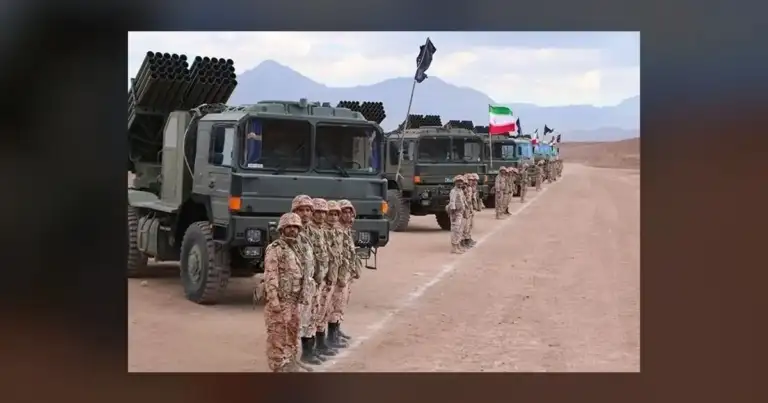
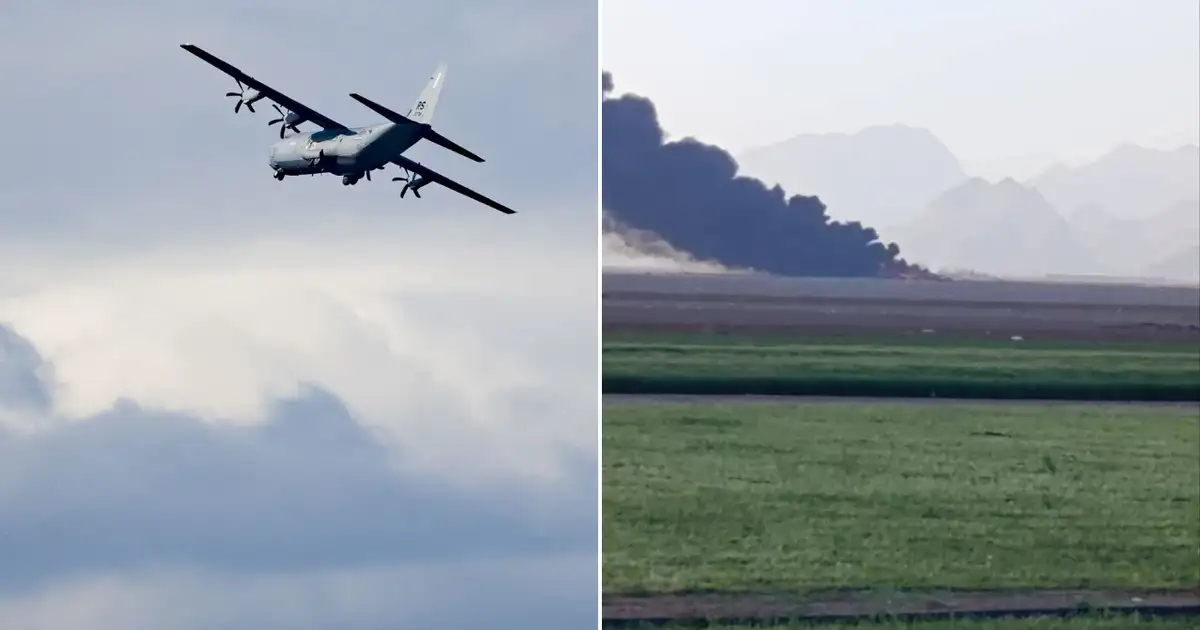
Iran’s state media, including prominent outlets like the Tasnim News Agency and Fars News Agency, were quick to disseminate this dramatic narrative. They reported the successful downing of a US C-130 during a mission purportedly aimed at rescuing downed US pilots. Yet, despite the gravity of such an event, concrete, verifiable evidence remains conspicuously absent, fueling skepticism and transforming a serious claim into what many perceive as state-sponsored fiction.
The C-130 Hercules is a robust military transport, renowned for its versatility in logistics, special operations, and aerial refueling. It is not typically deployed in direct combat roles that would expose it to such a threat. The assertion that it was shot down during a combat search and rescue (CSAR) mission raises questions about the operational context and the veracity of the claim itself.
Social Media’s Verdict: “Classic IRGC Fanfic”
The moment this claim surfaced, social media platforms, particularly Reddit and X (formerly Twitter), erupted with disbelief and derision. Communities dedicated to military analysis and geopolitics, such as r/CombatFootage and r/geopolitics, swiftly labeled it “classic IRGC fanfic.” This immediate, visceral reaction stems from a well-documented history of similar unverified or outright false claims emanating from Iranian state-affiliated sources.
Netizens were quick to highlight the use of recycled visuals. Grainy footage purporting to show C-130s, Black Hawks, and Apaches was swiftly debunked as old clips, some dating back to the 2019 Gulf of Oman incidents, and others even from routine peacetime drills. This blatant recycling of imagery solidified the “hoax skepticism” among a digitally literate populace.
One Reddit thread, which garnered an astonishing 12,000 upvotes, perfectly encapsulated the prevailing sentiment. “Iran’s been claiming F-15s, F-35s, A-10s, now a lumbering C-130? Pick a plane, losers,” it read, a blunt reflection of widespread public cynicism and fatigue with what is perceived as transparent propaganda. This collective dismissal underscores a critical shift in how information from state actors is consumed and evaluated in the digital age.
The Geopolitical Chessboard: Why This Narrative Now?
The timing of Iran’s assertion is rarely accidental in the intricate dance of international relations. This alleged incident follows closely on the heels of “daring ops” by the US, which successfully rescued two F-15 crew members. These genuine, high-stakes rescues were notably highlighted by former President Donald Trump, who lauded them as historic achievements. Iran’s C-130 claim could be interpreted as a calculated counter-narrative, an attempt to diminish US operational successes or to project an image of equivalent capability.
Such claims often function as a multi-purpose tool for Tehran. They can be an attempt to “save face” domestically, particularly when external pressures mount or when internal stability is tenuous. They can also serve as a potent distraction, diverting attention from less favorable developments. Iran frequently employs such narratives to project an image of strength and unwavering resolve, especially when confronting perceived threats or during periods of heightened tension.
The Strait of Hormuz remains an undeniable flashpoint, a narrow maritime choke point through which a significant portion of the world’s oil transits. Iranian Revolutionary Guard Corps (IRGC) forces frequently engage with US assets in this sensitive waterway. Any US aircraft, even a transport like the C-130, operating in proximity to Iranian territorial waters or airspace, inevitably draws intense scrutiny. Tehran consistently labels such activities as “provocative,” using them to justify its own military posturing and to rally domestic support against perceived foreign aggression.
The US Perspective: Silence, Sarcasm, and Strategy
The United States has maintained a characteristic silence regarding the alleged C-130 loss. US officials typically refrain from commenting on such claims unless irrefutable evidence necessitates a response, a strategy designed to avoid legitimizing what they often consider baseless propaganda. This official silence, while strategically sound, paradoxically fuels further speculation and allows the information vacuum to be filled by various interpretations.
On X, the reaction from various political factions was sharply divided, yet equally dismissive of the Iranian claim. Accounts aligned with the MAGA movement, for instance, humorously praised “Trump’s air superiority,” joking about Iranian surface-to-air missiles (SAMs) becoming mere “fireworks.” Conversely, left-leaning users framed the entire episode as “deep state escalation theater,” suggesting it was a manufactured crisis designed to justify a potential Hormuz blockade or further military intervention.
A particularly incisive analysis came from @WarMoniter3, whose post garnered over 200,000 likes. “C-130s don’t ‘get shot down’ in CSAR; they’re tankers/coordinators flying nap-of-earth with escorts. Iran spotting them? Means US owns the skies, filming their own humiliation.” This comment brilliantly encapsulates the operational realities of CSAR missions and deftly turns Iran’s claim into an inadvertent testament to US air superiority, highlighting the strategic and tactical illogic of the Iranian narrative.
Iran’s Air Defense: A Narrative of Vigilance
Iran possesses a long and well-documented history of claiming to intercept or “warn off” US aircraft operating near its borders. While these claims frequently lack independent verification, they are consistently amplified by Iranian state media, serving to construct a powerful narrative of national sovereignty and unwavering resistance against foreign interference. This narrative is crucial for domestic consumption, bolstering national pride and reinforcing the government’s image as a protector of national interests.
In late 2024, for instance, Iranian news agencies widely reported that IRGC air defense units had successfully tracked and issued warnings to “foreign aircraft” near Iranian airspace during military exercises. While no specific C-130 was mentioned in those reports, such incidents demonstrate a consistent pattern of vigilance and a readiness to publicize any perceived foreign aerial activity, regardless of its actual threat level. This constant stream of reports, even if unverified, helps to cultivate an image of a nation under perpetual threat, thus justifying its military expenditures and assertive foreign policy.
Furthermore, Iran frequently showcases its indigenous air defense systems, presenting them as formidable deterrents against any potential aggressors. The development and deployment of domestically produced radar and missile systems are consistently highlighted, supporting the narrative that Tehran possesses the capability to detect and neutralize any aerial incursions. This technological self-reliance, even if exaggerated, is a key component of Iran’s broader strategy to project strength and deter external threats.
The Information War: A Battle for Narrative Supremacy
The alleged C-130 incident transcends a mere military claim; it is a significant skirmish in the ongoing information war, a battle fought not with bullets, but with narratives. Both the United States and Iran are acutely aware of the power of controlling the narrative, each seeking to shape domestic and international perceptions to their strategic advantage. Iran, through such claims, aims to project an image of strength, resilience, and unwavering sovereignty, particularly to its own populace and to regional allies. The US, conversely, strives to maintain deterrence, project stability, and counter any narratives that might undermine its regional influence or operational capabilities.
The deafening silence from credible international news organizations regarding any widely reported incident of a C-130 shootdown is, in itself, profoundly telling. It strongly suggests that the claim is either unsubstantiated, localized exclusively to Iranian state media, or, most likely, entirely fabricated. In an age where even minor incidents are rapidly disseminated globally, the absence of corroborating evidence speaks volumes.
The broader geopolitical context, particularly the enduring tensions surrounding Iran’s nuclear program and the regional power struggle with Saudi Arabia and other Gulf states, inextricably links to the US military presence in the region. Iran views this presence with deep suspicion, often interpreting it as an aggressive posture aimed at regime change or containment. Therefore, any perceived affront, real or imagined, can be leveraged within this complex web of strategic considerations.
Unraveling Truth in the Fog of War
The assertion of a US C-130 shootdown by Iran is not merely highly dubious; it aligns perfectly with a well-established pattern of state propaganda designed to manipulate public perception and bolster domestic morale. The immediate and widespread skepticism evinced by online communities, far from being dismissible, serves as a powerful indicator of the claim’s lack of credibility. In an interconnected world, the ability of state actors to control information is increasingly challenged by the collective scrutiny of a global audience.
In a region as volatile and strategically critical as the Middle East, the truth is often deliberately obscured, twisted, or entirely fabricated. Therefore, it is imperative to critically assess all claims, especially those emanating from state-controlled media in adversarial contexts. This incident, or rather the conspicuous lack of a verifiable incident, further complicates the already strained US-Iran relationship, adding another layer of distrust to an already fraught dynamic. It demands not just careful observation, but a rigorous, evidence-based approach to understanding the complex interplay of power, politics, and perception. How many more such narratives will emerge before the international community demands verifiable proof over mere assertion?
Source: Google News