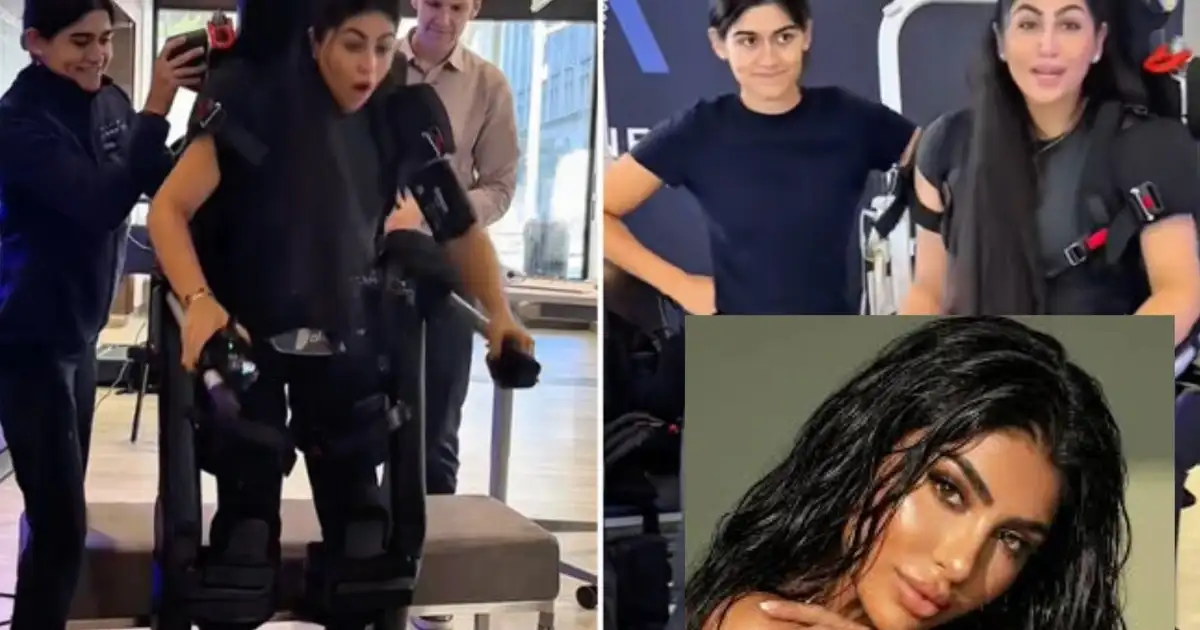

The digital ether, usually a cacophony of fleeting trends and forgotten memes, has recently been captivated by a spectacle designed to tug at the deepest recesses of our hearts: Jessica Tawil, a vibrant 27-year-old, seemingly taking her “first steps in a decade” with the aid of an exoskeleton. The video, a masterclass in emotional manipulation, has exploded across screens, eliciting tears and widespread awe. But let us not be so easily swayed, my friends. Beneath the glossy veneer of human triumph, a more cynical, and perhaps more accurate, narrative unfolds: this isn’t merely a miracle; it’s a meticulously orchestrated, sponsored spectacle, a grand slam for Eve Robotics, and a troubling symptom of our content-hungry age.
This emotional display, which has stunningly garnered over 330 million TikTok views and another 140 million on Instagram, feels less like a genuine medical breakthrough and more like a meticulously crafted advertisement. We, the unsuspecting public, are falling head over heels for what I can only describe as “inspiration porn,” meticulously wrapped in the gleaming chrome of a robotic suit. It’s a powerful narrative, a potent brew of hope and technology, but one that demands a more discerning eye from those who truly appreciate authenticity, whether on the diamond or in the digital realm.

The Echoes of a Viral Sensation: Or, A Masterclass in Marketing?
The numbers alone are staggering, a digital tsunami. Over 330 million views on TikTok, an additional 140 million on Instagram. At its epicenter is Jess Tawil, a TikTok influencer whose personal story, a paralysis stemming from a 2014 car crash, provides the poignant backdrop. The video itself is simple yet devastatingly effective: Tawil, her face a canvas of raw emotion, appears to walk with the assistance of a robotic exoskeleton, a device that ostensibly allows her to reclaim a lost freedom.
The mainstream media, ever eager for a heartwarming narrative, devoured the story whole. Outlets like Tag24 and EWN breathlessly reported on hearts captured worldwide, portraying Tawil as an “uplifting” figure. Her existing platform, built on popular disability vlogs that candidly explore wheelchair life and often focus on themes of gratitude, only amplified the impact. Even GMA, a major player in morning television, had previously featured segments on exoskeleton testers, including individuals like Caroline Lobach, further priming the public for such a narrative. This wasn’t just a story; it was a pre-packaged phenomenon, ready for mass consumption.
Yet, the device itself, the star of this digital drama, is hardly a novel invention. Exoskeletons have been a part of the medical landscape for years. Remember ReWalk, which debuted over a decade ago? These machines are not only complex but prohibitively expensive, often costing upwards of $100,000. It’s a common, if rarely acknowledged, practice within the industry to rent these devices for promotional videos and demonstrations. The video, with Tawil taking those tentative steps, her face a compelling blend of “fear mixed with disbelief,” undeniably delivers a powerful emotional hook. But is it a hook for genuine progress, or for something far more calculated?
The Cynical Side: Is This the Latest Iteration of “Influencer Grift?”
However, the internet, in its infinite wisdom and often brutal honesty, always manages to find the cracks in even the most polished narratives. The digital town squares of Reddit and X/Twitter are ablaze with skepticism, a refreshing counterpoint to the mainstream adulation. Users are not shy about labeling this entire affair as “staged clout-chasing,” meticulously dissecting the timing and the narrative itself. They point, with increasing frequency, to the established history of this technology, reminding us that exoskeletons are far from a sudden, groundbreaking invention.
One astute Reddit user, cutting through the emotional fog, articulated the prevailing sentiment with a rhetorical jab:
“Another ‘miracle’ exoskeleton that’s been around since 2015—ReWalk debuted ages ago, costs $100K, rented for vids? She’s been wheeling fine, now ‘walking’ for likes.”This sentiment, a refreshing dose of reality, echoes widely across online forums. The claim of “first steps in a decade” is under intense scrutiny. Critics are quick to highlight Tawil’s documented mobility in her wheelchair, suggesting that this “first step” is less a medical milestone and more a carefully orchestrated performance. The narrative, once so compelling, begins to unravel under the weight of informed cynicism.
The online discourse questions Tawil’s motivations with an almost surgical precision. Some go so far as to suggest “faked paralysis” for a “sob story arc,” pointing to her “high school crash” as a conveniently timed catalyst. The theory, gaining traction among the more skeptical corners of the internet, paints a stark picture: this is her “monetized comeback tour,” explicitly “sponsored by Eve Robotics for viral ROI.” This view, while harsh, forces us to confront an uncomfortable truth: is this truly a medical breakthrough, a triumph of the human spirit, or merely a sophisticated business transaction, designed to generate maximum engagement and profit?
The Real Game: Exploiting Human Emotion for Corporate Gain
This entire spectacle, when viewed through a critical lens, reveals itself as a perfectly executed play in the grand theater of digital marketing. It masterfully exploits the most fundamental of human emotions: empathy. It leverages a powerful, universally appealing story – a young woman valiantly overcoming adversity. Who among us, with a beating heart, wouldn’t instinctively root for such a narrative? But the playbook here is as clear as a fastball thrown down the middle: it’s about engagement, about clicks, and, ultimately, about brand visibility.
Consider the elements at play: an influencer with millions of dedicated followers, a “miracle” product that promises to restore lost function, and a narrative steeped in raw emotion. This, my friends, is the very definition of a PR dream. Eve Robotics reaps the benefits of free, invaluable advertising, their name etched into the collective consciousness. Tawil, in turn, enjoys renewed fame and a likely surge in her already considerable online presence. And the public? We are fed a feel-good story, a momentary escape from the often-harsh realities of life. But what about the inconvenient truths? What about the genuine struggles faced by those with disabilities? What about the astronomical, often unmentioned, cost of these devices?
The label of “inspiration porn” is not only fitting but essential here. It dangerously romanticizes disability, presenting it as something “uplifting” and easily overcome. It glosses over the profound daily challenges, the systemic barriers, and the often-unseen battles fought by individuals with disabilities. It presents a dangerously simplified narrative, reducing a complex human experience to a consumable moment. Life in a wheelchair, as anyone with genuine experience can attest, is profoundly challenging; it is rarely, if ever, a “gratitude seminar” designed for public consumption. This video, in its pursuit of viral fame, tragically reduces a multifaceted reality into a bite-sized, emotionally charged soundbite.
The Echoes in Sports: Authenticity vs. Performance on the Grand Stage
This isn’t merely a critique of exoskeletons or influencers; it’s a broader commentary on the insidious erosion of authenticity in our public narratives. We witness this phenomenon constantly in the world of college football, a realm where narratives are as carefully constructed as game plans. Players are frequently packaged, their stories spun, their emotions amplified – all for the sake of a compelling narrative that sells tickets, merchandise, and, increasingly, personal brands.
Take, for instance, a player like Carson Beck, the prodigious quarterback for the Georgia Bulldogs. He shoulders immense pressure, stepping into a role previously held by legends, a role that demands immediate excellence. The media scrutinizes his every move, dissecting his “leadership style,” drawing inevitable comparisons to iconic figures like Stetson Bennett. This isn’t just football; it’s a pressure cooker where young men are forged and often, unfortunately, broken.
The narrative surrounding Beck, like many high-profile athletes, often touches on the crucial topic of mental health. The constant spotlight is brutal, the weight of fan expectations crushing, and the relentless demand for championships unforgiving. News outlets frequently discuss his “mental preparation,” highlighting his “support systems” and the strategies he employs to cope with the relentless pressure. This, in its purest form, is a real struggle, an authentic human story playing out in the public eye.
But even these seemingly authentic stories can, at times, feel manufactured, carefully curated for public consumption. Are they truly about the athlete’s holistic well-being? Or are they, at least in part, about controlling the narrative, about building a more sympathetic public image, about enhancing marketability? The lines, my friends, blur with alarming frequency in the modern sports industrial complex. This vast enterprise demands its heroes, its villains, and, above all, its compelling storylines to keep the turnstiles spinning and the ad revenues flowing.
The NIL Factor: Every Story Has a Price Tag in This New Era
The advent of the NIL (Name, Image, Likeness) era has irrevocably altered the landscape, transforming college athletes from amateur ideals into marketable commodities. Athletes can now, quite rightly, profit from their own personas. Their stories, once solely the domain of sports writers, have become valuable assets, capable of generating millions. This seismic shift incentivizes a particular kind of narrative, one that is emotionally resonant, easily digestible, and ultimately, profitable.
Could Tawil’s viral video be seen as a form of NIL? Absolutely, unequivocally. Her “personal journey,” her “triumph over adversity,” is meticulously monetized. Her “miraculous steps” are not just a personal victory; they are a product, a brand endorsement in all but name. The gleaming exoskeleton, the very device that facilitates her “walk,” serves as the unspoken sponsor. This, my friends, is the stark new reality of our digital age: every emotional story, every moment of perceived triumph, now carries a potential price tag, a market value waiting to be exploited.
The public, therefore, bears a greater responsibility than ever before. We must become savvier consumers of content, questioning these “miracles” with a healthy dose of skepticism. We must learn to look beyond the tears, beyond the carefully edited moments of triumph. Is this genuine, unvarnished emotion? Or is it a meticulously crafted performance, designed to elicit a specific response? Is it a true medical breakthrough, a leap forward for humanity? Or is it simply exceptionally good marketing, a sophisticated advertisement masquerading as inspiration?
The cynicism I advocate is not about denying hope or dismissing genuine human resilience. Quite the contrary. It is about demanding honesty, about recognizing the subtle and not-so-subtle forms of exploitation that permeate our digital lives. It is about seeing the strings that manipulate our emotions, the hidden hands that pull them. The college football industrial complex, much like the broader influencer economy, thrives on these manufactured narratives, using the potent fuel of human emotion to sell a product, a dream, a moment of fleeting inspiration.
The Final Pitch: Don’t Let Your Emotions Be Played
So, the next time your feed delivers a viral “inspirational” video, pause. Take a deep breath. And ask yourself these crucial questions: Who truly benefits from this narrative? What, if any, is the hidden agenda lurking beneath the surface? Is this truly a raw, unedited moment of human experience? Or is it, more likely, a well-produced advertisement, a commercial in disguise?
The human spirit, let there be no doubt, is an incredibly powerful force, capable of astonishing feats of resilience and courage. True triumphs, the genuine moments of overcoming adversity, are indeed real and profoundly moving. But the internet, my friends, is an elaborate stage, a sprawling arena where perception often trumps reality. And some players, some influencers, some corporations, are absolute masters of the act, capable of weaving narratives so compelling they disarm our critical faculties. Do not let your emotions, those precious, vulnerable parts of your being, be an easy target. Look closer. Peer behind the curtain. For in this game of digital spectacle, the rules are often unwritten, and the game, more often than not, is rigged, one way or another.
Source: Google News