
The digital echo chambers vibrated with sensational claims of congressional campaign finance abuse in Puerto Rico, targeting Representatives Eric Swalwell and Ruben Gallego. These allegations, though swiftly debunked, laid bare the ruthless mechanics of modern political warfare and the alarming speed of disinformation.
Initial reports, aggressively amplified across social media, fixated on specific campaign expenditures. Publicly available records showed Representative Swalwell’s campaign spending $1,522 at a Hyatt Regency on June 7, 2021.

Concurrently, Representative Gallego’s campaign reportedly paid $2,000 to the Fairmont El San Juan on the same date. Representative Linda Sanchez’s campaign also incurred an $1,800 Hyatt charge.
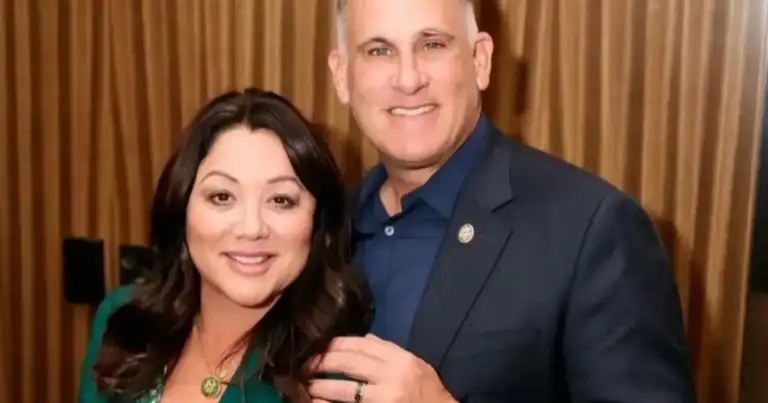
These transactions were then sensationally, and falsely, linked to Representative Gallego’s island wedding. The implication was a blatant misuse of campaign funds.
The Swift Implosion of a “Bombshell”
Yet, this meticulously crafted “bombshell” narrative imploded almost immediately under even cursory scrutiny. Robust fact-checking, notably by outlets like the Phoenix New Times, swiftly exposed its critical inaccuracies.
Representative Gallego’s actual wedding, for instance, occurred on June 4, 2021, at an entirely different Hyatt venue. There were no corresponding FEC charges for that event.
Furthermore, the Fairmont El San Juan expenditure by his campaign was demonstrably for a legitimate fundraiser conducted in September 2021—a full three months after the wedding. The claims thus fundamentally misrepresented both the timing and the legitimate purpose of these transactions.
This swift, yet often insufficient, debunking underscores a deeply troubling reality. Political attacks now proliferate with terrifying speed, often gaining irreversible traction.
This happens long before factual corrections can even begin to catch up. The initial, inflammatory accusations, regardless of their veracity, leave an indelible stain on public perception.
They represent a deliberate weaponization of financial records, twisting legitimate expenditures into scandalous narratives purely for partisan advantage. How can truth ever compete in such an environment?
Puerto Rico: A Geopolitical Flashpoint
While campaign finance controversies are typically confined to the domestic political arena, the specific setting of Puerto Rico injects a profound layer of geopolitical complexity.
As a U.S. territory, Puerto Rico holds a singular, often contentious, position within global governance discussions. Its persistent economic challenges, staggering debt, and unresolved debates over its political status are not merely internal matters.
These issues are keenly observed on the international stage. Consequently, even fabricated allegations of U.S. politicians misusing funds on the island can readily fuel broader, more damaging narratives about American stewardship and accountability towards its non-sovereign entities.
Such perceptions directly influence how the United States is viewed globally. This is particularly true concerning its ethical treatment of territories and its commitment to democratic principles abroad.
The inflammatory narrative—”Dems splurging taxpayer cash while islands drown in debt”—found fertile ground among certain online commentators. It resonated with disturbing ease.
This specific critique, regardless of its utter lack of factual basis, undeniably taps into profound, legitimate anxieties. Puerto Rico has endured severe economic crises and devastating natural disasters.
Its arduous recovery efforts are heavily reliant on, and often frustrated by, federal aid. In this sensitive context, the mere perception of U.S. officials acting with impunity, even if entirely fabricated, profoundly undermines public trust.
It inexorably fuels cynicism about governance structures. These structures are already under intense international scrutiny for their efficacy and fairness.
The Weaponization of Information
The breathtaking speed with which these unsubstantiated claims metastasized across platforms like X/Twitter is not merely alarming; it is a profound threat.
Right-wing commentators, acting as unwitting or deliberate conduits, amplified raw screenshots as incontrovertible gospel. Hashtags such as #SwalwellWeddingCrashers briefly surged, transforming fleeting accusations into viral moments.
Worse still, these initial posts quickly devolved. They spiraled into truly outlandish claims of “Puerto Rico money-laundering” or even “CCP spy honeypots.”
This trajectory vividly demonstrates the terrifying ease with which malicious misinformation can be injected into, and then dominate, public discourse. It expertly capitalizes on existing political grievances and deeply ingrained conspiracy theories.
The immediate, cynical goal of such campaigns is unequivocally not truth. It is to ignite outrage and systematically erode public confidence.
Discredited allegations, once unleashed and widely circulated, prove notoriously difficult to fully expunge from the collective consciousness. They invariably contribute to a pervasive, corrosive sense of distrust in political institutions.
This engineered distrust carries profound, destabilizing implications for democratic stability. This impacts not only domestically, but also how U.S. democracy is perceived and trusted on the global stage.
“The speed of information dissemination, combined with partisan echo chambers, makes it nearly impossible to contain false narratives once they gain momentum. The damage to public trust is often irreversible, regardless of subsequent retractions.”
This entire scenario serves as a chilling illustration of a fundamental pillar of modern geopolitics: information warfare. While the initial attacks were ostensibly domestic, the tactics employed eerily mirror those perfected and deployed by malicious state and non-state actors across the globe.
Their insidious aim is always to destabilize, discredit, and divide. The ultimate target is rarely an individual; it is invariably the very integrity of democratic processes themselves.
The United States, positioning itself as a beacon of democracy, simply cannot afford to be complacent about these internal challenges. Its global leadership, moral authority, and diplomatic influence are inextricably linked to its perceived domestic strength and stability.
Consequences Beyond the Headlines
The true, enduring consequence of this episode is emphatically not the alleged financial impropriety, which was so thoroughly debunked. Rather, it is the deliberate, calculated corrosion of public faith.
When every legitimate official action can be so easily twisted into a fabricated scandal, the very act of governing becomes extraordinarily difficult. Legitimate oversight and crucial accountability are not merely sidelined.
They are utterly drowned out by a relentless tide of manufactured outrage. This inevitably cultivates a political environment where verifiable truth is relegated to a distant second place behind compelling, albeit false, narratives.
Such a profound erosion of truth carries dangerous, far-reaching implications for international relations. How can global allies genuinely trust U.S. leadership when its own domestic political discourse is so profoundly fractured and susceptible to manipulation?
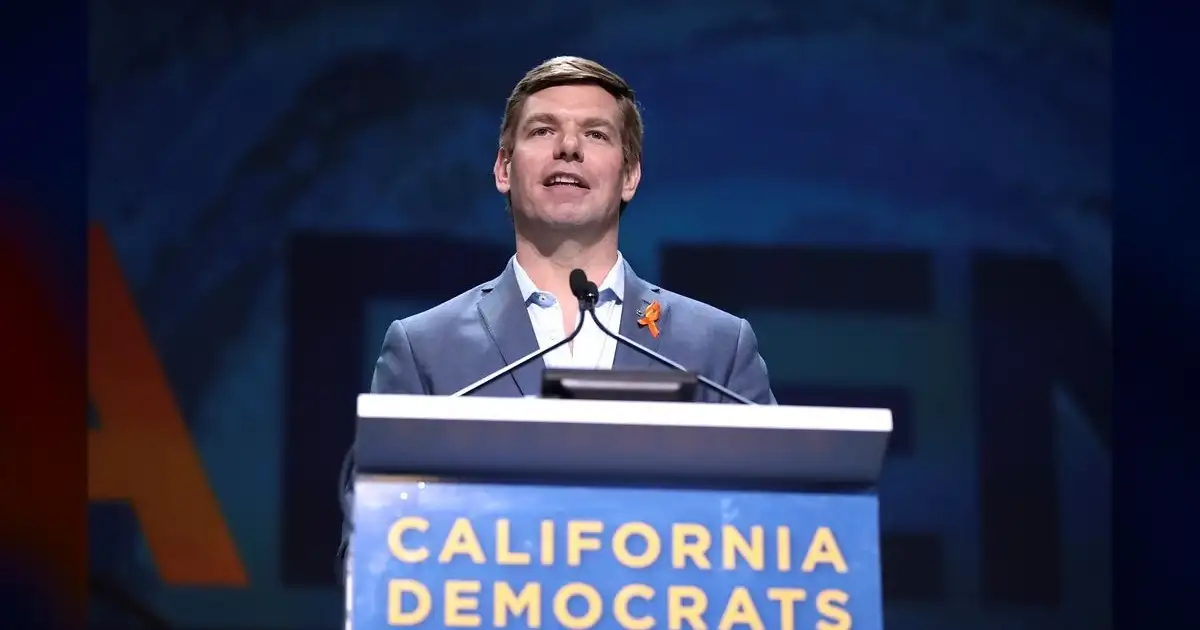
Photo: Photo by Gage Skidmore on Openverse (flickr) (https://www.flickr.com/photos/22007612@N05/48016375462)
Source: Google News