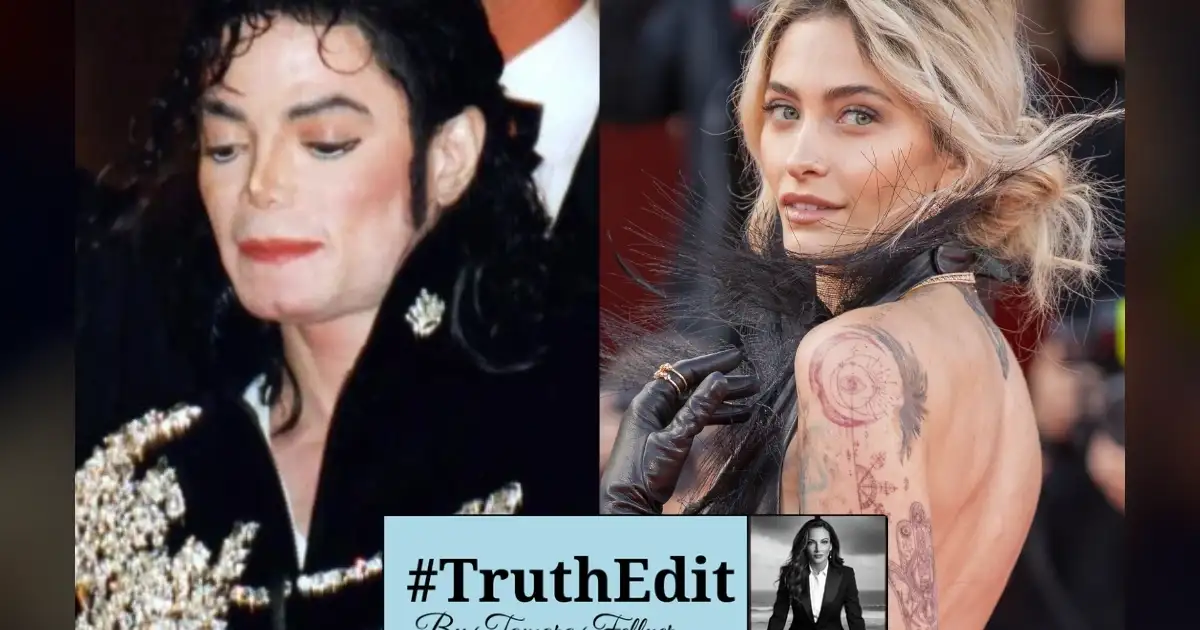

Maureen Callahan’s recent column didn’t just scratch the surface; it tore through the decades-long denial surrounding Michael Jackson, exposing the uncomfortable truths Hollywood still desperately tries to bury. His own daughter, Paris Jackson, now believes her father was a pedophile—a devastating admission that many still refuse to even acknowledge, let alone whisper aloud.
Published in the Daily Mail, Callahan’s blistering column didn’t just strike a nerve; it detonated a cultural bomb. It forced a direct confrontation with the horrifying reality of Jackson’s past—a reality that, for too long, has been swept under a gilded rug. The public reaction was immediate, visceral, and toxic.

The Great Denial: Why We Can’t Face It
The internet didn’t just buzz after Callahan’s article; it erupted into a firestorm. Michael Jackson loyalists, often operating with cult-like fervor, immediately swarmed, dismissing her work as “tabloid trash.” They branded Callahan a “hater hack” just chasing clicks, desperate to discredit any inconvenient truth.
On platforms like Reddit, threads across r/MichaelJackson and r/popculturechat quickly became battlegrounds, overflowing with furious rebuttals. Fans clung to his 2005 trial acquittals as irrefutable proof of innocence, vehemently claiming his accusers were “paid-off” and that the harrowing narratives from “Leaving Neverland” were nothing more than recycled, opportunistic lies. But does an acquittal truly erase the testimony of victims?
This isn’t merely about Michael Jackson; it’s a stark mirror reflecting our collective, often willful, inability to face ugly truths about the people we adore. We elevate these figures to god-like status, then defend them to the death, regardless of the human cost or the moral compromises required. It’s a defense mechanism that prioritizes myth over reality, and it’s poisoning our culture.
Conspiracy Theories and Emotional Shields
The backlash wasn’t merely denial; it quickly escalated into full-blown conspiracy theories, a predictable refuge for those unwilling to confront uncomfortable facts. Many linked Callahan’s piece to elaborate “Hollywood psyop” theories, claiming it was a cynical distraction from the Diddy tapes or the shadowy machinations of “elite pedo rings.” It’s easier, it seems, to believe in a grand, unseen manipulator than to question your own heroes.
On X, formerly Twitter, the hashtag #MJInnocent exploded, trending with over 50,000 posts. The vitriol wasn’t reserved for Callahan; it spilled over to Paris Jackson herself. Users viciously labeled her “brainwashed by media,” “grifting for relevance,” or even suffering from “Stockholm syndrome.” This isn’t rational discourse; it’s an aggressive, coordinated effort to silence dissent and protect a crumbling narrative.
This fervent level of denial isn’t just about fandom; it reveals a deep, almost pathological emotional investment. It’s profoundly easier to invent elaborate, convoluted plots than to confront the devastating possibility that your hero, your idol, might have been a monster. This stubborn refusal to accept reality doesn’t just damage public discourse; it corrodes our ability to foster honest relationships, both personal and societal, by prioritizing comfort over truth.
Hollywood’s Whitewash Continues
Callahan’s critics, in their desperate attempts to discredit her, hurled insults like “vulture journalist.” They accused her of “peddling unverified ‘reportedly’ gossip” and fabricating a “weepy PR stunt” designed to “drag a dead king.” The irony, of course, is that their furious denials only amplify the silence surrounding the actual victims.
The intensity of this reaction doesn’t refute Callahan’s argument; it unequivocally proves her point. It lays bare how Hollywood, aided by a complicit segment of the public, actively works to whitewash Jackson’s image, meticulously burying any unflattering information under layers of PR and nostalgia. It’s a systemic cover-up, plain and simple.
The narrative of innocence is further fueled by the selective focus on the “flipped testimonies” of Wade Robson and James Safechuck—a convenient distraction from the sheer volume of disturbing allegations. This cherry-picking of evidence willfully ignores the core issues and the consistent, harrowing accounts raised by so many others. It’s a deliberate blind spot, not an oversight.
The Cost of Selective Truth
This pattern isn’t unique to Jackson; we’ve witnessed it repeatedly with other fallen icons. The human impulse to refuse belief in terrible things about those we admire is powerful, but this selective truth-telling doesn’t just damage reputations; it fundamentally erodes the moral fabric of our culture.
What does this teach us? It screams that image, fame, and financial legacy always trump accountability. It cruelly tells victims their stories, their trauma, are less important than maintaining a celebrity’s carefully constructed myth. This isn’t just a dangerous message; it’s a morally bankrupt one that undermines justice itself.
When someone as intimately connected as his own daughter, Paris Jackson, publicly comes to terms with this horrifying truth, it should be a seismic event—a moment that forces a collective reckoning. Instead, it merely ignites an even more aggressive, desperate wave of denial, proving just how deeply entrenched this cultural sickness runs.
Why It Matters for Relationships
This isn’t just another celebrity gossip column, nor is it merely about a dead pop star. This is profoundly about relationships—the ones we have with truth, with justice, and with each other. It’s about the agonizing process of confronting and integrating difficult truths within families, communities, and our broader society.
The fact that Paris Jackson has come to terms with this devastating reality represents a monumental, agonizing shift. It lays bare the incredible, almost unbearable burden of living with such a complex, morally compromised family legacy. Her courage in acknowledging this truth, despite the inevitable backlash, highlights her own journey towards healing.
Denial, while a powerful psychological defense mechanism, is ultimately self-defeating. It doesn’t protect; it traps. It prevents genuine healing, stifles honest conversation, and stunts our collective growth.
We cannot evolve, as individuals or as a society, if we constantly flinch away from uncomfortable truths.
Hollywood’s continued, complicit silence on these dark, indisputable truths isn’t just deafening; it’s a moral failure. It protects a carefully constructed myth, not people—and certainly not the victims.
It’s time we, as a society, finally demand accountability, dismantle the pedestals built on lies, and stop letting celebrity status dictate our collective reality. The truth, however painful, is the only path forward. Anything less is a betrayal.
Source: Google News