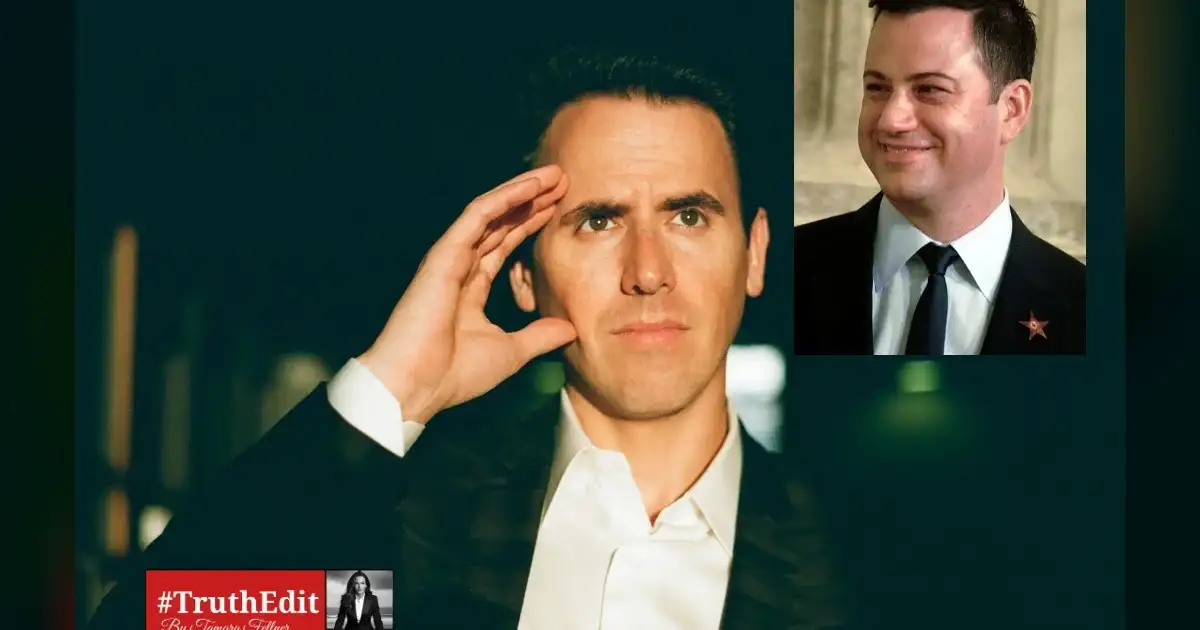

Mentalist Oz Pearlman didn’t just miss a flight; he executed a strategic withdrawal from Jimmy Kimmel Live, delivering a stunning blow to the late-night host. This wasn’t merely a scheduling conflict; it was a calculated move, a direct hit as Kimmel faces renewed scrutiny and intense heat over old jokes targeting former First Lady, Melania Trump.
Pearlman, the renowned mentalist who captivated audiences on “America’s Got Talent,” made the definitive decision to skip the spotlight. His abrupt departure comes at a critical juncture, with Kimmel’s show grappling with a fresh wave of “Melania backlash” that has once again put the late-night institution on the defensive.

The Tactical Retreat: When Brand Trumps Exposure
Make no mistake, this isn’t just about a mentalist. This is a stark illustration of the escalating pressure on entertainers operating in a deeply polarized cultural climate. Kimmel’s past jabs at the former First Lady are not merely resurfacing; they are actively creating tangible, real-world consequences for his show, forcing talent to reconsider their alliances.
Pearlman’s withdrawal is a textbook tactical retreat. It unequivocally signals the growing risk for any talent appearing on platforms perceived as politically charged. In today’s media battlefield, no one wants to get caught in the crossfire, especially when their own brand relies on universal appeal rather than partisan division.
The entertainment industry has become a high-stakes arena. Every decision, every appearance, is rigorously analyzed for political alignment. Guests are no longer simply seeking exposure; they are actively weighing their personal brand equity against a host’s history, their show’s reputation, and the potential for collateral damage. Pearlman’s move is a clear defensive play, protecting his illusionist brand from the political mudslinging that has become synonymous with late-night commentary.
Kimmel has cultivated a history of sharp, often biting, political commentary. For some, it’s essential, even hilarious. For others, it’s deeply offensive, a line crossed too many times. This latest episode serves as an undeniable reminder: the past never truly stays buried. In the digital age, yesterday’s monologue is just a click away from becoming today’s liability.
The “Melania backlash” isn’t a new phenomenon; it’s a recurring headache, a chronic condition for Kimmel. Each time it flares up, it forces difficult, often agonizing, choices for his production team and, crucially, for potential guests like Pearlman. The question isn’t if it will resurface, but when, and what the cost will be.
Late Night’s Precarious Tightrope Walk
Late-night hosts are walking a dangerous tightrope, indeed. They are compelled to be edgy, provocative, and relevant to maintain viewership and cultural cachet. Yet, in doing so, they risk alienating vast segments of their audience. This already precarious balancing act just got significantly harder for Kimmel, as Pearlman’s absence demonstrates.
Pearlman’s decision is a clear indicator: some guests are now choosing caution over exposure, actively avoiding shows that carry too much political baggage. This isn’t just a ripple; it’s a chilling effect that will undoubtedly reverberate across the entire industry. Other entertainers, their agents, and their publicists are watching this situation with hawk-like intensity. They will decide, with cold, hard calculation, if a Kimmel appearance is worth the potential trouble, the social media firestorm, or the alienation of a portion of their fanbase.
The stakes are astronomically high for network television. Viewership numbers are under constant, microscopic scrutiny, and any controversy, real or perceived, can send those numbers plummeting faster than a quarterback sack. Networks demand stability, not scandal.
Kimmel’s show, like all late-night programs, relies heavily on big-name guests to draw crowds and generate buzz. If top-tier talent begins to shy away, it directly impacts the show’s star power, leading to fewer eyeballs and, ultimately, less ad revenue. This isn’t just about optics; it’s about the bottom line, a critical factor in the brutal economics of network television.
The Growing Divide: Picking Sides in the Entertainment Arena
We are witnessing a profound and growing divide in entertainment. Some artists are more than willing, even eager, to jump into the political fray, using their platforms for activism or commentary. Others, like Pearlman, are steadfast in their desire to keep their careers separate from partisan battles, prioritizing their art over political alignment.
Oz Pearlman has drawn a clear line in the sand. His act is about wonder, illusion, and shared human experience, not political mudslinging or divisive rhetoric. His decision to withdraw was not emotional; it was a shrewd business decision, a strategic play to protect his brand and his audience.
This situation highlights a fundamental, pressing question for Hollywood: Can entertainers truly remain neutral anymore? Or has every public appearance, every guest spot, every social media post, now become an unavoidable political statement? The answer, increasingly, leans heavily towards the latter. Audiences today demand transparency and authenticity. They expect hosts and guests to align with their values, or face swift and often brutal consequences.
This isn’t an isolated incident concerning only Kimmel. It’s a bellwether for the entire late-night landscape. Every host who has ever made a controversial joke, every comedian who has pushed the envelope, is now on notice. Their past comments can, and will, come back to haunt them at the most inconvenient moments, threatening their careers and their shows.
Pearlman’s decision to back out was a meticulously calculated one. He undoubtedly weighed the benefits of national exposure against the very real potential for negative association and brand dilution. He chose, decisively, to protect his brand and his professional integrity. In this game, there are no amateurs; these are professional decisions with profound financial implications. Every appearance is a strategic play, a calculated risk, or a deliberate avoidance.
Kimmel’s Next Play: Handling the Minefield
So, what does this mean for Jimmy Kimmel Live? It means Kimmel must reassess his strategy, and quickly. He needs to figure out how to manage this volatile environment while simultaneously keeping his show attractive to top-tier guests. The playbook needs an urgent revision.
Will he double down on his political humor, embracing the controversy and solidifying his base? Or will he soften his approach, attempting to broaden his appeal and avoid further backlash? The outcome is uncertain, but the pressure is mounting with every passing day. This is not a minor bump in the road; it’s a significant indicator of the current media climate, a warning shot across the bow.
Talent is becoming increasingly selective, choosing their platforms with the precision of a surgeon. Kimmel’s team needs to be exceptionally tactical, actively seeking out guests who are either willing to brave the political storms or who operate entirely outside the political fray. Failure to do so risks their show becoming a revolving door of controversy, struggling to book the names that drive viewership.
The entertainment world now mirrors the political world in its intensity and scrutiny. Every move is scrutinized, every misstep can be costly, and every decision carries long-term implications. This is the new reality for late-night television, a landscape fraught with peril and demanding constant vigilance.
Oz Pearlman’s withdrawal is a clear signal flare, illuminating the treacherous terrain. It demonstrates that even mentalists, whose stock-in-trade is escapism and wonder, are feeling the heat, making strategic decisions to avoid political entanglement. In today’s media landscape, yesterday’s jokes can become today’s career-threatening liabilities. And those liabilities, as Kimmel is now learning firsthand, can cost you your most valuable assets: your guests.
Photo: Glenn Francis
Source: Google News