
President Donald Trump didn’t just throw a flag on the play this week; he laid down a tactical ultimatum. His hardline warning to Iran — that the Gaza ceasefire “better hope” it holds — wasn’t merely rhetoric.
Tehran’s instant, fiery retort, threatening to drag the United States into a regional “quagmire,” confirms it: this isn’t diplomatic sparring. This is a high-stakes, geopolitical showdown over a truce that feels less like peace and more like a fragile timeout before the next brutal quarter.

This fragile Gaza ceasefire, kicked off on May 4, 2026, was supposed to be the cooling period, a strategic pause to de-escalate the boiling hostilities between Israeli forces and Hamas, to get aid flowing and prisoners exchanged. But Trump’s direct challenge to Iran and its network of proxies hasn’t just ripped the lid off any perceived calm; it’s exposed the raw nerves of a region perpetually on the brink. This isn’t merely ‘putting everyone on edge’; it’s a deliberate escalation.
Trump’s Hard Tackle on Tehran
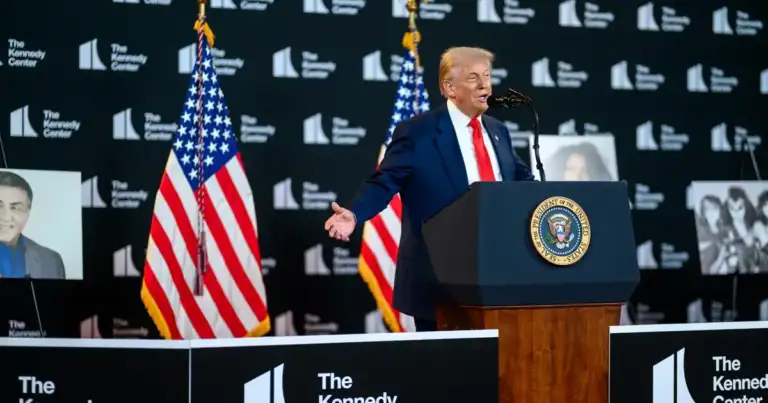
President Trump didn’t mince words. Speaking from a rally in Phoenix, Arizona, and doubling down on Truth Social, he dropped the hammer on May 4.
“This ceasefire in the Middle East, a very important thing, a very strong thing, it better hold. Iran and its terror proxies, they better hope it remains in effect. We don’t want to see any more trouble. We have peace, let’s keep it.”
That’s not just a direct message; it’s a clear, unequivocal shot across the bow to groups like Hezbollah. It’s a blunt declaration: stay in your lane, or face the full, unsparing consequences. There’s no room for misinterpretation here.
But Tehran wasn’t about to stand on the sidelines. On May 5, Iran’s Foreign Ministry Spokesperson, Nasser Kanaani, hit back with force. He warned the US to back off from what he called “one-sided” support.
“The American regime and its former leaders should be careful not to drag themselves back into a quagmire of their own making in our region. Any attempt to dictate terms, escalate tensions, or support aggression will only lead to further instability and will certainly not serve American interests. The region has seen enough of Washington’s miscalculations.”
That’s a direct, calculated counter-punch. It doesn’t just frame US pressure as a surefire way to reignite the conflict; it paints Washington as the primary provocateur. This isn’t merely diplomatic bluster; it’s a high-stakes strategic chess match playing out in the public arena, each move designed to gain an advantage.
Is the Gaza Ceasefire a House of Cards or a Deceptive Play?
The real question, the one keeping strategists and civilians alike awake at night, isn’t simple at all: Is this ceasefire a genuine attempt at de-escalation, or merely a temporary pause before the next inevitable explosion?
Let’s be blunt: this truce is not just a house of cards; it’s a sandcastle built on a fault line. The deep, ingrained mistrust between Israel and Hamas is a chasm, not a crack.
Critical, non-negotiable issues like hostage releases, humanitarian access, and long-term security aren’t just unresolved; they are the very bedrock of any lasting peace. To ignore them is to guarantee failure.
The historical ledger is brutal and unforgiving. Previous ceasefires in this region haven’t “often been short-lived”; they’ve been consistently, predictably ephemeral, collapsing under the weight of violations or a fundamental failure to address the core problems. Why should this one, born of similar circumstances, be any different?
The Weight of External Pressures
Statements from leaders like President Trump and the Iranian government aren’t just words; they are strategic maneuvers, each loaded with immense external pressure. Each side interprets the rhetoric not merely as a necessary deterrent or a blatant provocation, but as a direct challenge, a test of will.
This volatile environment is ripe for miscalculation by regional players. One wrong move, one misinterpreted signal, and the entire fragile structure doesn’t just “blow up”; it shatters, dragging everyone into the debris.
The involvement of Iranian-backed proxies isn’t just a constant threat; it’s a wild card in an already dangerous game. Groups like Hezbollah in Lebanon don’t wait for a green light from Tehran for every move; they operate on their own tactical timelines, often with devastating autonomy. Any action by these groups, regardless of Iran’s official stance, will be unequivocally interpreted as a direct challenge to the ceasefire, creating a volatile, unpredictable situation that can ignite at any moment.
Without a comprehensive political solution, any ceasefire is nothing more than a temporary break, a fleeting timeout, not a resolution. Its long-term viability isn’t just questionable; it’s non-existent. We’ve seen this play before, time and again, and the final whistle always blows on failure.
The Echo of “Quagmire” and the Broader Conflict
Iran’s calculated use of the term “quagmire” is no accident; it’s a deliberate, pointed jab. It’s a direct, stinging reference to US military entanglements in Vietnam, Iraq, and Afghanistan – a stark reminder that deeper US involvement in the Middle East has historically led to prolonged, costly, and ultimately unsuccessful engagements. This isn’t merely a historical lesson; it’s a live-fire warning in an active conflict zone, a tactical move to deter further American intervention.
Let’s not lose sight of the bigger picture, the wider battlefield. The United States and Israel launched military strikes against Iran on February 28, 2026. This isn’t some abstract dispute; this is an ongoing, active armed conflict.
The Gaza ceasefire, while critical in its own right, is merely a regional flashpoint within this much larger, complex geopolitical struggle. Trump’s warning, therefore, isn’t just a localized message about Gaza; it’s a strategic declaration regarding Iran’s entire regional posture during a period of declared warfare. It’s a test of wills, a dangerous game of ‘chicken’ on the global stage.
President Trump’s past policy of “maximum pressure” against Tehran didn’t just “lead to” several direct confrontations; it engineered them. The assassination of Iranian General Qassem Soleimani in 2020 and the subsequent retaliatory missile strikes remain seared into the collective memory of the region. This current exchange is not an isolated incident; it’s a direct continuation of that high-stakes, zero-sum game, a brutal test of resolve where the only question is who blinks first, and what price they pay for it.
The Stakes for the Average Fan
This isn’t merely a contest between politicians and generals, a strategic exercise played out in distant war rooms. For ordinary people, the “average fan” caught in the crossfire, these verbal volleys carry devastating, tangible consequences that ripple across continents.
- Regional Stability: The Middle East doesn’t just “impact” global energy markets; it dictates them. It doesn’t just “affect” trade routes; it controls vital arteries of international commerce and security. An unraveling ceasefire wouldn’t just “pull more regional and international players into the fray”; it would unleash a cascade of destabilization, potentially drawing in global powers who have a vested interest in the region’s volatile chessboard.
- Economic Impact: Escalating tensions don’t just “cause spikes” in gas prices; they send shockwaves through global commodity markets. They don’t just “disrupt” supply chains; they sever them, creating economic uncertainty that directly hits household budgets, job markets, and retirement funds worldwide. This isn’t theoretical; it’s pocketbook reality.
- Humanitarian Crisis: The failure of a ceasefire wouldn’t just “make the already dire situation in Gaza even worse”; it would plunge it into an unimaginable abyss. We’re talking about an exponential increase in civilian casualties, further mass displacement, and an escalation of suffering on a scale that defies comprehension. This is a human tragedy waiting to deepen.
- US Foreign Policy: This exchange doesn’t just “highlight” an ongoing debate within US foreign policy; it lays bare the fundamental, unresolved questions: Should the US engage directly or disengage strategically in the Middle East? How are America’s finite resources best allocated in a world of competing crises? These aren’t critical questions; they are existential dilemmas that will define the next era of American global leadership.
The truth, as I see it, is stark: this Gaza ceasefire isn’t just running on fumes; it’s on life support, flatlining. Both sides are engaged in dangerous, high-stakes posturing, but the underlying issues, the very roots of this conflict, remain stubbornly, defiantly unresolved.
Trump’s warning isn’t merely a power play; it’s a strategic gambit. Iran’s retort isn’t just a defiant stand; it’s a direct challenge to American dominance in the region.
This high-stakes game of geopolitical chicken means the “peace,” if you can even dignify it with that term, hangs by the thinnest, most frayed thread imaginable. Unless a truly seismic shift occurs, unless someone radically changes the playbook and commits to something more than tactical pauses, don’t expect this fragile truce to survive the next quarter. The clock is ticking, and the stakes couldn’t be higher.
Source: Google News