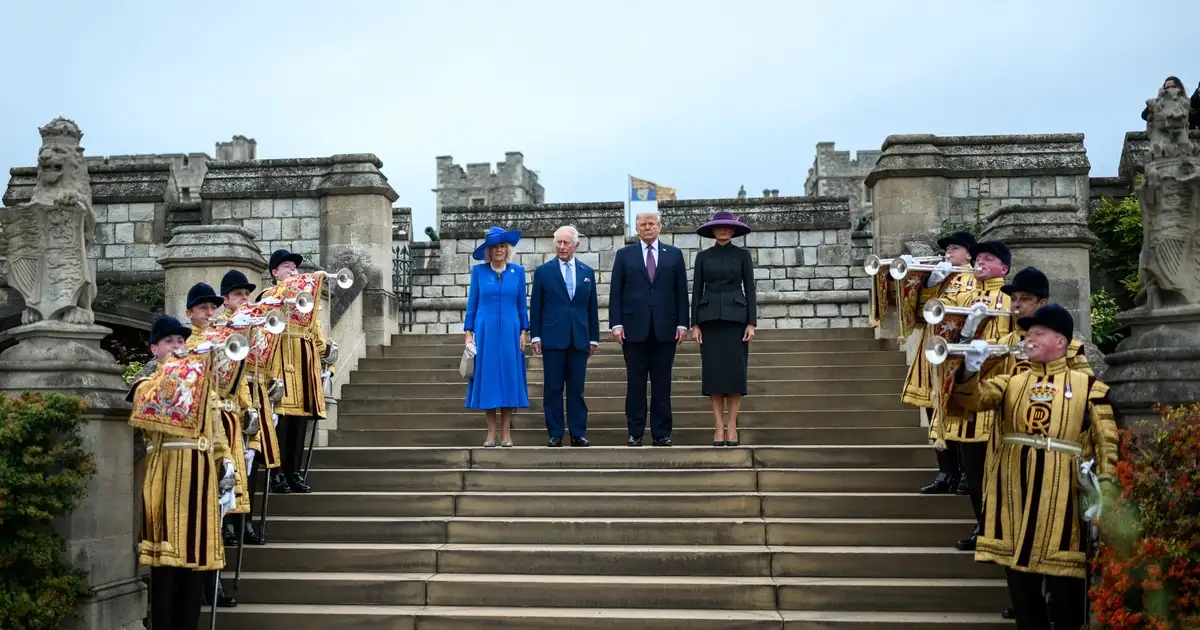

The White House became a strategic battleground today as President Donald Trump and First Lady Melania Trump rolled out the red carpet for King Charles and Queen Camilla. This high-stakes diplomatic play, unfolding on April 27, 2026, was a spectacle of pomp and circumstance, but beneath the regal veneer, the real game was security, with the presidential palace locked down tighter than a fourth-quarter goal-line stand.
This official state visit saw the British monarchs arrive in Washington D.C. amidst a palpable air of tension. Discussions ostensibly focused on global stability and strengthening diplomatic ties, yet the underlying current of security worries dominated the narrative, turning what should have been a straightforward exchange into a demonstration of the administration’s defensive capabilities.

Fortress White House: Security on Maximum Alert
Make no mistake, security concerns weren’t just a footnote; they were the dominant headline for this royal visit. The capital buzzed with an unprecedented level of vigilance, with the Secret Service operating on maximum alert. This heightened posture wasn’t merely precautionary; it was a direct response to recent domestic incidents, including the fallout from the WHCA shooting and ongoing drama within the Department of Homeland Security.
The White House complex transformed into an impenetrable fortress. Every detail, from motorcade routes to guest lists, was scrutinized with surgical precision. This isn’t just routine protocol; it’s a strategic deployment, a clear signal from the administration that while they project strength, they are acutely aware of real-world vulnerabilities. The stakes were too high for anything less than absolute control.
One observer, privy to the inner workings, noted, “The vague ‘worries overshadowing’ line is pure media bait. It justifies beefed-up Secret Service amid WHCA shooting fallout and DHS drama.”
This level of protection reflects not only the current threat landscape but also the immense political sensitivity of hosting a royal visit, particularly for a sitting President known for his uncompromising stance on national security. It was a show of force, a tactical display designed to deter and reassure simultaneously.
The Optics Game: Diversion or Masterclass in Diplomacy?
The public reaction to this “historic” greeting was anything but uniform. Let’s be clear: for many, this wasn’t diplomacy; it was a calculated diversion. Critics immediately questioned the timing of such a grand event, especially given the pressing challenges facing the U.S. and the world.
With the war in Iran escalating and the looming threat of nuclear proliferation, coupled with persistent border chaos and stubborn economic pressures at home, the decision to host a lavish royal visit struck many as tone-deaf. A viral thread on X, rapidly gaining traction, bluntly asked, “Why greet royals when Iran’s nukes are popping? Diversion much?” This sentiment wasn’t isolated; it echoed widely across social media, fueling a fierce debate about the administration’s true priorities.
For a significant segment of the populace, this visit felt like “performance art for boomers,” an elaborate, meticulously staged show designed to shift the national conversation. It was a classic political maneuver, intended to draw the spotlight away from unresolved issues and onto a narrative of global leadership and stability. The optics were undeniable: President Trump, engaging with royalty, projected an image of control and reinforced America’s global standing. But what was the actual score on the policy front?
President Trump’s Playbook: Commanding the World Stage
President Trump understands the power of a strong visual better than most. Hosting King Charles and Queen Camilla wasn’t just a diplomatic nicety; it was a major strategic score, a move straight out of his tactical playbook. It strengthens crucial alliances and, perhaps more importantly, sends an unmistakable message to adversaries: America remains a formidable player on the world stage, capable of commanding international respect even amidst domestic and global challenges.
This maneuver showcases his ability to orchestrate high-profile events, projecting an image of unwavering leadership. Even with the heightened security concerns, the show went on, precisely as planned. That’s not just diplomacy; that’s a power move, a deliberate demonstration of authority and control.
The visit allowed President Trump to reaffirm key relationships, particularly with the United Kingdom, a nation with whom the U.S. shares a deep, enduring history. This meeting solidifies those bonds, ensuring continued cooperation and maintaining American influence in a volatile geopolitical landscape. It’s about securing a strong flank in a complex global game.
Crucially, it also allowed the President to control the narrative. When the spotlight is firmly fixed on a royal visit, other stories—less favorable ones—recede into the shadows. This is a common, effective strategy in high-stakes politics, keeping the opposition scrambling to regain traction. He’s playing both offense and defense simultaneously, managing public perception while executing his broader game plan with precision.
The Royal Angle: Maintaining Global Relevance
Make no mistake, this wasn’t just a courtesy call for the royals; it was a critical strategic play for King Charles and Queen Camilla as well. This visit significantly boosts their global profile, reaffirming the UK’s soft power on the international stage. Being seen alongside the American President, particularly one as globally recognized as Donald Trump, is always a win for the monarchy, reinforcing their continued relevance in a rapidly changing world.
The monarchy thrives on visibility and high-level diplomatic engagements. These interactions ensure their continued presence in global conversations, demonstrating their enduring influence beyond mere ceremonial duties. It’s a way to stay in the game, to project stability and continuity even as the geopolitical landscape shifts beneath their feet.
This visit comes at a time when the UK is facing its own complex challenges, both domestically and internationally. Strengthening ties with the U.S. is paramount, a strategic imperative that this meeting visibly reaffirms. It underscores the “special relationship” between the two nations, ensuring continued cooperation on critical issues, from trade to security. They are not just figureheads; they are diplomatic assets, capable of opening doors, smoothing over tensions, and projecting a united front when it matters most.
Ultimately, this visit was a win-win on the diplomatic field. Both sides gained something valuable. The U.S. projected strength and stability, while the UK maintained its global standing and reinforced a vital alliance. In the intricate chess game of international relations, positioning is everything, and this move was executed with calculated precision by all players involved.
Beyond the Handshakes: The Unseen Scorecard
While the cameras captured the smiles and the pomp, the true impact of this meeting will be measured not in photo opportunities, but in the subtle shifts of power and perception. President Trump, ever the tactician, utilized every tool in his arsenal. He addressed security fears head-on, showcasing a secure and capable administration, while simultaneously redirecting attention away from more contentious domestic issues. This dual-purpose strategy allowed him to control the narrative and demonstrate leadership on multiple fronts.
The “historic meeting” served its purpose, projecting an image of control and reinforcing key alliances. It showcased the President’s command of the international stage, a potent message both at home and abroad. However, the underlying issues that drive global instability and domestic unrest—the war in Iran, border chaos, economic pressures—still demand urgent, sustained attention. The game clock keeps ticking, and while this play was executed flawlessly, the final score on these larger challenges is still uncertain. The world watches, waiting for the next move in this high-stakes contest.
Source: Google News