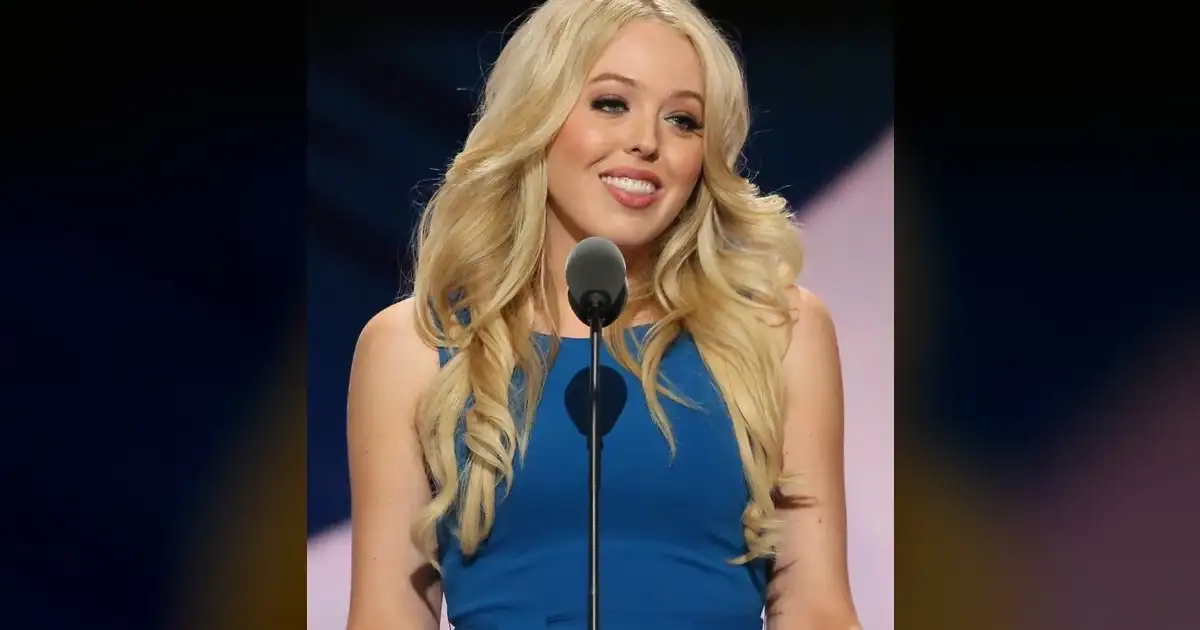

In the high-stakes arena of public perception, every move is a calculated play. Tiffany Trump’s recent state dinner appearance, where she unveiled her postpartum figure in a dazzling strapless gown, wasn’t just a fashion statement; it was a tactical misfire of epic proportions. This wasn’t merely a dress; it was a masterclass in tone-deaf optics, sparking a “fake mommy vibes” narrative that blitzed across social media, leaving a trail of public backlash in its wake.
The former First Daughter stepped onto the global stage in a stunning Saiid Kobeisy sequined gown, a bare-shouldered power play designed to dazzle. But what was intended as a triumphant post-birth reveal quickly became a lightning rod, drawing a defensive line of online critics ready to intercept the narrative.

The Postpartum Playbook Backfires
The digital scoreboard immediately lit up with accusations of a “post-birth glow-up” so meticulously staged, it felt less like a natural recovery and more like a carefully executed PR offensive. From the rapid-fire tweets on X to the deep dives on Reddit, the cynical comments flowed like an unchecked defensive line.
“Postpartum figure? She popped out a kid in May and looks runway-ready? This isn’t a glow-up; it’s the power play of Mar-a-Lago Ozempic!”
This wasn’t mere speculation; it was a direct hit, a visceral expression of public distrust. While countless new mothers grapple with the raw, often unforgiving reality of body image and recovery, Tiffany’s seemingly effortless bounce-back didn’t just feel disconnected; it felt like a deliberate slap in the face to their lived experience.
Skepticism ran deeper than a goal-line stand. Critics didn’t just question the authenticity of her appearance; they outright called it a Photoshopped PR blitz, a digital deception. Her son Alexander’s birth, “conveniently timed” to garner sympathy, seemed a distant memory as she shimmered in sequins, looking completely “snatched.” Was this a genuine moment, or just another calculated move in the Trump family’s relentless game of optics?
A viral TikTok, racking up a staggering 500,000 views, didn’t pull any punches:
“No stretch marks, no sag? Elite genes or elite surgeon?”
This wasn’t merely idle chatter; it was a direct, devastating jab at the perceived artifice, a clear call-out of the smoke and mirrors. The public, increasingly savvy, isn’t just seeing through these carefully curated images; they’re actively calling foul. They don’t just demand authenticity from public figures; they expect it, and anything less is met with a collective groan of disbelief.
Royal Protocol and Perceived Provocation
The selection of a strapless gown at a high-stakes state dinner wasn’t just a fashion choice; it was a tactical blunder, drawing immediate fire for a perceived breach of royal etiquette. The discussions, especially concerning the UK state banquet, laid bare a stark clash of cultures and expectations, a direct challenge to established diplomatic plays.
Melania Trump’s signature off-shoulder style, often in power-blue, paired with Tiffany’s vibrant yellow gown, ignited a furious online blitz, fueling “Yankee trash invading Windsor” rants that echoed across the Atlantic. This wasn’t merely a fashion faux pas; it was widely interpreted as a deliberate attempt to outshine, to disregard traditional protocol, and to assert dominance on a foreign field.
A Mumsnet pile-on, a digital scrum of disapproval, unequivocally branded it “tacky American excess,” drawing a stark, unfavorable comparison to Kate Middleton’s “demure chic.” This wasn’t just a style critique; it was a cultural judgment, a clear statement on who understood the rules of the game.
Make no mistake, this wasn’t just about hemlines or necklines. This was classic Trump one-upmanship, a signature play from a family brand that has consistently thrived on disruption. Yet, in the delicate, formal diplomatic settings of a state dinner, such aggressive tactics don’t just backfire; they explode, leaving diplomatic shrapnel. It alienated a significant portion of the audience, those who value tradition and respect for host nations, turning potential allies into instant critics.
Even the hype surrounding the Lebanese designer, Saiid Kobeisy, wasn’t spared, receiving heavy “side-eye” and accusations of “cultural appropriation bingo.” The accusation was crystal clear, cutting through the glamour:
“Was this merely flaunting ‘exotic’ couture to launder the family brand, another transactional play in the global PR game?”
Every stitch, every sequin, every strategic choice, was dissected, scrutinized for its underlying motive, revealing the cynical playbook at work.
The Trump World Stage: A Flawed Performance
In TrumpWorld, the entire globe is a stage, and every single appearance, every outfit, every public utterance is not just crafted; it’s meticulously engineered, a strategic gambit in their relentless pursuit of narrative control. Tiffany’s state dinner look was no exception to this grand strategy. It was a deliberate, almost aggressive, projection of power, wealth, and an almost alien, effortless perfection.
The critical flaw in this game plan? The public isn’t just watching; they’re actively refusing to buy the script anymore. They’re acutely aware of the performance, dissecting every detail not for its surface glamour, but for its true, often cynical, meaning. The “postpartum glow-up” wasn’t seen as a triumph; it was immediately flagged as another calculated move, a desperate attempt to project an image of invincibility, to scream to the world that even after childbirth, the Trump women remain flawlessly, impossibly perfect.
This kind of public display didn’t just backfire; it detonated, precisely because it utterly ignored the raw, lived experience of the vast majority of people. It didn’t just create a chasm; it forged an unbridgeable canyon between their gilded, elite image and the gritty, everyday reality of millions. The public reaction wasn’t rooted in mere envy; it was a deeper, simmering resentment. It felt like yet another playbook entry from the powerful, dictating narratives and attempting to set impossible, unattainable standards for the rest of us, as if we’re all just bit players in their carefully staged drama.
The Brand’s Reckoning: Can the Playbook Adapt?
This incident isn’t just a blip; it’s a glaring indicator of a broader, systemic challenge for the Trump brand, a chink in their armor that the public is now exploiting. Their brand operates on a principle of unapologetic, almost aggressive, confidence, thriving on generating buzz, even if that buzz is a cacophony of negative noise. But even in their no-holds-barred game, there’s a critical line between confidence and outright, perceived arrogance. Tiffany’s state dinner appearance didn’t just approach that line; it vaulted over it, alienating a significant portion of the audience.
It aggressively reinforced the stereotype of a family so utterly out of touch, so profoundly insulated, that they appear to exist in a gilded bubble, entirely detached from the common man. Their actions consistently appear to disregard common sensibilities, as if the rules simply don’t apply to them. This state dinner appearance wasn’t a mere PR stunt in the traditional sense; it was an unadulterated ego play, a calculated display of personal bravado. It showcased an insatiable desire for attention and validation, a desperate attempt to prove a point about resilience and an almost mythological beauty, even when the audience wasn’t buying it.
The real motive, the true play at hand, is absolute control over perception. It’s about maintaining an ironclad image of strength and success, ensuring that even in the most personal, vulnerable moments—like postpartum recovery—the public persona remains utterly unblemished, a flawless facade. This relentless, exhausting performance, however, wears thin on the audience. It doesn’t just lead to cynicism; it actively fosters accusations of inauthenticity, turning genuine connection into a theatrical farce.
The public isn’t asking for more glamour; they’re begging for realness, for a glimpse of vulnerability, for something, anything, relatable. They want to see the human, not just the highly polished product. When public figures consistently fail to deliver that, they don’t just face a backlash; they invite a full-blown assault on their credibility. Tiffany Trump’s state dinner appearance didn’t just become a symbol of this disconnect; it became a glaring monument to it.
So, the tactical question looms large: Is the Trump brand capable of adapting its playbook, or will it stubbornly cling to its disruptive, “my way or the highway” strategy, even as it continues to alienate a crucial segment of the audience? In this high-stakes game of public opinion, ignoring the crowd is a gamble that rarely pays off. The scoreboard is watching.
Source: Google News