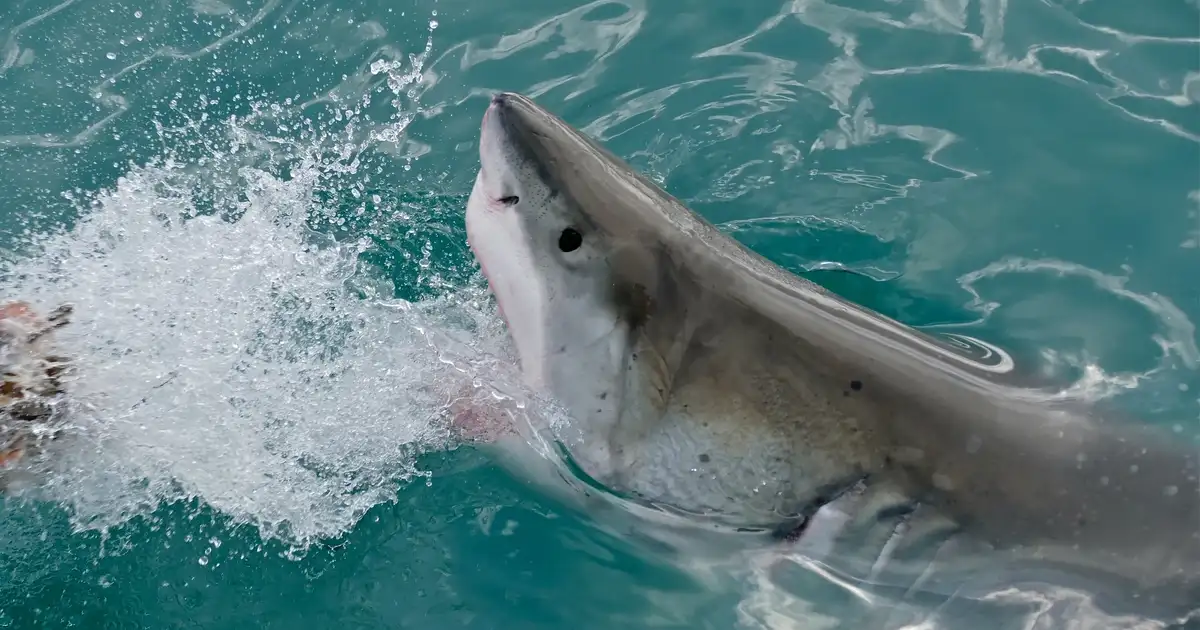

The Pacific playbook for California’s coast just got a radical rewrite, with a formidable defensive line packing serious teeth. Multiple great white shark sightings off the California coast, particularly around Huntington Beach, have sent beachgoers and officials into a full-on scramble, demanding a tactical reassessment of our coastal defense.
The past 48 to 72 hours have seen an unprecedented surge of activity. Lifeguards and vigilant locals confirmed at least five distinct great white sharks on April 28th and 29th, 2026. These aren’t just whispers from the bleachers; these are verified, on-the-record encounters that demand our attention.

The tactical map clearly highlighted the hotspots. The area around Huntington Beach Pier and Bolsa Chica State Beach saw the most action. On the afternoon of April 28th, a surf instructor caught sight of an estimated 8-foot great white just 100 yards offshore near the pier. That triggered a swift, decisive one-hour water closure – a necessary timeout. The very next day, April 29th, brought more reports: a 6-foot shark seen close to shore at Bolsa Chica. Two more sightings, sharks estimated between 7 and 9 feet, were reported further south towards Newport Beach. Lifeguards immediately issued advisories, urging swimmers and surfers to stay sharp and aware. Crucially, no aggressive moves or human interactions were reported; these were simply natural movements within a dynamic marine environment, a lot of ocean traffic reading the currents.
The Coaching Staff’s Playbook: Standard Defense or Strategic Shift?
The authorities are running their standard defense, but the pressure is mounting. Huntington Beach Marine Safety Chief John Smith laid out the game plan with characteristic calm.
“We are monitoring the situation closely. Our priority is public safety, and we are deploying drones and jet skis for enhanced surveillance. These are mostly juvenile sharks, but we always advise caution.”
He underlined that temporary closures are standard procedure, a non-negotiable timeout when sharks get too close to the shoreline. They pull the trigger without hesitation, and rightly so. Marine biologists are also weighing in, providing crucial intel. Dr. Eleanor Vance, a marine biologist with the Aquarium of the Pacific, explained the natural rhythm of these waters, offering an expert’s perspective on the current surge.
“Orange County waters, particularly around Huntington and Long Beach, are known nursery grounds for juvenile great whites. We often see increased activity in spring and summer as water temperatures rise and prey species like stingrays become more abundant. The recent cluster of sightings, while notable, is not entirely unprecedented for this time of year.”
She added that these sharks are probably just hunting their usual prey, like stingrays and fish. They aren’t looking for trouble with humans; they’re simply executing their natural hunting strategy. But is this merely standard operating procedure, or a strategic adjustment to a shifting landscape?
The Fan Zone’s Hot Takes: Cynicism on the Sidelines
But let’s be real. The public isn’t always buying the official narrative. Online forums are buzzing like a stadium after a bad call, filled with armchair quarterbacks and self-proclaimed experts. On Reddit, you’ve got the “salty veterans” of surfing, dismissing it as “just juvenile whites migrating early,” mocking the “tourist chum” who panic. One top post blasted, “Huntington bros acting like it’s Sharknado while we’ve been shredding with them for years—clear water means more spotters, not apocalypse.” This isn’t just a difference of opinion; it’s a clash of cultures on the coastline.
X users are piling on, too, hitting back at news outlets. They claim it’s “Fake news for clicks,” questioning why lifeguards shut down a mile of beach for an 8-footer that just “dipped.” The chatter points to a “performance for spring break hype,” a theatrical display for tourist dollars. Some even float sarcastic theories, suggesting “El Niño pushed them south early,” or claiming it’s “drone footage from Oceanographic tagging ops to scare off jet ski assholes.” The conspiracy theories are as abundant as the sightings themselves.
The cynicism runs deep. Why the sudden fanfare? Some locals smell a “revenue protection racket,” pointing to the timing, right before summer tourist season. They suggest it’s prime time for beach closures to boost “safety grant” funds, or maybe local politicians are flexing after last year’s quiet season. One viral Substack thread ripped into it: “Great whites transiting, not hunting—Instagram fire dept post admits it’s rare, yet 4-hour shutdowns? Smells like revenue protection racket,” it declared. Surfers, meanwhile, just show unfazed bravado, a defiant stance against perceived overreaction. “10-footer at HB? Aggro my ass, it ghosted—back in by dusk,” one YouTuber scoffed. The fan zone, it seems, has its own complex playbook.
Are California Beaches Still Safe? A Tactical Assessment
This brings us to the big question that looms over every beachgoer: Are California beaches still safe? Or should you just hang up your wetsuit for good and call it a season? The hard facts unequivocally state: do not panic. The risk of an unprovoked shark attack in California remains incredibly low. The California Department of Fish and Wildlife confirms this, providing the cold, hard data. There have been only 20 fatal unprovoked shark attacks in California since 1950. Non-fatal incidents are also rare, a testament to the millions of people who hit the water every single year without incident.
The vast majority of these recent sightings involve juvenile great whites. These young sharks are typically 6 to 10 feet long. They are generally less aggressive, primarily feeding on fish and stingrays. They aren’t looking for a meal that looks like you; they’re simply navigating their natural environment, following their instincts.
Our lifeguards are the ultimate special teams unit, executing their mission with precision. They are actively patrolling, using drones, jet skis, and their own sharp eyes to maintain situational awareness. When sharks are spotted within a certain distance, temporary water closures are immediate and non-negotiable. This drastically cuts down on potential encounters, a crucial defensive play. Safety guidance is also key: avoid swimming at dawn or dusk, stay out of murky water, don’t wear shiny jewelry, and never swim alone. Listen to the lifeguards; they are the coaches on the field, and their calls are paramount to your safety.
All recent sightings have shown sharks swimming naturally, exhibiting no aggressive behavior towards humans or boats. This confirms they are just doing their thing, foraging in their natural habitat, not stalking swimmers. The data supports a calm, rational approach, not hysteria.
Historical Tape and the New Normal: Adapting the Game Plan
Southern California has always been a nursery for young great whites. We’ve seen spikes before, like in 2017 and 2020. These also led to warnings and closures. This isn’t a new game, just a new quarter with higher stakes and better visibility. The consistent message from authorities has always been education, not hysteria—a strategy built on understanding, not fear. These sharks are a natural, vital part of the ecosystem, and we must respect their presence.
Data shows that sightings have actually increased over the last decade. This is partly due to successful conservation efforts; the shark population is rebounding, a win for marine health. Also, our surveillance has gotten exponentially better. Drones give us eyes we never had before, providing unprecedented situational awareness. Warmer ocean temperatures for late April might also be a factor, pulling more marine life, including sharks and their prey, closer to shore. It’s a complex interplay of factors, demanding a nuanced understanding.
This uptick in shark activity forces us to adjust our game plan. It’s a direct reminder of our place in the marine environment, a powerful call to respect the wild. For beachgoers, it means staying vigilant and respecting lifeguard warnings without question. For coastal communities, it’s about balancing tourism with wildlife conservation and robust public safety protocols. The increasing frequency also sparks a bigger conversation: it’s about ocean health, it’s about climate change, and it’s about the undeniable success of apex predator conservation. Ultimately, it’s a sign of a healthier ocean, which is a victory for everyone.
The Final Whistle: Play Smart, Stay Vigilant
So, should you bench yourself from the water? Absolutely not. But you better be smart, because the ocean isn’t some manicured turf; it’s a wild, untamed arena. These increased sightings aren’t a red flag of imminent danger, but a tactical alert for heightened awareness. We’re seeing more because our surveillance game is stronger, leading to more warnings, not necessarily more threats. It’s a healthy ecosystem flexing its true power. Master the new game plan, respect the wild, and you’ll not only survive but thrive in the lineup. Dismiss this intelligence at your own peril.
Source: Google News