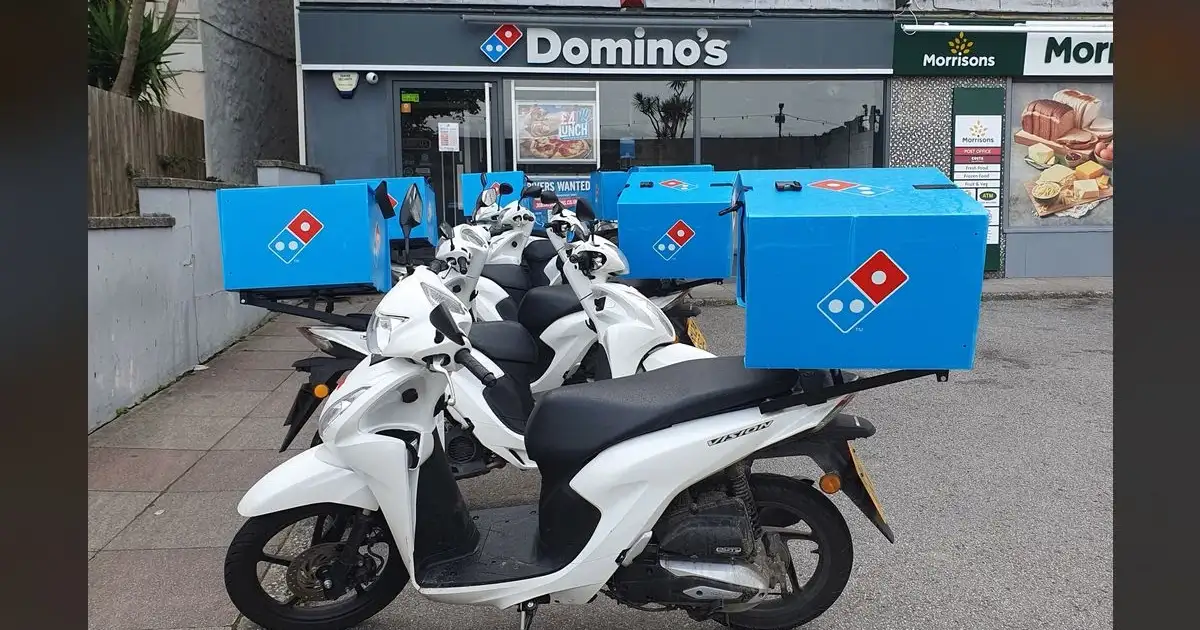

A Domino’s delivery driver was charged today after allegedly wreaking violent revenge on a customer who dared to stiff him on a tip. This isn’t just a bad customer service story; it’s a brutal breakdown of trust in the gig economy.
This shocking incident, involving a delivery driver seeking violent retribution over a tip, forces us to confront a dark reality. It perfectly illustrates the simmering rage and entitlement now boiling over within the delivery industry.

While details of this specific Domino’s incident are emerging, it fits a disturbing pattern.
The Gig Economy’s Dark Side
We’ve seen this play out before, albeit usually with less physical confrontation. Consider Marcus “MJ” Jones, a 32-year-old driver for a prominent third-party food delivery platform.
He was charged in early April 2026 with multiple counts of grand larceny and identity theft in the Greater Metro Area. Jones wasn’t just stealing food; he was allegedly stealing customer identities.
Police reports indicate Jones used two primary methods. He would mark high-value orders as delivered, then disappear with the food himself.
More chillingly, he allegedly photographed or illicitly obtained credit card details from customer receipts or cards. This is a betrayal of trust on a scale that should terrify anyone who orders takeout.
A Pattern of Betrayal
The investigation into Jones gained traction after multiple customers reported similar patterns of fraud. One victim, Sarah Chen, told local news outlets her $150 sushi order vanished.
Days later, $800 in fraudulent charges appeared on her credit card. Police traced the pattern to Jones’s deliveries, leading to his arrest.
Authorities reportedly found customer receipts and partially eaten high-value food items at his residence.
These aren’t isolated incidents. In late 2025, Frederick Ike Cooper, an 18-year-old in Aberdeen, N.C., was arrested.
He faced charges of felony larceny, embezzlement, and false pretenses. His alleged crime? Adding unauthorized charges, often fake tips, to customers’ credit cards after delivery.
This digital theft is just another flavor of the same systemic rot.
Who Is Accountable?
The question isn’t just about bad apples; it’s about the entire barrel. Delivery companies rely on independent contractors.
This structure often means less oversight and less accountability. The ease of entry into these roles creates a massive loophole.
It allows individuals intent on exploiting the system to thrive, operating largely unsupervised.
Consumer advocates are screaming for stricter background checks. They demand more robust identity verification processes for drivers.
Enhanced data security measures from delivery platforms are no longer optional. They are an absolute necessity.
Customers share personal and financial information, expecting basic security in return.
“My $150 sushi order vanished, marked as delivered, but never arrived. Days later, fraudulent charges totaling over $800 appeared on my credit card.” – Sarah Chen, victim
This isn’t just about an unpaid tip spiraling into violent revenge. It’s about a system that enables rampant fraud and leaves customers exposed.
The delivery industry is booming, but at what cost to our safety and peace of mind?
The Price of Convenience
These incidents erode public trust with every stolen order and every fraudulent charge. They prompt urgent discussions about regulation and industry best practices.
The ongoing legal proceedings against Marcus Jones could set a precedent. They might finally force platforms to better monitor and vet their drivers.
For consumers, the message is clear: vigilance is paramount. Check your financial statements like a hawk.
Report any suspicious activity immediately. This doesn’t matter what service provider you use.
The convenience of delivery is no longer a given; it comes with a hidden price tag of risk.
The outcome of these cases will shape the future of the entire gig economy. Will companies finally step up, or will they continue to prioritize rapid expansion over basic safety? Our wallets, and sometimes our personal safety, depend on the answer.
Source: Google News