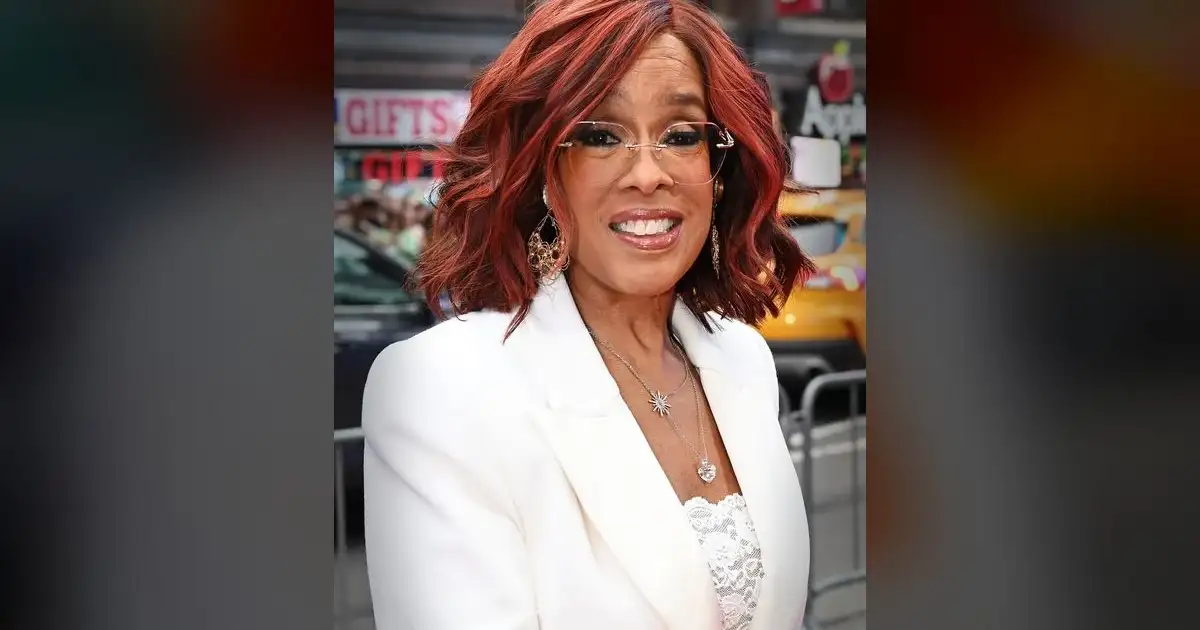

CBS anchor Gayle King didn’t just take a hit; she suffered a devastating blow to her journalistic credibility, fumbling a crucial interview with child abduction survivor Elizabeth Smart. Her “very inappropriate” line of questioning regarding Smart’s bodybuilding journey wasn’t merely a misstep; it was a tactical blunder that left viewers appalled and ignited a firestorm of criticism across the media landscape.
King, a broadcast veteran known for her direct style, grilled Smart relentlessly on her new physique. The questions were so invasive, so exploitative, that the collective gasp from the audience was almost audible. This wasn’t just a tough watch; it was a masterclass in how not to interview a trauma survivor, leaving a bitter taste and serious questions about journalistic ethics.

The Interrogation on Air: A Strategic Misplay
The controversial segment, aired on May 3, 2026, saw King press Smart hard on her physical transformation. She didn’t just ask about it; she interrogated, demanding to know if her new physique was a “reclamation of control” after her abduction. King then probed the emotional impact of displaying her body on stage, seemingly intent on forcing a direct, explicit link between Smart’s past trauma and her present triumph. This wasn’t an exploration; it was an excavation.
This aggressive line of questioning struck a raw nerve, and the backlash was immediate and fierce. Social media platforms, particularly X and Instagram, erupted with condemnation. Users accused King of re-traumatizing Smart on live television, arguing that she utterly failed to demonstrate even basic journalistic sensitivity. It was a textbook example of how a powerful platform can be misused to inflict further harm.
Elizabeth Smart’s story is one of unimaginable resilience. Abducted at age 14 in 2002 and held captive for nine months, she has since become a powerful advocate for others. Her recent foray into bodybuilding was a profound symbol of strength, a personal declaration of overcoming trauma and reclaiming control on her terms. The interview was ostensibly designed to showcase this powerful new chapter. Instead, its flawed execution completely overshadowed the message, transforming a potential celebration into a psychological dissection that felt both intrusive and disrespectful.
King’s Playbook Under Fire: A Fumbled Opportunity
The journalistic community, alongside a furious public, didn’t just condemn King’s approach; they tore it apart. Critics argued that her questions were not merely overly personal but deliberately engineered to force Smart into a narrative directly linking her bodybuilding to her past trauma. This felt not only forced but potentially re-traumatizing, a strategic error of monumental proportions.
Let me be clear: a survivor’s journey is theirs alone to define. To force a link between a triumphant present and a traumatic past is not just insensitive; it’s a journalistic malpractice. There should be no undue probing into old scars, especially when discussing a positive new endeavor meant to symbolize strength and personal growth.
“Gayle King really missed the mark. Elizabeth Smart is a survivor, not a case study for psychological analysis. Let her celebrate her strength without dissecting her trauma.”
Organizations dedicated to supporting trauma survivors immediately raised red flags, issuing strong reminders to media outlets about their fundamental responsibility to protect interviewees. This isn’t just good manners; it’s paramount to ethical reporting. When a journalist fails this basic duty, the entire profession suffers.
Some attempted to run interference for King, suggesting she was merely exploring deeper motivations, framing it as legitimate journalistic inquiry. They reasoned that Smart, as a public figure, is accustomed to discussing her past. But this defense crumbles under scrutiny. Smart looked visibly uncomfortable throughout the segment, her body language a clear signal of distress. She repeatedly emphasized her desire to inspire others, to prove she could achieve anything, focusing on finding strength in a new, positive way – a message that King’s line of questioning seemed determined to undermine.
“It’s about proving to myself that I can do hard things, that I can set a goal and achieve it. It’s about finding strength in a new way.”
Smart, with admirable grace, has not directly commented on the backlash, choosing instead to focus her recent social media posts on self-empowerment and resilience, refusing to engage with the controversy directly. This highlights her unwavering focus.
Beyond the Trauma Narrative: A Systemic Challenge?
This isn’t King’s first rodeo with probing interviews. Her sit-down with R. Kelly, for instance, was widely praised for its no-holds-barred approach. But sometimes, directness morphs into a brutal, uncalled-for assault on an interviewee’s privacy and dignity. This incident isn’t just proof; it’s a damning indictment of a journalist overstepping a critical boundary.
The question isn’t just about Gayle King; it’s about a wider systemic issue. Is this an isolated misfire, or does it expose a fundamental flaw in how high-profile journalists, particularly those in the spotlight, approach the most vulnerable among us? Are we seeing a pattern where the pursuit of a “deeper story” trumps basic human empathy?
Journalistic organizations have established clear guidelines emphasizing consent, respect for boundaries, and, crucially, avoiding re-traumatization. This interview doesn’t just make us question if these guidelines are followed; it screams that these fundamental principles were not just ignored, but actively trampled. The media often seeks out “reinvention” stories, celebrating how survivors achieve amazing things. But connecting these achievements directly and aggressively to past trauma is deeply problematic. It risks reducing complex individuals to their victimhood, stripping away their agency in the present.
“Interviewing survivors requires immense sensitivity. The goal should be to empower their voice, not to re-victimize them or force them into a narrative they may not want to tell.”
Dr. Sharma’s words are not just a suggestion; they are a blueprint for ethical engagement. To deviate from this blueprint is to risk not only public trust but also the very integrity of the journalistic endeavor.
The Public’s Verdict is In: A Demand for Empathy
The public’s verdict is in, and it’s a resounding condemnation. This wasn’t just a signal; it was a deafening roar demanding accountability and empathy from those who hold the microphone. This isn’t a game; these are real people with real, profound experiences, and their stories deserve to be treated with the utmost respect and care.
This incident starkly highlights the inherent tension in media’s role: informing the public is key, but ethical obligations to interview subjects, especially those who have faced profound trauma, are just as, if not more, important. Are survivors forever defined by their past, or can they truly reinvent themselves, moving forward without constant psychological dissection? The public wants, and deserves, answers.
The scoreboard is clear: Gayle King suffered a major defeat in the court of public opinion. This isn’t about second-guessing; it’s about setting a new standard for how we engage with stories of resilience and recovery. For every journalist who holds a microphone, the message is stark: Empathy isn’t a soft skill; it’s the bedrock of ethical reporting. Fail to grasp that, and you’ll find your own credibility taking a brutal, irreversible hit.
Source: Google News