
In a single, audacious political maneuver, President Donald Trump executed a classic double-whammy this past Wednesday, May 13, 2026. From the rally stage in Scranton, Pennsylvania, he didn’t just float a casual anecdote; he strategically unveiled what he called a “cool” response from China’s President Xi Jinping regarding nuclear arsenals, then immediately pivoted to unleash a brutal, new tactical weapon against his domestic opponents: the “Doom-and-Gloom Democrats.” This wasn’t merely a speech; it was a meticulously crafted offensive, designed to dominate headlines and redefine the political battlefield on his terms.
The Xi Playbook: A Global Power Read
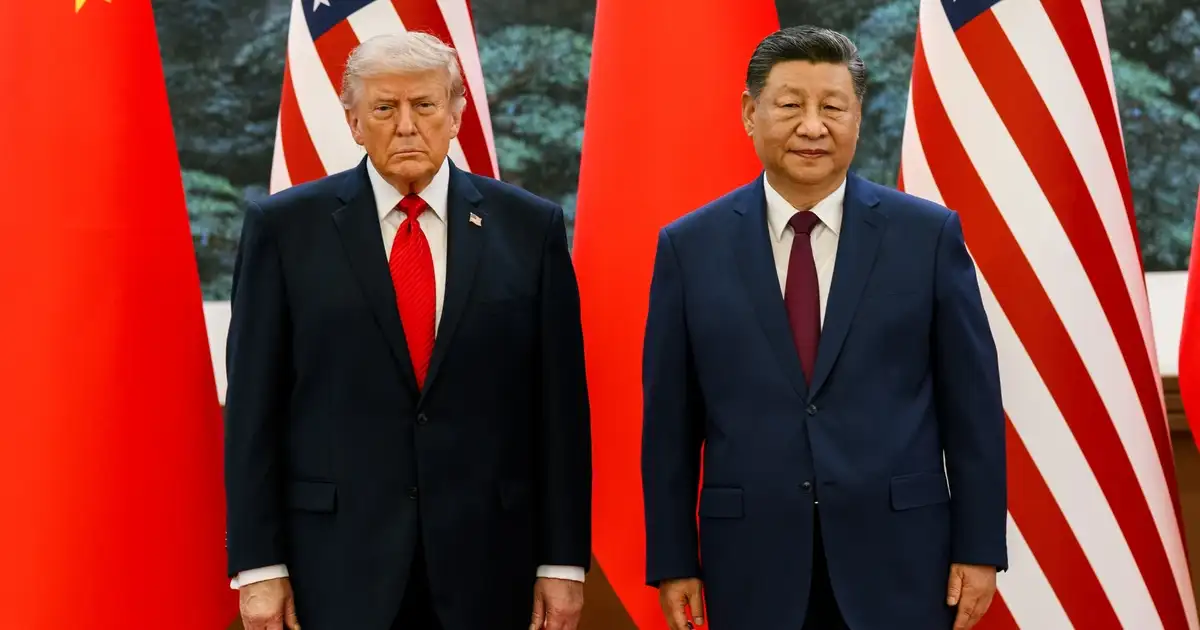
Trump recounted a direct, high-stakes exchange with President Xi Jinping, claiming he “grilled” Xi on China’s formidable nuclear arsenal. He described Xi’s demeanor as remarkably calm and collected, not defensive. “I asked President Xi, ‘What about those nukes, Mr. President? What’s the deal?'” Trump stated, adding that Xi was “cool. Very cool. Didn’t even flinch. That’s a strong man.”

This wasn’t merely a casual anecdote; it was a calculated maneuver, a power play designed to position Trump as the singular figure capable of engaging with global adversaries on their own terms. He’s actively constructing a narrative that only he possesses the gravitas and the unblinking resolve to ‘grill’ a nuclear power’s leader and walk away with a ‘cool’ assessment.
This signals a willingness to bypass traditional diplomatic channels, engaging in high-stakes, direct confrontations few other leaders would dare to recount. It bolsters his image as a risk-taker whose audacity is his strength, operating outside the conventional playbook.
For his base, it’s proof positive of a leader unafraid to tackle the world’s most daunting challenges head-on, bypassing the perceived timidity of career diplomats. For the global stage, it’s a potent, if unsettling, signal of his approach to international relations—a high-stakes poker game where cards are shown, or at least, claimed to be shown. Was it genuine insight, or a calculated bluff to unsettle rivals and reassure his base?
Critics immediately condemned the revelation as reckless. Discussing sensitive nuclear matters publicly, they argue, is a dangerous game that risks diplomatic fallout and miscalculation.
But for Trump, substance often takes a backseat to perception. He’s telling his base, unequivocally, that he handles the big guys directly, without fear, and with an unparalleled ability to gauge their strength.
This move is a calculated risk, a gambit designed to make him look like the only adult, the only truly strong leader in a room full of cautious diplomats. He’s showing his hand, or perhaps, masterfully bluffing his way through the game, even when the underlying message is alarming.
Unleashing the ‘Doom-and-Gloom’ Offensive
Immediately after his Xi comments, Trump pivoted with surgical precision to his domestic opponents, unveiling a new, cutting nickname for the Democratic Party. He branded them the “Doom-and-Gloom Democrats.” This is vintage Trump, a master tactician always on the hunt for the perfect, most devastating label to define and diminish his opposition.
“These Democrats, they’re not just ‘Radical Left’ anymore,” Trump declared, his voice dripping with disdain. “They’re the ‘Doom-and-Gloom Democrats.’ Always complaining, always tearing down, never building up. Doom-and-Gloom!”
The crowd roared its approval, instantly adopting his new moniker. This isn’t just a catchy phrase; it’s a psychological weapon. Trump understands that in the crowded, noisy arena of modern politics, simplicity often trumps nuance.
“Doom-and-Gloom” isn’t merely descriptive; it’s prescriptive, instantly framing the Democratic platform as inherently pessimistic, devoid of hope, and perpetually focused on negativity. It’s a brilliant stroke of political jujitsu, flipping critiques of his administration back onto the opposition.
By defining his adversaries with such a stark, memorable label, Trump doesn’t just energize his own base; he seeks to demoralize and disorient his opponents. This forces them to either embrace or awkwardly reject a caricature he has so deftly drawn, bypassing policy debates in favor of emotional resonance.
His critics, predictably, decry this as divisive and demeaning rhetoric, arguing it demonizes opponents and avoids substantive debate. But Trump isn’t interested in debate; he’s interested in winning, igniting his base and strategically demoralizing his opposition.
This nickname is a weapon, aimed directly at the heart of Democratic messaging, a quick jab designed to land a knockout punch. The “Doom-and-Gloom” label carries a powerful, insidious message: Democrats are inherently negative, incapable of optimism, and fundamentally opposed to progress.
It’s a strategic move that positions Trump as the ultimate optimist, the builder, the one with the vision for a brighter future. Make no mistake: this isn’t about policy debate; it’s about psychological warfare, drawing a clear, unyielding line in the political sand.
The Long Game: 2028 on the Horizon
Make no mistake, these pronouncements are not isolated incidents; they are carefully orchestrated plays in a much larger, unfolding drama. With the 2028 election cycle already casting its long shadow, Trump is not merely staying relevant; he is actively shaping the discourse, ensuring his voice remains the loudest and most dominant in the political arena. This Scranton rally wasn’t just a casual appearance; it was a strategic deployment, a test run of new messaging, and a clear signal to both his supporters and his potential rivals that he remains the undisputed heavyweight contender.
Every word, every provocative nickname, every anecdotal recounting of high-stakes diplomacy is meticulously calculated to maintain his unparalleled field position. He aims to control the narrative and keep his opponents perpetually off balance.
He’s not just testing new material; he’s refining his political arsenal, gauging public reaction with the precision of a seasoned tactician. This is how he keeps his base not just engaged, but fervently loyal, ensuring he dictates the terms of engagement for the entire political spectrum.
The public reaction is, as always, sharply split. Some mock the “cool” Xi line, dismissing it as Trump’s familiar routine, a mere rhetorical flourish.
Others, however, see another performative escalation, a tactic meticulously tailored for the algorithm, designed to generate clicks and outrage rather than genuine statesmanship. They understand that for Trump, the point isn’t clarity or diplomatic nuance; it’s domination through spectacle, a relentless content cycle.
This keeps him at the center of attention. This is the new political game, and Trump is playing it harder, and arguably more effectively, than anyone else.
Trump doesn’t just understand the media ecosystem; he masters it, knowing precisely how to generate headlines, spark debate, and command attention. His comments ensure he remains central to every political conversation, setting the agenda and defining the terms of engagement.
This is a seasoned politician, playing chess, not checkers, always looking several moves ahead, meticulously preparing for his next big play. This is about raw power and undeniable influence.
He wants to be seen as the only viable choice, the strongest leader, and the ultimate definer of his opponents. Trump’s latest rally was a clinic in political theater, a masterclass in strategic communication.
It was designed to keep everyone guessing, keep everyone talking, and ultimately, keep everyone playing by his rules. The game is on, and Trump just reminded everyone who truly controls the ball.
Source: Google News