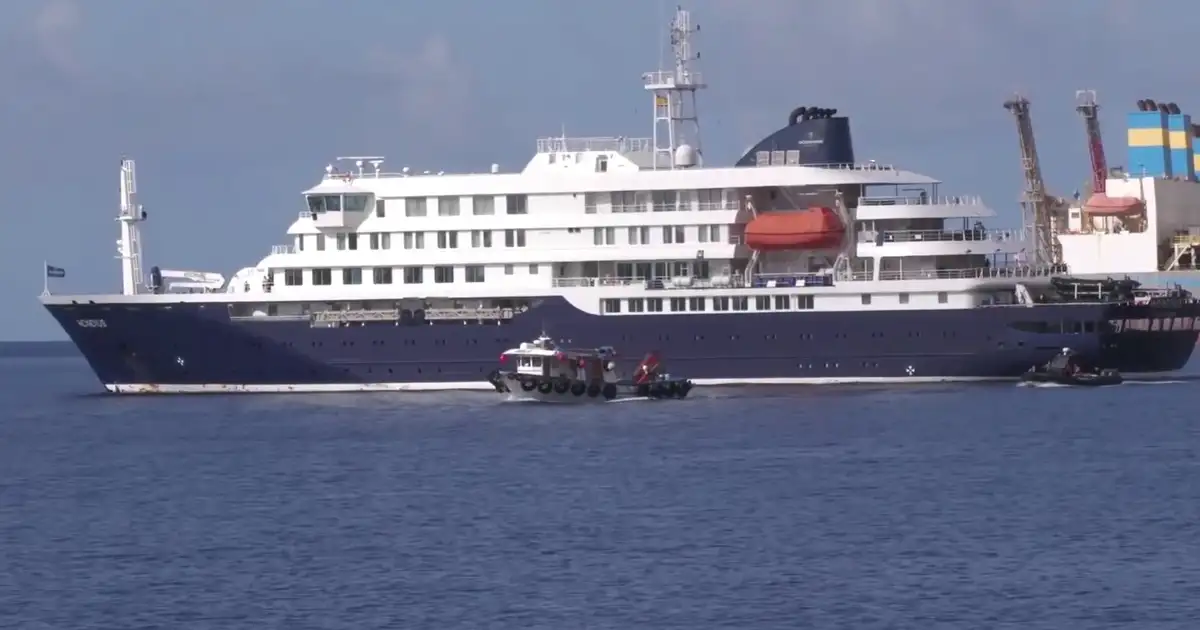

Hantavirus on a cruise ship? It sounds like a plot from a medical thriller, but it’s terrifyingly real. A recent outbreak has not only ravaged a vessel but shattered our understanding of this deadly pathogen, forcing the World Health Organization to issue a hushed yet urgent global alert. This isn’t just a rodent problem anymore; it’s a seismic wake-up call for global travel.
This wasn’t a few isolated cases; public health officials confirm a swift, widespread hantavirus outbreak on an unnamed cruise ship. What they found was alarming: case clusters that defy all previous understanding of hantavirus transmission, pointing an undeniable finger at the presence of one or more “super-spreaders” onboard.

These aren’t just sick people; these are individuals, potentially asymptomatic, who shed dangerously high viral loads for extended periods, turning confined spaces into viral incubators. The WHO’s advisory to member countries wasn’t just hushed; it was a stark, urgent directive: bolster preparedness protocols, particularly for high-density environments like cruise ships, or face unthinkable consequences.
Hantavirus Unmasked: Beyond Rodents
So, the burning question isn’t just ‘how did hantavirus get on a ship?’ It’s ‘how did it tear through a vessel without the usual rodent vectors?’ What does “super-spreader” really mean in this context? Prepare yourself, because the answers are profoundly unsettling.
First, let’s talk about the chilling prospect of aerosolized transmission. While typically rare, specific hantaviruses – crucially, those responsible for the devastating Hantavirus Pulmonary Syndrome (HPS) – possess the terrifying ability to spread through tiny airborne particles. Think about it: if an infected person, shedding a high viral load, simply coughs or sneezes, those microscopic respiratory droplets become deadly projectiles.
Now, picture that scenario in the confined, often poorly ventilated environment of a cruise ship. Every shared breath, every crowded hallway, every dining room becomes a potential transmission zone. These aren’t just conditions; they’re amplifiers for short-range human-to-human spread. It’s not just a terrifying thought for a passenger; it’s a waking nightmare.
Next, consider the insidious role of extended close contact. Cruise ships, by their very design, are floating cities built for communal living, shared experiences, and constant interaction. Dining halls, bustling entertainment venues, and even the intimacy of shared cabins mean prolonged, unavoidable closeness. This isn’t theoretical; it’s a proven catalyst for human-to-human spread, especially with variants like the Andes virus (ANDV), notorious in South America.
Let’s be clear: a “super-spreader” isn’t simply someone who falls ill. It’s a biological anomaly – an individual with unique physiological factors that lead to exceptionally high viral shedding, meaning they literally excrete more virus into their environment. Couple that with specific behavioral patterns – perhaps a highly social nature, interacting with countless individuals daily – and you have a perfect, devastating storm for rapid, exponential disease spread.
Scientists, working against the clock, are also investigating the chilling possibility of a unique viral strain or mutation. Has this hantavirus evolved? Researchers are urgently analyzing its genomic fingerprint to determine if it now replicates more efficiently in human respiratory tracts or, even worse, if it survives longer in the environment. Either scenario would transform human-to-human spread from rare to frighteningly efficient.
Finally, we cannot ignore the critical role of environmental factors within the ship’s ecosystem itself. Air circulation systems and the potential for surface contamination are now under intense scrutiny. While hantavirus is generally fragile outside a living host, specific microclimates or conditions within a ship could allow it to persist briefly on surfaces. This opens the door to indirect transmission, a silent accomplice to a high-shedding individual.
The Dire Consequences for Cruise Travel
This isn’t just a blip on the epidemiological radar; this situation utterly shatters everything we believed about hantavirus. It rips the virus from its traditional confines of isolated rural outbreaks and thrusts it onto the global stage as a very real, very terrifying travel nightmare. The game has changed.
The implications for global public health are nothing short of profound. We don’t just ‘might need’ an overhaul; we must implement a complete re-evaluation and strengthening of health screening protocols for international travel. Cruise lines, above all, face an existential choice: adapt swiftly and comprehensively, or face catastrophic, perhaps irreversible, losses.
Dr. Lena Hansen, a leading epidemiologist, offered a stark assessment. She declared,
“While hantavirus is typically rodent-borne, the epidemiological pattern observed in this cruise ship cluster strongly suggests a human-to-human component, possibly amplified by a super-spreader event.”Her words underscored the immediate urgency for genomic data analysis, a critical step to unraveling this new threat.
A WHO spokesperson, granted anonymity to speak candidly, echoed this alarm with chilling clarity. They stated,
“The situation underscores the need for all nations to maintain robust surveillance systems and flexible response plans for zoonotic diseases, especially those with the potential for person-to-person spread in concentrated populations.”This isn’t just a recommendation; it’s a dire warning – a stark reminder that this is unequivocally not a drill.
Let’s not forget the lethality. Hantavirus Pulmonary Syndrome (HPS) isn’t just a severe illness; it’s a brutal one, boasting a mortality rate of approximately 38% in the US. To be absolutely clear: this isn’t a common cold, a seasonal flu, or a minor inconvenience. This is a genuinely deadly threat that demands our utmost attention.
Adding another layer of complexity, the incubation period for hantavirus can stretch from 1 to 8 weeks. This extended window transforms contact tracing from a difficult task into a monumental, almost impossible, undertaking. Can you truly grasp the logistical nightmare of tracking down thousands of passengers and crew, dispersed across the globe, weeks after disembarkation?
Cruise Lines Under the Microscope
The entire cruise industry now finds itself in an undeniably precarious position. The financial and reputational fallout from this outbreak isn’t just ‘immense’; it could be utterly devastating. Public trust, once shattered by such a profound health scare, is notoriously difficult, if not impossible, to rebuild.
Passengers and the broader public aren’t just anxious; they’re rightly terrified. They are demanding, and deserve, absolute transparency. The very notion of a “super-spreader” event unfolding in a confined space immediately conjures the chilling specter of early COVID-19 fears. Providing clear, unequivocal information on risks, symptoms, and preventative measures isn’t just paramount; it’s a moral imperative.
The stringent sanitation protocols currently in place on cruise lines, while commendable for other threats, are simply not enough for this new paradigm. They were designed for different enemies. This new, terrifying understanding of hantavirus transmission demands entirely new defenses. Enhanced screening, rigorous isolation protocols, and rapid response mechanisms must cease being options and become non-negotiable standards.
Let’s be unequivocally clear: this isn’t merely about one ill-fated ship. This is a profound reckoning for the entire future of high-density travel, a test of our collective ability to manage infectious diseases in an increasingly interconnected and vulnerable world. The scientific community isn’t just ‘scrambling’ for answers; it’s in a desperate race against a ticking clock, and the stakes couldn’t be higher.
The chilling potential for a deadly virus like hantavirus to mutate and exploit the vulnerabilities of human-to-human spread in such a setting isn’t just a warning; it’s a seismic shift in our global health landscape. The question isn’t if another outbreak will occur, but when. Will the cruise industry, and indeed all global travel, rise to this unprecedented challenge with courage and innovation, or will we be caught flat-footed, again, by a threat we once dismissed? The world isn’t just watching; it’s holding its breath.
Photo: Wikimedia Commons (query: Hantavirus)
Source: Google News