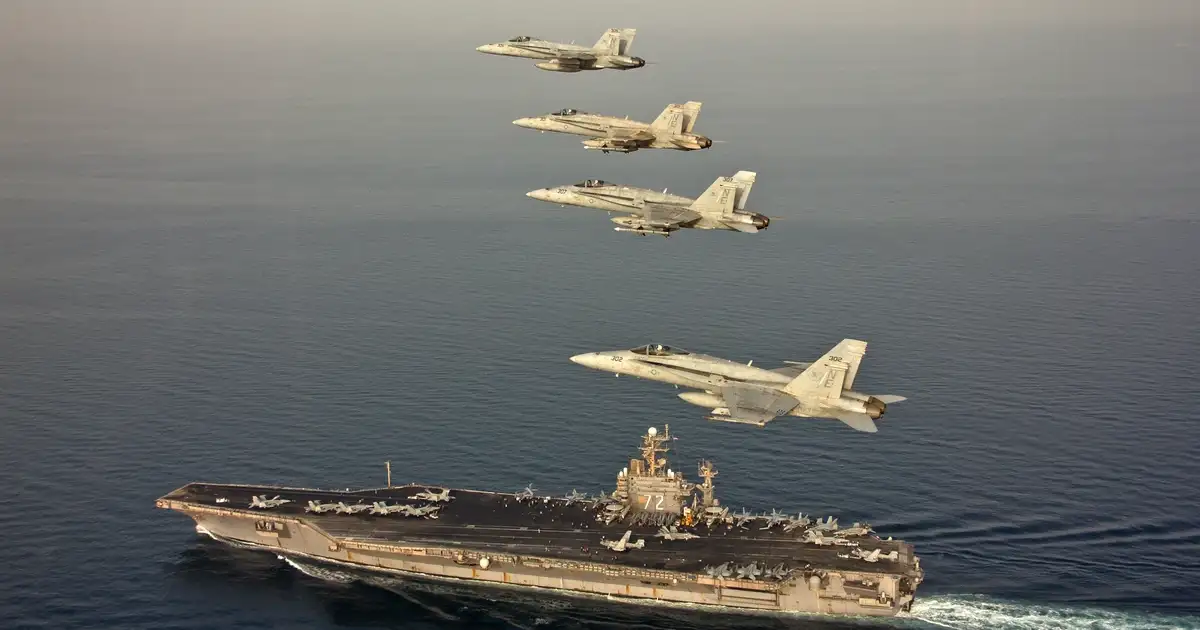

A $160 million inferno erupted yesterday, May 16, 2026, off the Virginia coast when two U.S. Navy F/A-18 Super Hornets collided mid-air. This wasn’t just a training exercise gone wrong; it was a brutal, high-stakes reminder of the unforgiving realities our aviators confront daily and the crushing cost of maintaining a ready fighting force. The incident, which saw both pilots miraculously eject safely, demands immediate, unvarnished answers.
The catastrophic event unfolded around 2:30 PM EDT during what was supposed to be a routine, albeit advanced, training maneuver. Both state-of-the-art jets, assigned to Naval Air Station Oceana, were executing complex aerial tactics when they slammed into each other over the Atlantic. The pilots, demonstrating incredible composure under extreme duress, successfully ejected into the frigid waters.
In a testament to rapid response protocols, a U.S. Coast Guard team quickly located and pulled both aviators from the ocean. They are currently in stable condition at Naval Medical Center Portsmouth, a small comfort in the face of such a monumental loss. The Navy has, predictably, launched an immediate and thorough investigation into the crash – an investigation that must be transparent and uncompromising.
The Crushing Cost of Readiness: A Taxpayer’s Reckoning
Let’s talk brass tacks, because the numbers are staggering. Each F/A-18 Super Hornet represents a colossal investment, costing taxpayers anywhere from $70 million to $80 million. That means yesterday’s collision wiped out a potential $160 million in advanced military hardware in a single, gut-wrenching moment. This isn’t merely equipment; it’s a direct investment from every American wallet, a tangible representation of our national defense budget literally falling out of the sky.
This incident screams about more than just the immediate financial toll. It exposes the immense, often hidden, costs of maintaining military readiness. We must ask ourselves: are we truly getting the return on investment when our most advanced hardware can be lost so quickly? What does this mean for future procurement, for the readiness of our squadrons, and for the confidence of our allies and adversaries alike? The financial impact ripples far beyond the price tag of the jets, affecting maintenance budgets, future training allocations, and even the pace of technological upgrades.
The Real Score: Why the Mishap Rate Keeps Climbing
Make no mistake, this isn’t an isolated incident, nor can it be dismissed as an unavoidable anomaly. The American military has been grappling with a deeply concerning rise in aviation accidents for years. Between 2013 and 2017, Class A mishaps—the most severe category, involving death, permanent disability, or damages exceeding $2 million—skyrocketed by a staggering 40%. That is a trend moving in the absolute wrong direction, signaling systemic issues that demand urgent attention, not just an investigation into a single crash.
Investigations into these persistent crashes consistently point to a few critical culprits. Human error, often a catch-all term, is a major factor. This encompasses everything from pilot fatigue and miscommunication in high-stress environments to a momentary loss of spatial awareness at supersonic speeds. But let’s be clear: “human error” rarely exists in a vacuum. It’s often exacerbated by maintenance issues, where aging fleets and budget constraints lead to deferred repairs or insufficient inspections. Furthermore, insufficient training hours – a direct consequence of budget cuts and a high operational tempo – mean pilots aren’t getting the flight time they need to hone their edge.
We’ve seen this tragic playbook before, a recurring nightmare for our armed forces. In 2018, two Marine Corps F/A-18 Hornets collided off Japan, tragically claiming the life of one pilot. In 2016, two Navy T-45C Goshawk training jets crashed over Texas, though both pilots thankfully ejected safely. And just two years prior, in 2014, two more F/A-18 Hornets from Naval Air Station Lemoore collided over the Pacific, with safe ejections. Each incident, while unique in its specifics, adds another grim tally to the ledger of lost assets and, more importantly, put human lives at extreme risk. The pattern is undeniable; the question is, what are we truly doing to break it?
“We are incredibly relieved that both pilots ejected safely and are receiving medical care,” stated Captain Eleanor Vance, NAS Oceana Public Affairs Officer. “Our immediate priority is their well-being and launching a thorough investigation to understand exactly what happened.”
Rear Admiral David Chen, Commander, Naval Air Force Atlantic, added, “This incident serves as a stark reminder of the inherent risks our aviators face daily. We will leave no stone unturned.”
Their words resonate with the gravity of the situation. This is, unequivocally, a dangerous profession. But the cold, hard truth is that “inherent risk” cannot be an excuse for preventable accidents. We, the taxpayers and the public, demand to know if every conceivable measure is being taken to mitigate that risk, or if systemic failures are putting our aviators and our national assets in unnecessary peril.
The Playbook for Prevention: Are We Executing Flawlessly?
The military consistently asserts it’s refining its game plan to curb these devastating accidents. Significant investments are poured into advanced flight simulators, designed to replicate hazardous live-flight scenarios in a controlled environment, reducing the need for risky real-world maneuvers. There’s a constant push for stricter maintenance schedules and more rigorous inspections, aiming to catch mechanical failures before they become catastrophic. Furthermore, the emphasis on Crew Resource Management (CRM) aims to foster better communication, teamwork, and decision-making within the cockpit, recognizing the critical human element.
Newer aircraft, like the F/A-18 Super Hornet, come equipped with cutting-edge collision avoidance systems, sophisticated radar, and improved cockpit displays, all designed to enhance situational awareness. Yet, technology, while vital, is only one piece of the puzzle. The human factor remains the most critical and unpredictable variable, especially in the complex, high-speed, and high-pressure environment of modern aerial combat training. The cost of replacing these lost jets, coupled with the extensive resources required for investigations, places an immense strain on the defense budget. This isn’t a zero-sum game; robust funding for comprehensive maintenance programs and adequate, realistic training hours isn’t just a recommendation – it’s an absolute imperative to prevent future incidents and safeguard both lives and assets. Are we truly dedicating the resources and strategic focus necessary to execute this playbook flawlessly, or are we still cutting corners where it matters most?
What’s Next for Naval Air Power: The Stakes Are Sky-High
This collision reverberates far beyond the immediate loss of two aircraft. It strikes at the heart of the Navy’s strategic capabilities, impacting the readiness of entire squadrons and potentially slowing the deployment of critical assets. Beyond the hardware, it inevitably impacts pilot morale, fostering a sense of vulnerability among those who put their lives on the line. Furthermore, such high-profile incidents can, and often do, affect recruitment efforts, making it harder to attract the next generation of top-tier aviators.
The findings from this ongoing investigation are absolutely critical. They possess the power to trigger significant, potentially transformative, changes in training protocols, operational procedures, and even aircraft design. These changes will directly influence future pilot safety and, by extension, the operational readiness of our entire nation. This crash is a stark, undeniable underscore of the constant, non-negotiable need for sustained investment – not just in cutting-edge equipment, but crucially, in robust pilot training, rigorous maintenance, and a culture that prioritizes safety without compromising effectiveness. The stakes, both human and strategic, are simply too high to accept anything less than perfection in our pursuit of readiness. Our aviators deserve the absolute best, and our national security demands that we cannot, under any circumstances, afford to cut corners when lives and the very defense of our nation hang in the balance.
Photo: MC2 Mark Logico
Source: Google News