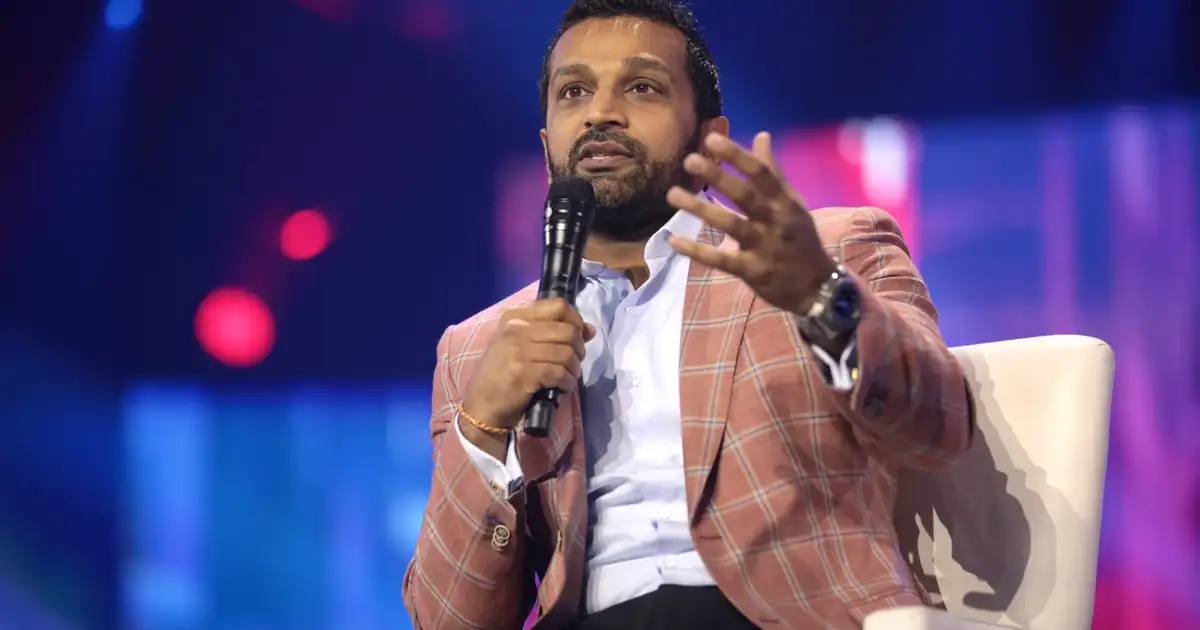

The intelligence community, a realm traditionally insulated from the raw political machinations of Washington, is bracing for a seismic shift. President Donald Trump, in a move that surprises precisely no one who has observed his presidency, has decisively tapped Kash Patel to replace Tulsi Gabbard as Director of National Intelligence. This isn’t merely a personnel change; it is a calculated, aggressive maneuver to consolidate presidential power over the nation’s most sensitive information apparatus, signaling Trump’s unwavering determination to bend every lever of government to his will.
Gabbard’s tenure as DNI was, from its inception, a tightrope walk destined for a fall. Whispers, then outright shouts, from within the labyrinthine corridors of Washington’s intelligence establishment pointed to escalating scrutiny over her leadership. Senior intelligence community sources, speaking on condition of anonymity to The Washington Post, consistently voiced profound concerns about her management style and, more critically, the perceived politicization of intelligence briefings – a cardinal sin in their world.

Trump’s inner circle, a tight-knit cadre of loyalists, has confirmed Patel is not just a choice, but the choice. The President himself has privately conveyed his decision to key advisors, leaving no doubt about the impending transition. While a formal announcement from the White House press secretary is still anticipated, the writing isn’t just on the wall; it’s etched in stone for anyone paying attention.
The Patel Playbook: Unquestioning Loyalty as Currency
Kash Patel’s ascension to the pinnacle of the U.S. intelligence hierarchy is a textbook Trumpian play, perfectly executed. He brings to this critical role not just experience, but something far more valuable in this administration: unquestioning, absolute loyalty. This isn’t about some fantastical “deep state” conspiracy or shadowy figures pulling strings; it is about the stark, undeniable reality of raw power and the President’s unyielding drive for control over every facet of national security.
Patel’s career trajectory has been meticulously intertwined with Trump’s political battles. Before this appointment, he served as chief of staff to the DNI, a crucial vantage point. Prior to that, he was a top aide on the House Intelligence Committee, where he became a prominent and vocal defender of Trump against what he fiercely labeled as politically motivated attacks and investigations. His history clearly demonstrates his unwavering commitment to the President’s agenda. Patel’s placement at the helm sends an unambiguous message to the entire intelligence community: from this day forward, their mandate will operate under a very specific, politically charged directive.
One anonymous intelligence official, a veteran of decades across multiple administrations, spoke with chilling frankness to Reuters about the implications.
“This isn’t about making intelligence better, or more efficient, or more accurate. It’s about making sure the intelligence serves the President’s narrative, no matter how inconvenient the facts might be. That, truly, is the existential danger here for our national security.”
This sentiment, a palpable current of unease, echoes through the hallowed halls of Washington, from Langley to Capitol Hill. Many, both inside and outside the intelligence apparatus, fear a further, perhaps irreversible, erosion of intelligence independence. The DNI position is explicitly designed to be non-partisan, a bulwark providing objective, unvarnished assessments to the President and policymakers. Patel’s well-documented history, however, suggests a fundamentally different approach, one where political loyalty has consistently superseded the sacred duty of delivering impartial truth.
Gabbard’s Exit: An Inevitable Political Casualty
For Tulsi Gabbard, her position became not merely untenable, but a political impossibility. The intelligence community itself, a notoriously insular and traditional institution, was actively pushing back against her leadership. Concerns about her management style were not the minor whispers of disgruntled employees; they were loud, resonant complaints from career professionals who saw the integrity of their work compromised. Sources within the intelligence community, speaking to CNN, detailed instances where briefings were reportedly altered or downplayed to align with White House preferences.
The core issue, frequently coded as the “politicization of intelligence briefings,” is, in plain language, the tailoring of information. It means twisting, spinning, or selectively presenting facts to fit a predetermined political agenda, rather than delivering the unvarnished truth. The DNI’s paramount responsibility is to deliver that truth, however uncomfortable, however inconvenient it might be for the administration. If the intelligence paints a grim picture, or contradicts a White House talking point, that’s precisely what needs to be communicated without hesitation or embellishment.
Gabbard, by all accounts, struggled profoundly with this impossible balance. She found herself caught in the vise between the President’s relentless demands for loyalty and the intelligence community’s unyielding standards for objectivity.
In Trump’s zero-sum world, one is either unequivocally with him or irrevocably against him; there is no nuanced middle ground, no room for independent thought. Gabbard, attempting to operate in that perilous space, ultimately found herself exposed, and her replacement became not just predictable, but an absolute inevitability. What choice did she truly have?
This shake-up is not an isolated incident; it follows a well-established pattern. President Trump demands absolute, unwavering loyalty from his appointees, a fealty that often transcends professional obligation. Anyone who falters, questions the party line, or even appears to prioritize institutional integrity over presidential will, is swiftly and unceremoniously shown the door. The DNI is not just a critical position; it is the critical position for any administration, profoundly shaping foreign policy, national security decisions, and even the public’s understanding of global threats. Handing this immense power to a staunch, unquestioning loyalist like Patel isn’t just a personnel decision; it fundamentally alters the landscape of American intelligence, potentially for years to come.
What This Means for US Intelligence in a Volatile World
Patel’s appointment will unleash immediate and profound repercussions across the entire intelligence apparatus. Career intelligence officers, the bedrock of America’s national security, will undoubtedly feel increased pressure. Their assessments, their meticulously gathered data, and their professional judgments will face heightened scrutiny from above, often through a political lens. There is a very real, very tangible concern about plummeting morale, about self-censorship, and about the chilling effect on honest reporting that could permeate every agency.
The DNI oversees all 18 US intelligence agencies, a sprawling network that includes the Central Intelligence Agency (CIA), the National Security Agency (NSA), and the Federal Bureau of Investigation (FBI). Placing a figure with such a pronounced partisan history in this overarching role is not merely a gamble; it is a high-stakes bet with potentially catastrophic consequences. It risks alienating seasoned professionals, driving away expertise, and, most dangerously, deterring the very honest, unvarnished reporting that policymakers desperately need. Can we afford to have intelligence officers second-guessing what the White House wants to hear?
The mandate of the DNI is unequivocally clear: to integrate intelligence from disparate sources and ensure that policymakers receive the most accurate, comprehensive, and unbiased information available. This mission is especially vital during ongoing global conflicts, such as the precarious and demanding US-Iran War 2026. In a conflict of this magnitude, where every decision carries immense weight and potential for escalation, accurate, uncompromised intelligence is not merely paramount; it is the difference between strategic success and catastrophic failure.
Another intelligence insider, a former senior analyst with close ties to the Pentagon, expressed deep apprehension to The Guardian, painting a grim picture of the future.
“When the DNI becomes, in essence, a political operative rather than an impartial conduit of truth, the nation suffers irrevocably. Our adversaries, from Tehran to Beijing, benefit from our self-inflicted wounds. This isn’t just about internal squabbles or bureaucratic turf wars. It directly impacts our ability to protect the country, our troops, and our strategic interests abroad.”
This move represents a stark centralization of power, placing a key oversight role – a position designed for independence – squarely in the hands of a trusted, unwavering ally. It ensures that President Trump’s specific vision for intelligence, whatever its merits, is executed without dissent or inconvenient facts. This isn’t about fostering efficiency or improving intelligence gathering; it is, unequivocally, about control. It is about making absolutely certain that all information flowing into the Oval Office aligns seamlessly with the White House’s predetermined goals and narratives, regardless of objective reality.
The Steep Cost of Consolidation: A Perilous Precedent
The true cost of this brazen power play will ultimately be borne by the everyday taxpayer, by every citizen of this nation. They will pay for an intelligence apparatus that risks being compromised, for potential missteps and strategic blunders stemming from biased or filtered information. An effective intelligence community thrives on trust: trust that its reporting will be taken seriously, trust that its analysts will be protected from political reprisal, and trust that it can operate free from partisan interference. Patel’s appointment shatters much of that fragile trust, creating a perilous precedent.
This isn’t merely a new chapter; Patel’s appointment signals a new, potentially dangerous era for American intelligence. It is an era where unwavering loyalty to the President demonstrably trumps objective analysis and institutional integrity. It is an era where the intelligence community, once a beacon of impartial assessment, is increasingly expected to serve the President’s political agenda first, and the nation second. The consequences for national security, for America’s standing on the global stage, and for the lives of its citizens and service members could be severe, far-reaching, and profoundly destabilizing.
This is not just a personnel change; it is a fundamental, ideological shift in how intelligence operates at the highest levels of government. It is a stark, undeniable reminder of who truly holds the levers of power in Washington, and how ruthlessly they are willing to wield them. This move, designed to lock down control and further cement President Trump’s authority over every branch of government, is more than just a political maneuver. It is a declaration of intent, a perilous new reality that demands vigilance from every quarter. The question is, will anyone in Washington stand up to challenge it, or will the silence of complicity be the ultimate answer?
Source: Google News