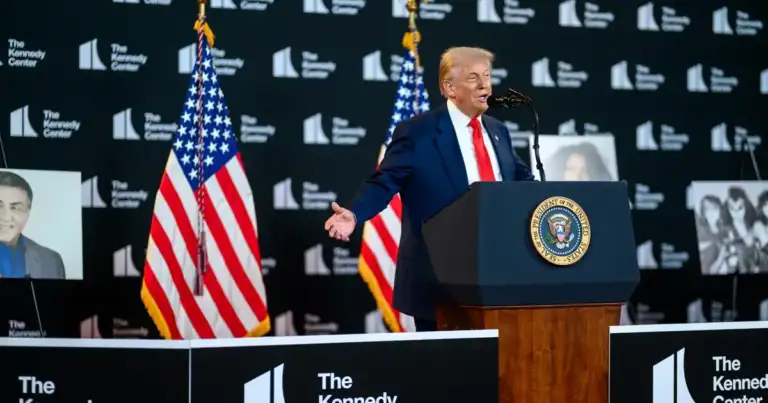

President Donald Trump, ever the showman, has defiantly declared his upcoming Freedom 250 rally will feature nothing less than the “greatest music ever played.” This audacious pronouncement comes on the heels of reports detailing a familiar, almost predictable, challenge for the President’s team: a string of prominent bands reportedly refusing to grace his June 14th birthday event. But dwelling on setbacks is not the Trumpian way. His campaign, with characteristic speed, didn’t merely shift gears; it slammed into overdrive, transforming a perceived snub into a grand, defiant spectacle. This is vintage Trump: not just turning a potential negative into a positive, but transforming a minor blip into a massive, attention-grabbing political statement.
The past few days brought a familiar, almost predictable, challenge for the President’s team. Several artists reportedly declined invitations for the planned birthday celebration. Their reasons, predictably, ranged from “busy schedules” to thinly veiled political disagreements. This, predictably, forced a rapid, strategic pivot. Instead of allowing the narrative to linger on these rejections, Trump’s campaign swiftly unveiled plans for a major political gathering, now known as the Freedom 250 rally. It now promises nothing short of an unforgettable, indeed historic, musical experience. This is classic Trump, not just turning a potential negative into a positive, but transforming a perceived slight into a grand, defiant spectacle.

Trump’s Strategic Music Shift: A Masterclass in Narrative Control
The President’s team understands the art of political hardball. When musicians shy away, they don’t merely fold; they double down with a defiant flourish. The Freedom 250 rally is far more than just a concert; it is a powerful political statement, a testament to Trump’s unparalleled ability to adapt, to pivot, and to dominate the narrative even under intense pressure. This isn’t merely about securing a band; it’s about absolute control, about meticulously shaping the narrative, and about demonstrating an unyielding will.
When some artists demur, Trump doesn’t just find replacements; he masterfully frames their absence as a victory for his movement, a rejection of the “establishment” that only galvanizes his base. The audacious declaration of the “greatest music ever played” is signature Trump, a rhetorical cannon shot designed to command attention. It sets an impossibly high, almost mythical, bar. It generates immense, almost feverish, hype. It dares critics, indeed, the entire media apparatus, to disprove it. This kind of bold, unapologetic claim is precisely what his millions of supporters expect, and it fuels their excitement, transforming a logistical headache into a rallying cry.
The Political Playbook in Action: Every Snub a Weapon
Why do some bands consistently refuse to play for Trump? The answer is multifaceted, often rooted in a calculated concern for public image, a fear of alienating their fan base, or simply a profound disagreement with his politics. This has been a recurring theme throughout his tumultuous career, a predictable hurdle that his team has learned not just to clear, but to weaponize. Yet, in a display of political alchemy, Trump transmutes these rejections into potent political advantage.
He masterfully portrays himself as the quintessential outsider, the lone warrior battling a monolithic “establishment” that seeks to silence him. This narrative resonates deeply with his voters, who see it as irrefutable proof that he is on their side, fighting their battles. The Freedom 250 rally, therefore, is not merely an event; it is a multi-pronged weapon in the Trump campaign’s arsenal. It mobilizes supporters with fervent intensity, it generates invaluable media buzz, and it powerfully reinforces his image as an unyielding fighter. Every perceived slight, every media critique, every celebrity snub, becomes potent fuel for his movement. This, make no mistake, is a masterclass in political jujitsu.
The rally will undoubtedly draw massive, adoring crowds – a predictable outcome given Trump’s magnetic pull. These events are not just spectacles; they are crucial engines for fundraising, allowing the campaign to replenish its coffers with contributions from a dedicated base. They also allow Trump to deliver his message unvarnished and direct, bypassing the often-hostile traditional media filters. This unmediated communication is not merely a strategy; it is the cornerstone of his political power, a direct line to the hearts and minds of his supporters.
Who Pays for the Show? The Investment in Spectacle
Staging a major rally, especially one promising the “greatest music ever played,” demands serious capital. These events are not cheap; they require massive venues, layers of intricate security, and significant production costs. Campaign funds will undoubtedly cover these expenses, drawn from a vast network of dedicated donors and fervent small contributions, fueling a relentless cycle of political spending. This is the engine of modern political spectacle.
Every dollar poured into this rally is not merely an expense; it is a calculated investment in voter turnout, in overwhelming media exposure, and in building undeniable political momentum. The significant cost is not just justified; it is dwarfed by the anticipated political payoff. This is the unvarnished reality of modern, high-stakes campaigning, where spectacle often translates directly into influence and votes.
The “birthday concert” setback, widely reported by outlets like Reuters and The Washington Post, was, in retrospect, a minor blip on the radar. The swift pivot to the Freedom 250 rally demonstrates not just resilience, but an almost predatory adaptability. It decisively proves Trump’s continued, iron-fisted control over the political conversation. He simply does not permit minor logistical hiccups to derail his grander plans; he merely finds a new, often more dramatic, path forward.
This rally, then, serves as a crucial litmus test. It tests the unshakeable loyalty of his base, the far-reaching tendrils of his influence, and his undeniable ability to attract performers willing to brave the political storm. The “greatest music” promise is merely the glittering lure; the profound political message, the galvanization of his movement, is the true, invaluable prize.
The Message Behind the Music: A Political Weapon
The curation of music at a political rally is never, under any circumstances, accidental. It invariably carries a carefully crafted message, designed to resonate with a specific demographic, to ignite particular emotions, and to forge a powerful, collective identity. For Trump, this often translates into an unapologetic celebration of patriotism and a fervent evocation of American pride. It is about enshrining and celebrating a very specific, often nostalgic, vision of the country.
The very term “Freedom 250” is not just a name; it is a declaration, loaded with potent, evocative meaning. It suggests a monumental celebration of American liberty, a defiant stand, and a clear, unmistakable hint at future political victories. The chosen music will not merely entertain; it will enhance this narrative, creating an atmosphere of unity, excitement, and unwavering resolve.
This event, therefore, transcends mere entertainment; it is a finely honed political weapon. It is designed not only to energize the faithful but to draw in new, perhaps hesitant, supporters, and to send an unambiguous, thunderous signal to his political opponents. Trump remains an utterly formidable force, a political titan who continues to dominate, indeed to define, the national political stage.
The media, predictably, will dissect every minute detail: they will analyze the crowd size with obsessive scrutiny, critique the performances with a critical eye, and dissect his speech for every nuance. But the core message, broadcast loud and clear, will be undeniable: Trump is campaigning with relentless ferocity, an unstoppable political engine showing no signs of slowing. The audacious “greatest music ever played” claim guarantees headlines, it ignites furious debate, it dominates the news cycle, and it keeps his name relentlessly in the public consciousness. This is precisely the strategic oxygen a high-stakes campaign demands.
The bands that, perhaps unwisely, backed out are now relegated to historical footnotes. The focus has decisively shifted to the new event, to the tantalizing promise of something far grander, far more spectacular. This, in essence, is the Trump strategy distilled: always forward, always making seismic noise. The Freedom 250 rally is not merely the latest example; it is a potent reaffirmation of his unique political genius.
This audacious move underscores a crucial, often underestimated, aspect of modern politics: it demonstrates the raw, unadulterated power of direct communication, the unparalleled ability to bypass traditional gatekeepers and media filters. Trump connects, unfiltered and unyielding, directly with his supporters. He weaponizes his platform to rally them, to inflame their passions. This rally will be yet another, perhaps the most spectacular, display of that formidable power.
Expect a spectacle. Expect strong rhetoric. Expect a crowd ready to cheer, to roar. The music will be part of the show, but the political message will be the main event, the true purpose. Trump is not just throwing a party; he is building his movement, brick by defiant brick, song by strategic song.
Source: Google News