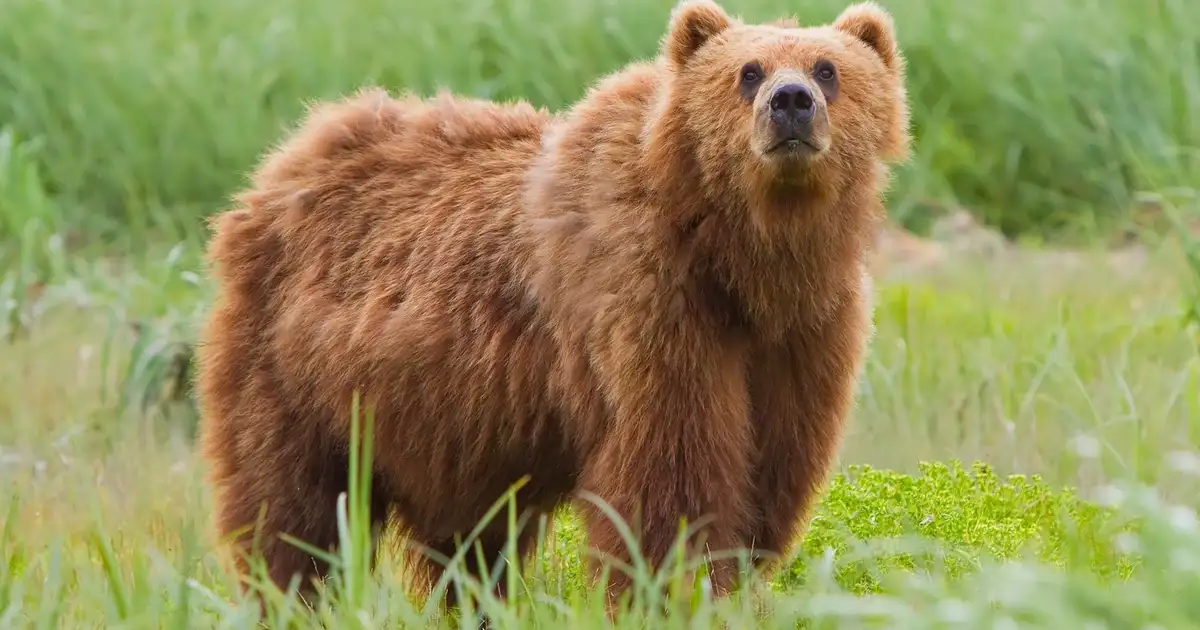

On a seemingly ordinary Monday evening, June 15, 2026, the majestic beauty of Mount Rainier National Park turned into a scene of primal terror. Four high school students, descending the popular Skyline Trail, found themselves in a desperate fight for survival against a charging black bear. This wasn’t a cautionary tale from a distant land; it was a brutal, unprovoked assault right here in Washington, a stark reminder that even familiar wilderness can harbor unpredictable fury.
On Monday, June 15, 2026, four high school students, aged 16 and 17, were descending the Skyline Trail near Paradise in Mount Rainier National Park. Around 6:30 PM, a large black bear charged them without warning. Two teens were badly injured.
Sarah Jenkins, 17, suffered a severe laceration and bite wound to her right calf. Michael Chen, 16, sustained deep scratches on his arm and a possible hairline fracture in his wrist. The other two, Emily Rodriguez and David Lee, were physically unharmed but are battling severe shock.
The Immediate Aftermath: A Fight for Life
Their survival hinged on quick thinking and preparedness. Confronted by the charging beast, they deployed bear spray, a crucial tool that drove the animal off. This decisive action undoubtedly saved their lives, allowing them to embark on a grueling two-mile hike to the Paradise Ranger Station for urgent first aid.
Both Jenkins and Chen are now stable at Harborview Medical Center in Seattle. Jenkins underwent surgery to thoroughly clean her significant bite wound, a critical step to prevent the devastating infections that can follow such an injury. Chen’s wrist is still under evaluation for a possible hairline fracture, but the immediate, overriding medical priority for both is rigorous infection prevention.
In response, park authorities swiftly closed the Skyline Trail and a five-mile radius around the attack site. Wildlife teams are actively tracking and hunting this aggressive bear. This isn’t just an unfortunate encounter; it’s profoundly abnormal behavior for a black bear, and therein lies the chilling problem: an unpredictable threat in a place people expect relative safety.
Beyond the Bite: The Unseen Scars
Physical wounds heal, but the mental scars can last a lifetime. Imagine the sheer terror these teens endured. Emily Rodriguez and David Lee, though physically untouched, are grappling with severe trauma.
Public health officials aren’t simply “highlighting” a concern; they’re emphasizing an absolutely critical, often overlooked dimension of trauma. Surviving such an ordeal leaves a profound, indelible mark. This isn’t just about mending skin and bone; it’s about the painstaking work of repairing psyches shattered by an unprovoked attack that came out of nowhere.
“The psychological impact on the uninjured teens is also a significant concern, highlighting the need for mental health support post-trauma,” park officials noted.
How often do we truly consider the unseen costs of wilderness encounters? The immediate physical wounds demand attention, but the fear, the nightmares, the lingering anxiety – these invisible scars are as real, and often as debilitating, as any bite wound.
Nature’s Unpredictable Fury
Black bear attacks are statistically rare. Washington has an estimated 25,000 to 30,000 black bears, yet only 61 fatalities have occurred in North America from 1900-2017, with just one in Washington in 1974. So, what happened here?
Wildlife experts aren’t just “scratching their heads”; they’re grappling with a truly perplexing puzzle. Was this a bear under severe food stress, driven by desperation? Had it become dangerously habituated to humans, losing its natural fear? Or is there something far more sinister at play, an underlying pathology?
An unprovoked charge, with no cubs reported nearby, defies typical black bear defensive behavior. This isn’t a simple case; it’s a profound behavioral anomaly that demands urgent answers.
This incident shatters any illusion that wildlife is always predictable. Our ever-expanding human presence in their shrinking habitats isn’t just “might be” changing their behavior – it is changing it, often in ways we don’t yet fully comprehend. We don’t just “need” to understand the “why”; it’s an imperative, a scientific and public safety mission, before more people suffer the same terrifying fate.
The Park’s Impossible Balancing Act
Mount Rainier National Park sees over 1.5 million visitors annually. The Skyline Trail is a major draw. The park service has a monumental task: protect visitors while preserving wildlife.
Park officials are rigorously investigating whether human actions, such as improper food storage, played any role in this incident. However, initial reports overwhelmingly point to an unprovoked attack, an animal acting outside expected norms. This places the park service in an almost impossible bind: how do you effectively mitigate a threat that defies predictability?
In the wake of the attack, park authorities have reiterated crucial warnings about exercising caution, securing food properly, and carrying bear spray. These are not just “vital steps”; they are absolute necessities for anyone venturing into bear country. Yet, as this incident tragically demonstrates, even the best precautions cannot guarantee safety against an animal that acts entirely outside established behavioral patterns.
Human Encroachment and the Shifting Wild
This attack isn’t just a local incident; it’s a symptom of a larger trend. As human populations expand and more people flock to wildlands, human-wildlife interactions are increasing. This is simple math.
Beyond direct human presence, climate change is undeniably playing a significant, insidious role. Environmental shifts, from altered berry seasons to disrupted salmon runs, can profoundly impact food availability for bears, often driving them out of their traditional territories and closer to human-populated areas in search of sustenance. This isn’t merely about a single aggressive bear; it’s a potent symptom of a rapidly changing ecosystem, where the boundaries between human and wild are blurring with dangerous consequences.
In this evolving landscape, “bear-smart” practices aren’t just important; they are more critical than ever before. Education, meticulous preparedness, and a profound, unwavering respect for nature’s boundaries are no longer negotiable suggestions – they are commandments for survival. We are, after all, guests in their home, and as these teens discovered, sometimes the hosts are not merely indifferent, but actively hostile.
This horrific attack on young hikers serves as a brutal, visceral lesson. The wilderness, in all its breathtaking beauty, is fundamentally untamed and inherently unsafe. We must prepare for the worst, diligently understand the risks, and never, ever forget that wild animals are precisely that: wild, unpredictable, and powerful.
The profound medical and psychological toll on Sarah, Michael, Emily, and David is not just a stark reminder that nature demands respect. Sometimes, in its raw, unyielding power, nature demands everything.
Photo: Wikimedia Commons (query: Skyline Trail)
Source: Google News