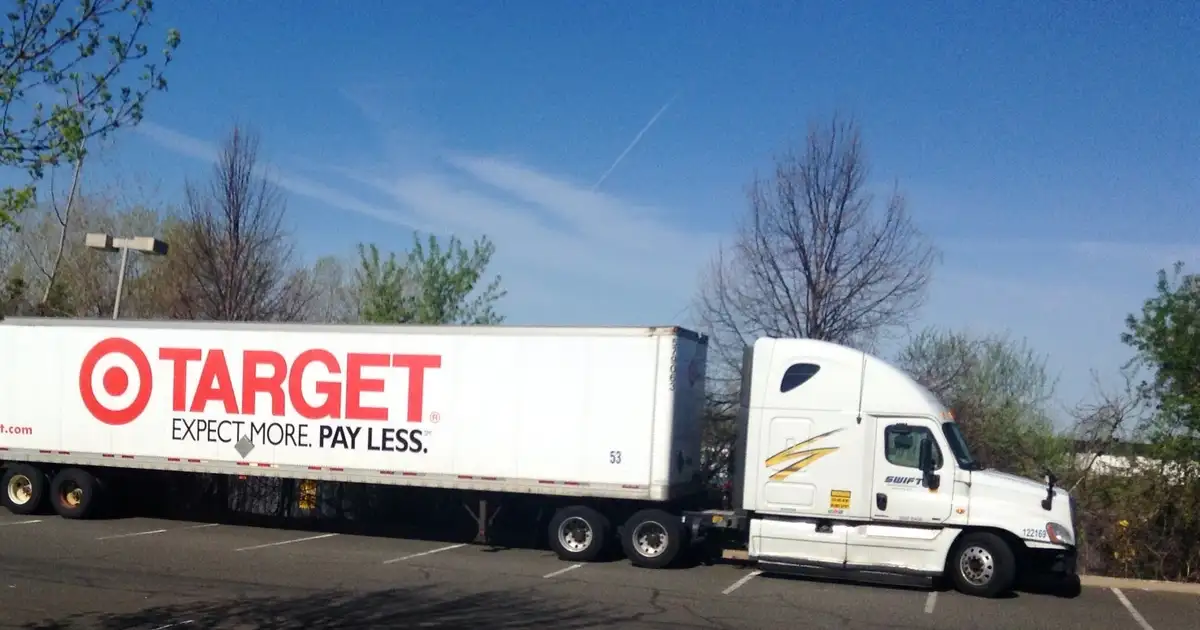

A routine drive turned into a horrific gauntlet of twisted metal and shattered lives when a Target semi-truck, a behemoth of corporate logistics, ripped across a California freeway divider. One woman is dead. Dozens are hurt. This isn’t just a traffic accident; it’s a brutal collision between unchecked corporate pressure and the absolute imperative of public safety.
On Friday, June 19, 2026, at approximately 7:45 AM PT, a northbound Target-branded semi-truck veered violently across the median on Interstate 5 near Stockton. It didn’t just drift; it barreled through the concrete barrier, a missile of commerce launched directly into the heart of unsuspecting southbound traffic. The immediate aftermath was pure, unadulterated chaos – a scene of mangled vehicles, desperate cries, and the chilling silence of lives irrevocably altered.

The collision claimed the life of Maria Rodriguez, 47, of Sacramento, a woman simply driving her car, caught in the crosshairs of a corporate truck gone rogue. Twenty-eight others suffered injuries, with five clinging to life in critical condition. This wasn’t a fender bender; it was a full-blown catastrophe on the asphalt, a devastating play that no one saw coming.
The Crash Scene Breakdown: A Field of Wreckage
The California Highway Patrol (CHP) confirmed the semi-truck, a massive freight hauler, crossed a concrete K-rail barrier with catastrophic force. It then struck at least five passenger vehicles, transforming them into crumpled husks. Emergency crews swarmed the site, a grim ballet of first responders battling to extract the injured from the wreckage. Ambulances, fire trucks, and tow vehicles created a desperate tableau against the morning sky, a stark response to a tragedy that screams “preventable.” Southbound I-5 lanes, a major artery for California commerce and commuters, were shut down for an agonizing over 12 hours, paralyzing traffic and amplifying the economic ripple effect of this disaster.
Officer Mark Thompson of the CHP, his face etched with the gravity of the scene, called it a “complex scene.” He stated, “Our preliminary investigation indicates the semi-truck, for reasons yet unknown, veered across the median and into oncoming traffic.” Unknown? That’s not good enough. The investigation is just beginning, but the damage is already done, leaving a permanent scar on the freeway and in the lives of those affected.
Unpacking the Playbook: Driver Error, Mechanical Failure, or Systemic Breakdown?
The CHP’s Multi-Disciplinary Accident Investigation Team (MAIT) is on the case, a specialized unit tasked with dissecting every angle of this catastrophic event. They’re looking for the critical failure point in this deadly play. Was it the driver, the machine, or the highway itself? Or, more likely, a dangerous combination of all three?
Authorities are intensely grilling the Target truck driver. Toxicology tests are pending, a standard but crucial step in understanding the driver’s state at the moment of impact. Investigators will scrutinize every minute of their recent hours-of-service logs – a critical document that reveals potential fatigue, a silent killer on our highways. Was it fatigue, a momentary lapse of attention, or something far more sinister? The black box data recorder from the truck will be cracked open, ready to spill its secrets on speed, braking, steering inputs, and engine performance in the moments leading up to the collision. This isn’t just about human error; it’s about the entire operational environment.
But the truck itself is also under the microscope, every bolt and every tire a potential smoking gun. Was there a sudden tire blowout, a catastrophic brake malfunction that left the driver powerless, or a steering system failure that sent the rig careening out of control? Target’s maintenance records for that specific rig are now front and center. Were inspections up to snuff? Were repairs made on time? This isn’t just about a driver; it’s about the entire operation, the corporate responsibility behind every mile that truck travels.
The Weakest Link: California’s Freeway Barriers Under Fire
This incident throws a harsh spotlight on California’s freeway infrastructure, specifically the fundamental inadequacy of its median barriers. The K-rail barrier, a system designed to prevent vehicles from crossing into opposing traffic, failed spectacularly to stop a heavy commercial vehicle. This isn’t an isolated incident; it’s a recurring nightmare on our roads.
Just four years prior, in 2022, a similar cross-median crash on I-15 near Barstow killed three people. These barriers are supposed to be the last line of defense, a concrete wall between safety and disaster. When they fail, the consequences are not just severe; they are deadly. Mayor Kevin Jenkins of Stockton, a man who sees the everyday toll of inadequate infrastructure, minced no words.
“This heartbreaking incident is a stark reminder of the need to continuously evaluate and strengthen our freeway safety measures,” said Mayor Jenkins. “We must ensure our infrastructure is robust enough to prevent such catastrophic cross-median collisions. Our citizens deserve better than to face a deadly projectile from the opposite lanes.”
He’s absolutely right. Engineering experts will now assess if the K-rail was truly up to the task of containing a fully loaded semi-truck. Was it designed correctly for this specific stretch of highway, known for heavy truck traffic? Was it maintained properly, or had years of wear and tear compromised its integrity? The call for more robust barriers – specifically continuous concrete median barriers or high-tension cable barriers, which have proven more effective against heavy vehicles – especially on high-traffic truck routes, will only grow louder. Our roads need a stronger defense, a playbook that prioritizes human life over minimal installation costs.
Target on the Hot Seat: Corporate Responsibility in the Crosshairs
Target Corporation quickly issued a statement, a predictable corporate maneuver designed to manage optics. They expressed “deepest condolences” to the victims and promised “full cooperation” with the investigation. But platitudes won’t bring back Maria Rodriguez, nor will they heal the dozens injured. Actions, not words, are what matter now.
“Target is fully cooperating with law enforcement in their investigation and conducting our own thorough review,” their corporate communications statement read, a carefully crafted message designed to deflect immediate blame.
This crash puts Target’s entire logistics operation under an intense microscope. Did they employ the driver directly, or was it a third-party contractor operating under the Target brand? Either way, the buck stops with the prominent red bullseye on the side of that truck. Their safety protocols, driver training programs, hours-of-service compliance, and vehicle maintenance schedules will be dissected by investigators and, inevitably, by plaintiffs’ attorneys. Expect a torrent of civil lawsuits, including potential class-action litigation. Expect increased regulatory oversight and perhaps even federal intervention. This isn’t just bad PR; it’s a potential financial and legal nightmare that could cost the company millions, if not billions, and severely damage its brand reputation.
For everyday people, this incident highlights the hidden dangers of our delivery-driven economy. We demand our goods fast and cheap, often without considering the human cost. But what’s the real price of that convenience when a semi-truck, an essential part of the supply chain, becomes a deadly projectile, tearing through lives with impunity?
The Ripple Effect: New Rules for the Road Demanded
This high-profile crash isn’t just a local story; it’s a national wake-up call. It could trigger a seismic shift in commercial trucking regulations, forcing state and federal lawmakers to finally feel the heat. There will be intense debates about stricter enforcement of existing laws, which are often poorly policed. New mandates for advanced vehicle technology, such as automatic emergency braking, lane-keeping assist, and fatigue monitoring systems, could be on the table for all commercial trucks. Driver monitoring, already a contentious issue, could become even more stringent, with calls for continuous electronic logging and biometric monitoring.
The pressure on truck drivers is immense: long hours, tight deadlines, and the constant grind of the road. But the public cannot afford to pay the ultimate price for systemic failures within the logistics industry or from inadequate infrastructure. This tragedy demands a complete reevaluation of how we manage commercial traffic on our highways, from driver accountability to corporate responsibility and infrastructure design. We need to know who dropped the ball, and we need to hold them accountable.
The investigation is underway, and the answers, however painful, will come. But for Maria Rodriguez’s family and the dozens injured, the game is already over. The question now is: what concrete, enforceable changes will be made to ensure no other family suffers such a devastating, preventable loss? The time for action is now; the cost of inaction is too high to bear.
Photo: Uoaei1
Source: Google News