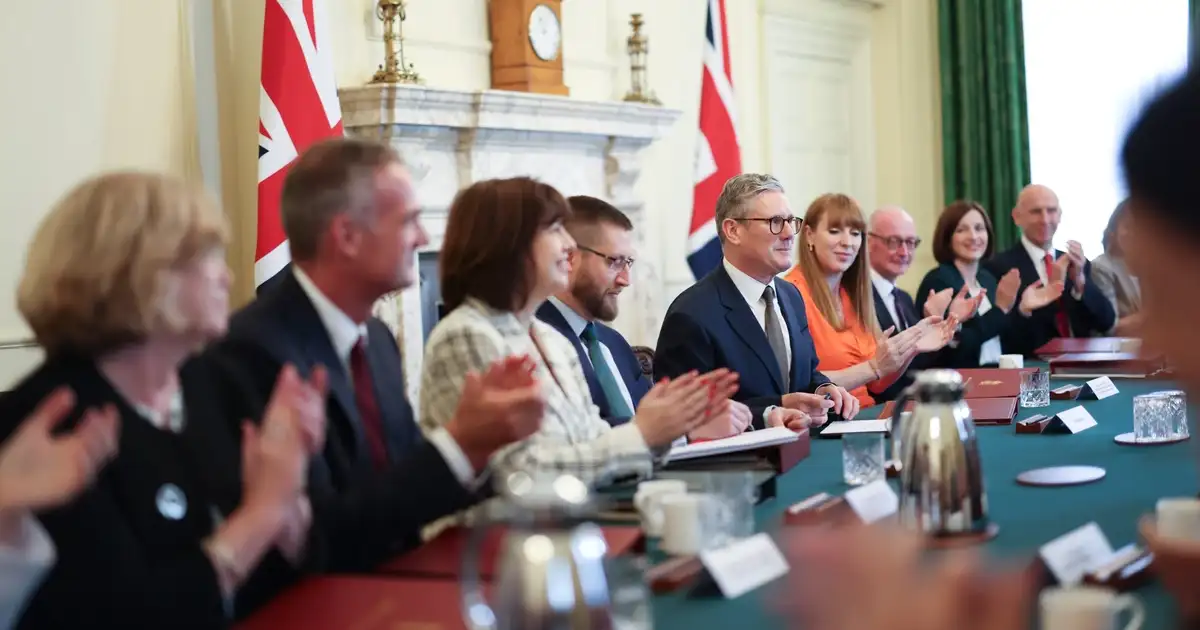

Keir Starmer’s tearful, pathetic exit from No. 10 isn’t just a resignation; it’s a stark, delusional epitaph for a tenure that choked on its own promises. Britain, buckle up: you’re now bracing for your seventh Prime Minister in ten years. This isn’t a political merry-go-round; it’s a national humiliation, spinning so fast it threatens to fling us all into irrelevance.
Starmer finally caved on Tuesday morning, his resignation a desperate, delayed surrender after weeks of relentless pressure and open revolt within his own Labour Party.

The final nail in his political coffin? The utter fiasco of his government’s handling of the botched rollout of the National Health Service (NHS) reform bill – a policy so poorly conceived, it became a national punchline before it even left the drawing board. Downing Street insiders, practically queuing up to spill the beans, confirmed the fury was palpable, boiling over from his own backbenches.
High-profile cabinet resignations, a mass exodus of rats from a sinking ship earlier this week, had already sealed his fate. Yet, in his mawkish, tearful farewell, Starmer somehow managed to conjure a delusionary highlight reel of “significant accomplishments.”
“Stabilizing the post-Brexit economy”? “Advances in green energy initiatives”? The man spoke these words while persistent, crippling inflation choked households and unemployment figures climbed like a desperate mountaineer. Critics didn’t just slam these claims; they openly mocked them, pointing to the cold, hard data of national economic misery as Starmer’s true legacy.
The Leadership Vacuum
So, the immediate, gut-wrenching question now hangs heavy in the air: Who, in God’s name, is next to lead Labour and, by extension, this perpetually bewildered nation? More importantly, can anyone bring a shred of stability to this political dumpster fire? The Labour Party’s National Executive Committee (NEC), no doubt already sharpening their knives, has officially kicked off the leadership contest. Expect a parade of ambition, as several big names—and a few no-names—scramble to declare their candidacies.
Early speculation, fueled by frantic WhatsApp groups and leaked briefings, points to figures like Wes Streeting, Yvette Cooper, and Lisa Nandy as the early frontrunners for the poisoned chalice. But make no mistake: this isn’t just a leadership contest; it’s an ideological bloodbath waiting to happen.
Starmer’s departure has ripped open the deep, festering cracks within Labour, exposing a party still utterly at war with itself. Expect brutal, heated debates on everything from economic policy and the spectre of nationalization to reckless public spending and unattainable environmental targets. Nothing, absolutely nothing, is off the table.
The next leader, whoever that poor soul turns out to be, faces a task that isn’t just difficult; it’s damn near impossible. They must somehow unite a party already fractured beyond repair by Starmer’s bland, centrist approach – an approach that pleased no one and alienated everyone.
His departure doesn’t just leave Labour in chaos; it leaves a gaping void where a coherent vision should be. The British public, utterly exhausted and cynical, has zero patience left for another round of internal Labour squabbles. They want leadership, not a soap opera.
Britain’s Endless Carousel
Let’s be clear: this isn’t merely a Labour crisis; it’s a full-blown, systemic crisis of governance that shames the entire nation. Britain has become a global punchline, a country defined by its revolving door at No. 10.
Over the last decade, we’ve witnessed a dizzying, humiliating succession of Prime Ministers: David Cameron, Theresa May, Boris Johnson, Liz Truss, Rishi Sunak, and now, the utterly forgettable Keir Starmer. That makes Starmer the sixth PM to crash and burn in just ten years. The incoming leader will be the seventh.
This isn’t just an embarrassing display of instability; it’s a catastrophic breakdown of political leadership, broadcasting Britain’s weakness to every corner of the globe.
Ordinary Britons, the ones actually paying the bills, are beyond exhausted. They’re not just frustrated by this constant political churn; they’re incandescent with rage. Public confidence in any leadership is at rock bottom, scraped clean by years of incompetence and infighting.
How in hell’s name can any government implement long-term strategies, tackle the cost of living crisis, or fix our crumbling healthcare system when the captain of the ship changes every other week? Policy paralysis isn’t a threat; it’s our grim reality, and the nation suffers for it.
Recent polls confirm this profound public disillusionment, laying bare the national despair. YouGov and Ipsos Mori surveys clocked Labour’s approval ratings at a dismal 28-30% – their lowest point in years, a damning indictment of Starmer’s failed tenure.
Even the Conservatives, despite their own incessant, self-inflicted drama, managed a slight bump to 25-27%, reflecting Labour’s spectacular implosion. The financial markets, ever the brutal arbiters, responded with a shrug and a dip: the FTSE 100 slid 0.8% within hours of Starmer’s news. Investor uncertainty isn’t just “real”; it’s a chilling forecast for Britain’s economic future.
The Opposition’s Opportunity
Predictably, the opposition isn’t just “not wasting” this opportunity; they’re pouncing on it like a starved predator. The Conservative Party, under the steady, if somewhat beleaguered, leadership of Rishi Sunak, is already baying for an immediate general election. Their argument is simple, brutal, and effective: capitalize on Labour’s catastrophic failures, seize the moment, and demand a fresh mandate from a weary public. The Liberal Democrats, smelling blood in the water, are enthusiastically echoing the call.
“Mr. Starmer’s ‘achievements’ are a fantasy. The reality is a country struggling under the weight of his government’s failures. The British people deserve a fresh start, and that means a general election now.” – Rishi Sunak, speaking to Sky News.
This pressure won’t just “grow”; it will become an inescapable, deafening roar. Whoever emerges from Labour’s internecine war as the new leader will immediately find themselves under siege, facing relentless calls to the ballot box.
The legitimacy of a Prime Minister installed without a public vote isn’t just questionable; it’s a democratic insult. Britain, scarred by years of unelected leaders and backroom deals, has had enough. A public mandate isn’t merely crucial; it’s the only path to restoring any semblance of trust.
“This is not just a Labour crisis; it’s a crisis of governance. We cannot continue like this. The people need certainty, not another internal party squabble.” – Liberal Democrat leader Ed Davey, via statement.
Starmer might have whimpered about “foundations for a fairer, greener Britain” as he shuffled out the door, but his tearful departure screams one word: failure. His legacy isn’t some grand vision; it’s a stark monument to instability, reflecting the brutal, unforgiving pressures of No. 10 in a hyper-partisan, utterly disillusioned era.
Britain doesn’t need another leader who can merely survive the cut-throat politics or cry about their imagined “achievements.” This country, teetering on the edge of political farce, desperately needs strong, decisive leadership.
It needs someone who can actually deliver, not just another face for the revolving door. Will anyone step up, or are we doomed to watch the carousel spin into oblivion?
Photo: Wikimedia Commons (query: Britain cries)
Source: Google News