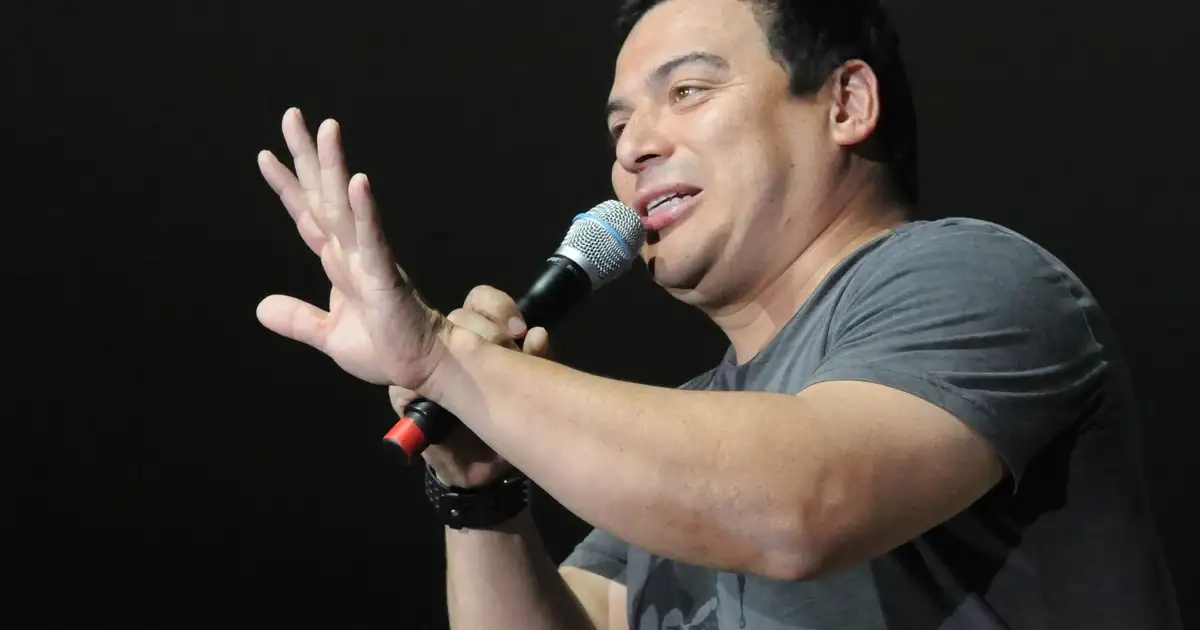

Comedian Carlos Mencia, once a provocative voice in stand-up, has just received the ultimate penalty flag: an arrest for over $300,000 in unpaid taxes. This isn’t a setup for a punchline; it’s a stark, real-life consequence that slams him as “one of California’s biggest tax scofflaws.” For a man who built a career dissecting societal absurdities, the irony is as brutal as a blindside hit.
The Honduran-American comedian, widely recognized for his sharp, often controversial humor and the popular Comedy Central series “Mind of Mencia,” now faces a formidable opponent: the California tax authorities. They’ve dropped the hammer, bringing him in for a staggering tax debt that demands more than just a laugh.

Make no mistake, this isn’t some minor accounting error or an easily dismissed oversight. We are talking about a sum north of $300,000 – a figure that represents years of alleged non-compliance, a systematic failure in financial game management. For a public figure, it’s not merely a misstep; it’s a monumental fumble on the biggest stage, a glaring testament to a fundamental breakdown in civic responsibility.
The Comedy of Errors: Mencia’s Costly Fumble
Born Ned Arnel Mencia, the comedian meticulously carved out a niche with his incisive, often divisive humor. His signature show, “Mind of Mencia,” which ran from 2005 to 2008, served as a potent platform for calling out hypocrisy and societal foibles. Now, the spotlight, once focused on his targets, shines unforgivingly on his own alleged financial hypocrisy. This isn’t just bad optics; it’s a direct contradiction of the very ethos he championed.
This arrest transcends a mere legal inconvenience; it’s a devastating blow to a career that, frankly, has already navigated its share of “significant challenges.” Comedians, by their very nature, thrive on relatability, authenticity, and a perceived connection with the common person. Getting publicly tagged as a “tax scofflaw” doesn’t just erode rapport; it obliterates it. It creates an insurmountable chasm between the performer and the audience, particularly the everyday taxpayer who diligently files their own returns.
Imagine a star quarterback, with the game on the line, fumbling the ball on the goal line. That’s the sheer magnitude of this situation for Mencia. He’s been caught, not with his hand in the cookie jar, but rather, actively avoiding the bill for the entire bakery. The impact of such a high-profile misstep resonates far beyond the courtroom, shaking the very foundation of his professional brand.
Unpaid Dues and the Public’s Verdict
The label “one of California’s biggest tax scofflaws” isn’t a casual insult; it’s an official, damning assessment of his financial conduct. This is no minor dispute over a parking ticket; it’s a substantial liability that has escalated to the point of a public arrest. The state of California, known for its aggressive pursuit of tax delinquents, has clearly drawn a line in the sand, and Mencia has crossed it.
Public figures, whether they embrace it or not, are held to an undeniably higher standard. When you make a living by speaking your mind, by critiquing others, your own actions inevitably come under intense, unforgiving scrutiny. Failing to honor tax obligations, especially to this staggering amount, isn’t just an oversight; it’s a direct assault on credibility. It undermines the very trust a public personality needs to maintain.
This situation compels us to ask difficult questions about personal responsibility. How does someone accumulate over $300,000 in unpaid taxes? Was it sheer negligence, outright defiance, or simply a catastrophic failure in financial planning? Whatever the underlying reason, the outcome remains brutally consistent: a very public downfall that leaves little room for excuses. This isn’t just about the money; it’s about the message it broadcasts to every working American who dutifully contributes their share.
Every single working American pays their taxes. When a celebrity is accused of dodging theirs, it doesn’t just create resentment; it ignites a furious sense of injustice. It feels like a glaring double standard, a rich person getting a pass while everyone else grinds through their obligations. This fuels public anger and further alienates Mencia from the very people who once bought tickets to his shows.
Mencia’s career has certainly seen its share of peaks and valleys, and his comedic style was always designed to be divisive. This latest incident, however, is not about artistic choice or provocative humor. It’s about a fundamental civic duty, a non-negotiable obligation that applies to every citizen, regardless of fame or fortune. This is a different kind of controversy, one that is significantly harder to laugh off or spin into a new routine.
The Aftermath: A High Price to Pay for a Missed Payment
What are the tangible consequences here? Beyond the immediate humiliation of arrest, Mencia faces a grueling battle to clear his name and satisfy his substantial debt. The legal fees alone will be astronomical, a financial drain that will compound his existing troubles. More critically, the damage to his public image, the very currency of a comedian, could prove irreparable. How does one rebuild trust when the foundation has been so publicly fractured?
For a comedian, reputation is the bedrock of their entire brand. It’s the intangible asset that allows them to connect with audiences, secure bookings, and maintain network relationships. This arrest doesn’t just chip away at that foundation; it takes a sledgehammer to it. It makes it exponentially harder for audiences to connect with his humor, harder for promoters to take a risk on booking him, and virtually impossible for networks to trust him with future projects. The ripple effect will be long-lasting and severe.
This isn’t an isolated, one-off mistake that can be easily explained away. Over $300,000 in unpaid taxes strongly suggests a pattern, a systemic issue with how Mencia has managed his finances over an extended period. That kind of recurring red flag is a serious concern for any professional, signaling a fundamental lack of discipline or accountability that extends beyond the stage.
The state of California does not, under any circumstances, mess around with tax evasion. They pursue these cases with relentless vigor, often making examples of high-profile individuals to send a clear message. This arrest is not merely an action against Mencia; it serves as a stark, unequivocal reminder to everyone, celebrity or not, that tax obligations are not optional. They are a mandatory cost of doing business and living in society.
This situation stands as a harsh, undeniable lesson in accountability. No matter how famous you are, no matter how many laughs you generate, the rules of the game still apply. The taxman, with an almost mythical certainty, always gets his due, eventually. Attempting to dodge that fundamental responsibility almost always backfires, and often, as Mencia is now discovering, spectacularly so.
Mencia built a career on pushing boundaries, on challenging norms and speaking uncomfortable truths. But some boundaries, those meticulously drawn by the IRS and state tax boards, simply cannot be pushed. They are non-negotiable. Crossing them leads directly to this kind of public embarrassment, legal quagmire, and profound professional setback. This isn’t a punchline; it’s a serious, costly problem. It’s a reminder that even those who make us laugh the hardest are not exempt from the law, and the price for such alleged financial indiscretion is steep, measured not just in dollars, but in dignity and a shattered legacy.
Photo: Wikimedia Commons (query: Carlos Mencia)
Source: Google News