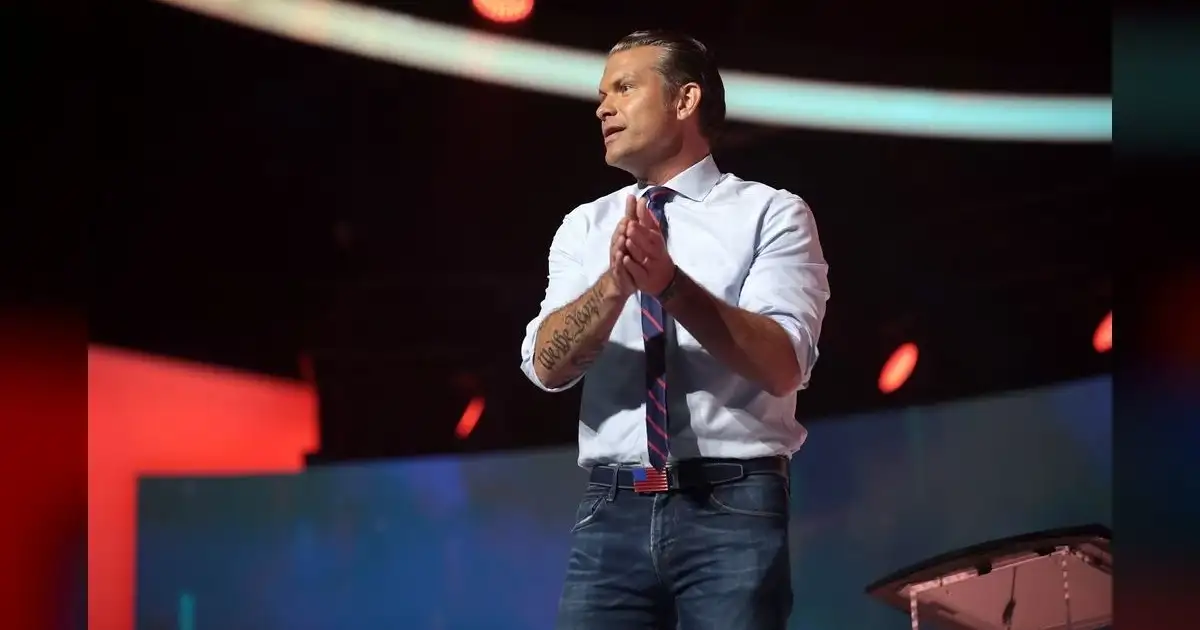

The conservative media landscape, often a bastion of unwavering loyalty, is currently experiencing a seismic shock. A powerful Republican figure, whose influence was instrumental in elevating Pete Hegseth to his prominent Fox News platform, has publicly eviscerated the host’s recent performance as “sophomoric.” This isn’t merely a critique; it’s a political betrayal, a public disavowal that sends shivers through Washington’s power corridors and signals a profound regret over a once-decisive backing.
The tremors of this unprecedented attack are shaking the very foundations of the political establishment. This Republican, whose past support for Hegseth was nothing short of foundational, unleashed a brutal verbal assault in the wake of Hegseth’s highly controversial monologue last week. The question isn’t just what was said, but why now, and what it means for the meticulously constructed alliances within the GOP and its media apparatus.

On June 22, 2026, Hegseth leveraged his primetime Fox News pulpit to launch a blistering broadside against the current administration’s handling of the escalating tensions in the South China Sea. His rhetoric was stark, his demands absolute: he branded diplomatic efforts as “weak-kneed appeasement” and unequivocally called for an “immediate, aggressive military posture.” It was a declaration of war from a television studio, delivered with the certainty of a general, yet lacking the gravitas of a statesman.
The immediate backlash was fierce and widespread. Critics didn’t just note a lack of depth; they condemned his intellectual laziness, pointing to his “simplistic historical parallels” and his cavalier dismissal of “complex geopolitical realities.” Many weren’t merely critical; they were appalled, labeling his approach “overly jingoistic, dangerously simplistic, and utterly devoid of nuance.” This wasn’t just bad commentary; it was, for many, irresponsible warmongering.
The Patron’s Public Disavowal: A Reckoning for Rhetoric
The Republican’s swift and stinging condemnation, delivered on June 23, 2026, was no spontaneous outburst. It represents a calculated move, a dramatic fracture within the conservative ecosystem. The individual who once championed Hegseth’s voice now views him as an undeniable liability, openly branding his pronouncements as “sophomoric.” This isn’t merely a disagreement; it’s a political patron disowning their protégé in the most public and damaging way imaginable.
This isn’t just about a single ill-conceived segment. It’s about a powerful figure pulling the rug out from under someone they helped elevate. The Republican, whose identity remains strategically guarded for now, clearly feels burned, perhaps even betrayed. They invested significant political capital, time, and influence into Hegseth’s ascent, only to watch him spout what they now perceive as dangerous, unhelpful, and potentially catastrophic rhetoric. Was the price of his influence too high?
Why this sudden, dramatic reversal? The South China Sea is not merely a distant geopolitical flashpoint; it is a powder keg threatening global stability. Hegseth’s demand for immediate military action is not just bold; it is reckless, a direct challenge that could ignite a major international crisis with unimaginable human and economic costs. Such talk doesn’t just inflame; it risks lives and squanders billions. The Republican, a seasoned operator, undoubtedly fears being irrevocably associated with such extreme, uncalibrated views, particularly as the geopolitical temperature rises.
The “decisive vote” that secured Hegseth’s influential position wasn’t cast in a ballot box. It was a currency of political influence, of strategic endorsements, of doors opened within the labyrinthine conservative media circles. This Republican didn’t just support Hegseth; they helped construct the very platform from which he now broadcasts. To watch that platform potentially ignite with such incendiary rhetoric must feel like a profound personal and political setback.
The Steep Price of “Sophomoric” Statecraft
Hegseth’s monologue wasn’t just poor television; it was profoundly irresponsible statecraft. The South China Sea is a crucible of global trade, a strategic arena involving nuclear powers, and a delicate web of alliances and historical grievances. To reduce this intricate tapestry to a simplistic call for immediate war is not just naive; it demonstrates a profound ignorance of international relations and the immense complexities of modern diplomacy. It’s the kind of armchair generalship that makes actual military strategists wince.
This Republican’s public regret is extraordinarily telling. It lays bare the often-transactional nature of Washington and its media ecosystem. The backing for Hegseth wasn’t predicated on his foreign policy acumen or his nuanced understanding of global affairs. It was, more likely, a calculated investment in his ability to stir the pot, to rally a specific segment of the base, and to provide a reliably provocative voice. What they got, it seems, was a loose cannon firing indiscriminately.
The true cost of such bellicose talk is never borne by the pundits safely ensconced in their studios. It is paid in blood by soldiers, in resources by taxpayers, and in shattered lives by families caught in the crossfire of distant conflicts. Hegseth delivers his pronouncements from a comfortable chair; the consequences of his words ripple across oceans, shaping destinies and potentially igniting global conflagrations. This isn’t abstract; it’s the grim reality of foreign policy.
The blistering criticism from his former backer underscores this harsh truth. Even within the often-permissive conservative media ecosystem, there are limits. There is a point where bombastic rhetoric ceases to be merely entertaining and becomes genuinely harmful, a threat to national interest and global stability. Hegseth, in the eyes of his former ally, evidently crossed that line. The speed with which his former patron is now distancing themselves speaks volumes about the perceived danger.
“His commentary was not merely simplistic; it was devoid of any meaningful nuance,” an insider with deep ties to the Republican’s camp revealed to CNN. “To advocate for aggressive military action without a fundamental grasp of the stakes involved is truly sophomoric – it’s dangerously childish.”
This quote doesn’t just cut deep; it suggests a fundamental, almost contemptuous, lack of respect for Hegseth’s intellectual contributions. It’s a stark admission that some within the GOP establishment are growing weary of media personalities playing general, tired of talk that inflames passions without informing policy. They recognize the very real, tangible dangers inherent in such bluster, particularly when global tensions are already at a fever pitch.
The Shifting Sands of Conservative Media: A Wake-Up Call?
This unprecedented public rebuke could carry significant implications for Hegseth’s career and influence. His power is intrinsically linked to his credibility, particularly within the conservative movement. If his own former allies are now publicly discrediting him, who else will follow suit? This isn’t just an isolated incident; it could be the opening salvo in a broader pushback, signaling a potential, albeit gradual, shift in the conservative media landscape itself.
For far too long, certain networks have prioritized personality cults over policy expertise, elevating outrage and performative anger above sober analysis. This incident serves as a stark warning about the inherent pitfalls of that strategy. When the rhetoric becomes too hot, too reckless, even the most loyal allies are compelled to jump ship, lest they be dragged down by the ensuing inferno. It’s a pragmatic calculation, not a moral one.
The Republican’s move is undeniably a calculated maneuver, a strategic attempt to save face and protect their own political brand from guilt by association. This is classic Washington power politics: a ruthless calculus of self-preservation above almost all else. The timing suggests a genuine concern that Hegseth’s commentary has become not just unhelpful, but actively detrimental to the broader conservative agenda, or at least to the Republican’s own standing within it.
This public split reveals a deeper, more pervasive unease within segments of the Republican Party. It suggests that some are growing profoundly tired of the relentless cycle of performative outrage and demand serious, substantive engagement on critical issues. They are not finding it from figures like Hegseth, who consistently offer simplistic slogans and inflammatory soundbites in place of thoughtful analysis. The appetite for mere spectacle might finally be waning.
The everyday American ultimately pays the price for this intellectual vacuum. They are fed an endless diet of soundbites and rhetoric that pushes for potentially catastrophic conflicts. They deserve serious, informed discussion about foreign policy, not jingoistic cheerleading. They deserve leaders and commentators who understand the profound human and economic costs of conflict, and who approach such weighty matters with the gravity they demand.
The Real Game Behind the Headlines: Power, Influence, and Survival
Let’s be clear: this isn’t about Pete Hegseth’s bruised ego. This is about the brutal realities of money, power, and influence in Washington. Hegseth’s position at Fox News is more than just a job; it is a powerful platform, a megaphone that carries immense weight. That platform shapes public opinion, influences policy debates, and, crucially, commands significant financial resources.
When a key backer publicly withdraws support, it sends an unmistakable message: the gravy train might be slowing down. The political utility of Hegseth’s particular brand of aggressive rhetoric might be waning, or worse, becoming a net negative. This is the swamp at its most transparently transactional. Allegiances in Washington shift with the wind, especially when the optics turn sour, or when a protégé becomes a liability rather than an asset.
The Republican who helped Hegseth ascend now views him as a political albatross. This is a cold, hard calculation, stripped of sentimentality. It’s not about shared principles in this moment; it’s about damage control. It’s about ensuring one is not dragged down by another’s recklessness, particularly when the stakes involve international conflict. It’s the ultimate act of political self-preservation.
The fallout from this dramatic public split will be watched with bated breath across the political spectrum. Will Hegseth, chastened, temper his rhetoric? Will other conservative media figures take note of this cautionary tale and recalibrate their own approaches? Or will the cycle of outrage, fueled by the insatiable demands of cable news, continue unabated, heedless of the real-world consequences? The stakes are too high for “sophomoric” commentary, especially when the world is watching, and listening, to every word.
Source: Google News