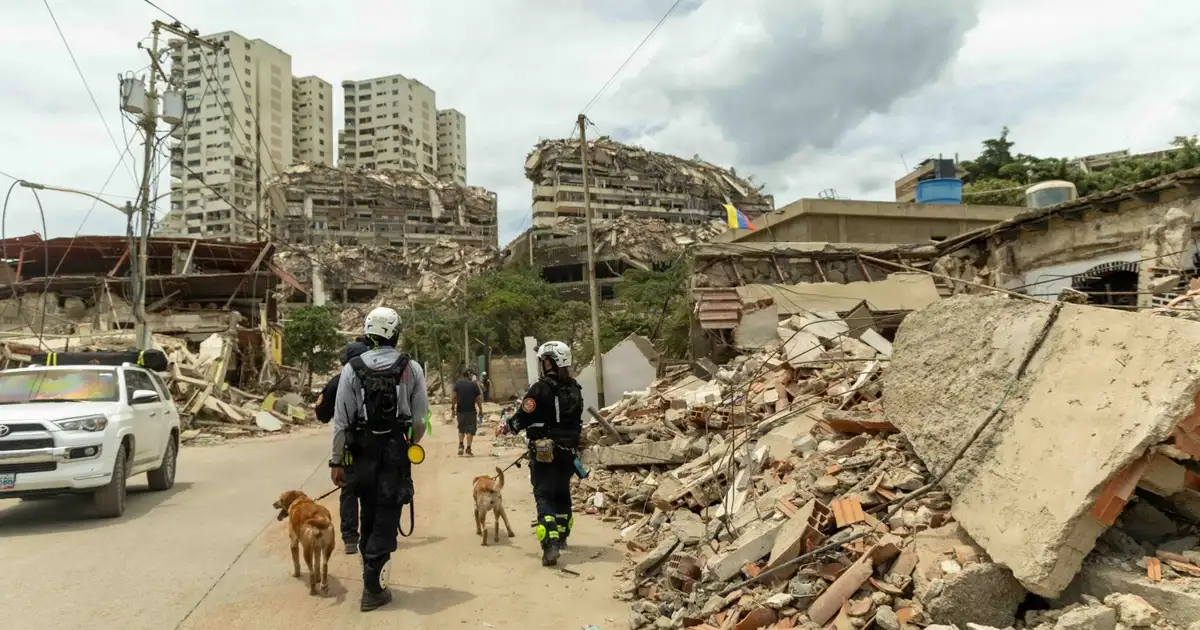

Amidst the rubble and despair following the devastating 7.3 magnitude earthquake that struck Venezuela’s Sucre state on October 26, 2023, a more profound tragedy unfolds: a near-total absence of international humanitarian aid. With initial reports indicating over 500 confirmed dead, 2,000 injured, and at least 50,000 displaced, the victims find themselves not only grappling with unimaginable loss but also facing a stark, solitary struggle for survival, abandoned by a world seemingly unwilling or unable to help. This desperate scenario is compounded by Venezuela’s profound, pre-existing humanitarian crisis, a nation already reeling from economic collapse and severe political isolation, whose crumbling infrastructure proves catastrophically inadequate against such a natural disaster.
Venezuela’s Protracted Humanitarian Emergency
Venezuela has long been in the throes of a perpetual humanitarian emergency, a crisis exacerbated by years of economic mismanagement, systemic corruption, and deepening political isolation. The nation’s once-robust economy has been crippled, leaving basic services like healthcare, clean water, and electricity in chronic scarcity. For millions, adequate food and housing are distant luxuries.

This extreme pre-existing vulnerability means that any significant natural disaster, like the recent earthquake centered near the coastal city of Cumaná, instantly escalates into an unmitigated catastrophe.
For the earthquake victims, this translates into unimaginable suffering. Homes are not merely damaged; they are obliterated. Families are not just displaced; they are rendered utterly destitute, with no functional government safety net or international relief mechanism to turn to.
The sheer scale of Venezuela’s internal crisis often overshadows specific, acute events. This makes it extraordinarily difficult for even the most determined international organizations to operate effectively. Entrenched bureaucracy, political hurdles, and a pervasive lack of transparency routinely block aid efforts, creating a humanitarian bottleneck that strangles assistance before it can reach those most in need.
“The Venezuelan state’s capacity to respond to any large-scale emergency is not merely compromised; it is functionally non-existent,” stated Dr. Elena Ramirez, a prominent humanitarian aid expert. “They simply do not possess the resources, the infrastructure, or the political will to mount an effective, independent response.”
The Perplexing Absence of Global Aid
The question looms large and demands an answer: why is the world largely silent in the face of such profound suffering? Several interconnected factors contribute to this devastating inaction, with geopolitical tensions playing a particularly corrosive role.
- Political Polarization: Venezuela’s government faces widespread international condemnation and a complex web of diplomatic disputes. Many nations actively resist direct engagement, viewing any aid as potentially legitimizing a regime they oppose.
- Sanctions Regime: The extensive economic sanctions imposed on Venezuela, while intended to pressure the government, inadvertently complicate humanitarian aid delivery. Banks and international financial institutions are often hesitant to process transactions, fearing potential violations and punitive measures, effectively chilling legitimate relief efforts.
- Donor Fatigue: The global landscape is saturated with crises, from ongoing conflicts to other natural disasters. Venezuela’s long-standing, seemingly intractable issues sometimes fall off the international radar, struggling to compete for attention and resources against more immediate, politically palatable emergencies.
- Access Restrictions: Crucially, the Venezuelan government has a well-documented history of obstructing humanitarian access and dictating aid distribution. This consistent interference has cultivated deep distrust among potential donors and aid agencies, effectively sabotaging relief efforts even before they begin and making direct, impartial assistance nearly impossible.
The result is a cruel paradox: a nation in dire need receives tragically little assistance. Its people, already marginalized and impoverished, are left to pay the ultimate price.
While the global community often prioritizes other conflicts or disasters, the stark lack of political will to intervene in Venezuela leaves earthquake survivors abandoned, trapped in a humanitarian void.
The Human Toll of International Indifference
Imagine losing everything in an instant – your home, your possessions, your sense of security – only to discover that no one, absolutely no one, is coming to help. This is the horrific reality confronting Venezuelan earthquake victims, particularly in hard-hit areas like Cumaná. They are left to fend for themselves amidst the ruins, a situation that breeds not just despair but further waves of internal displacement and migration.
Children are especially vulnerable in this maelstrom. Their schools lie in rubble, their routines shattered, and their futures become even more precarious. The lack of adequate shelter, clean water, and medical care inevitably leads to secondary crises.
Disease spreads rapidly through makeshift camps. Injuries, if untreated, cause permanent damage and disability. This is not merely a story of a natural disaster; it is a profound narrative of systemic failure, highlighting the devastating consequences of international indifference when confronted with political complexity.
The global community frequently espouses humanitarian principles, yet these principles seem to dissolve when faced with the intricate geopolitical realities of a nation like Venezuela. The ongoing suffering of its people, now compounded by the earthquake, highlights this troubling disconnect. What does it say about our collective humanity when political considerations routinely eclipse the urgent imperative to save lives?
A Moral Reckoning: What Happens Next?
Without immediate, coordinated intervention, the situation for Venezuela’s earthquake victims will only worsen. More people will become internally displaced, fleeing the devastation only to face new hardships. The public health crisis will deepen, threatening to overwhelm what little medical infrastructure remains.
Furthermore, the ripple effects will extend beyond Venezuela’s borders. Increased migration flows will strain neighboring countries already grappling with their own economic and social challenges, risking regional instability.
The international community must urgently re-evaluate its approach. Political disagreements, however deeply entrenched, cannot and must not overshadow the humanitarian imperative to alleviate human suffering. Lives are quite literally at stake.
A coordinated effort is desperately needed, one that prioritizes diplomatic engagement to secure humanitarian access and establish impartial aid corridors. The time for deliberation and political posturing is over.
As the dust settles on Venezuela’s shattered communities, the international community faces a profound moral reckoning. Can we truly uphold humanitarian principles while allowing political complexities to condemn tens of thousands to abject suffering? The choice is stark: either find the diplomatic ingenuity and political will to deliver aid, or tacitly endorse a future where natural disasters become instruments of collective punishment.
Venezuela’s earthquake victims are not just statistics; they are a stark reminder of our shared humanity, demanding an answer to the question: what is the true cost of global indifference?
Photo: Michael Wimbish
Source: Google News