
Donald Trump’s Hair Transformation Sparks a Political Firestorm—But Is It More Than Just Hair?
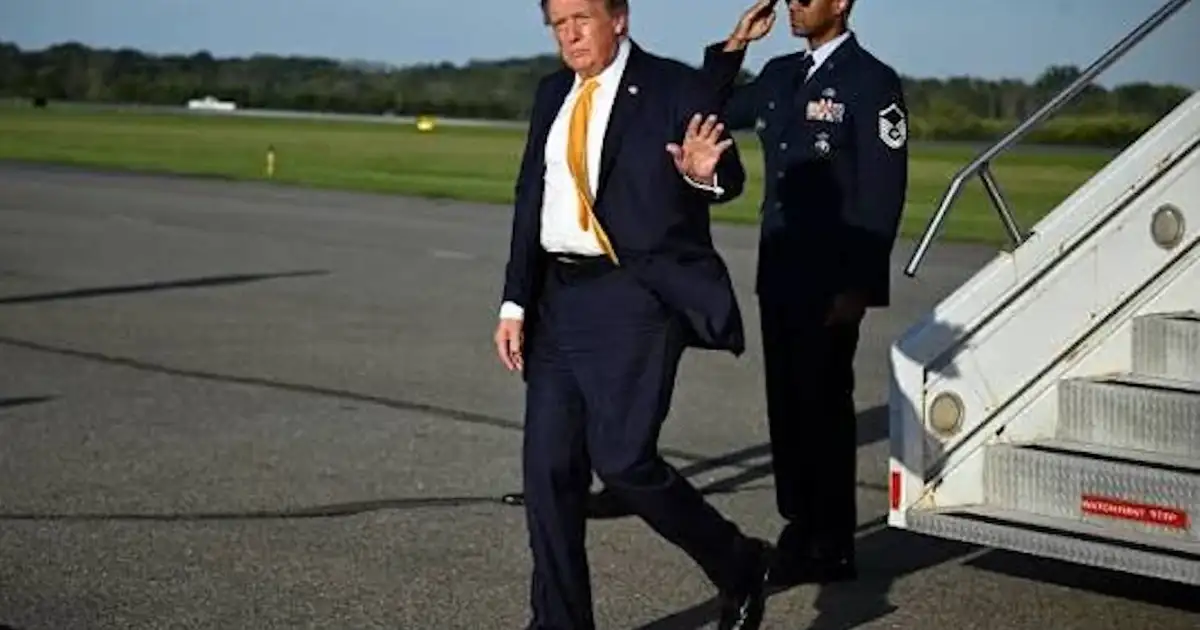
When Donald Trump stepped onto the Florida rally stage sporting a chestnut-brown mane instead of his signature platinum blonde, the political universe didn’t just blink—it exploded. This wasn’t a subtle change; it was a calculated, provocative move designed to send shockwaves through a landscape already saturated with chaos and spectacle.
The Big Reveal: A Hair Makeover That Commands Attention
Over the weekend, Trump unveiled a new look that immediately dominated headlines and social feeds. Gone was the familiar platinum, replaced by a deep, rich brown that screams, “I’m reinventing myself.” Within hours, hashtags like #TrumpHairMakeover and #BrownIsTheNewBlonde trended worldwide. Supporters cheered, interpreting it as a sign of vitality, resilience, and a willingness to shake up the status quo. Critics, however, dismissed it as a desperate stunt, an attempt to cling to relevance in an age obsessed with surface-level spectacle. The truth? It worked. The conversation has shifted from policy to pomade overnight.

Supporters see the transformation as a bold step, a visual signal that Trump is evolving, ready to lead anew. Opponents? They see it as just another distraction—a shiny object designed to divert attention from mounting legal battles and policy chaos. But in the world of politics today, what’s real and what’s performative? The line is razor-thin.
The Media’s Feast on a Hairdo
Media outlets from CNN to The Guardian have dissected the move, debating whether this is a strategic image shift or just vanity run amok. Some speculate Trump’s aiming for a softer, more “approachable” look ahead of 2028. Others argue it’s merely a spectacle—a way to stay front and center in a fractured political arena. But let’s be honest: can a hairstyle genuinely sway voters? Or is this just a new form of political signaling, a way for Trump to dominate the narrative without uttering a single policy detail?
In today’s digital age, visual branding is everything. Reagan’s iconic hair made him seem trustworthy; Trump’s chaotic coiffure was a symbol of disruption. Now, with this bold brown hue, he may be signaling a desire for a different kind of chaos—one that’s more palatable, more “presidential.” Or at least, that’s what his supporters hope. The question remains: does a haircut carry the weight of a political platform? Or is it just another layer of spectacle designed to keep us hooked?
History’s Politicians and Their Hair-Driven Tricks
Politicians have long used their appearances as strategic tools. Reagan’s slick hair projected stability; Obama’s evolving styles subtly reflected a changing leadership style. Trump’s hair? It’s always been a battleground—parodied, scrutinized, and weaponized. Now, his switch to brown isn’t accidental; it’s a deliberate move, a modern twist on age-old image tactics. It’s viral, it’s visual, and it’s designed to generate buzz that outlasts most policy debates.
Within 72 hours, this simple dye job has generated more chatter than some speeches. That’s the power of perception in the digital age—an almost costless move that yields maximum attention. It’s not just about hair; it’s about control, influence, and staying relevant amid chaos.
Who Wins and Who Loses in This Hair-Raising Game?
Supporters interpret the change as a sign Trump is evolving—resilient, adaptable, ready for the next chapter. They believe it energizes his base and signals confidence. Opponents dismiss it as superficial, a distraction from legal woes and policy failures. The media calls it a “stunt,” a PR ploy rather than genuine transformation. But here’s the brutal truth: in politics, image isn’t just a tool; it’s the battlefield. Trump’s latest move proves he’s still the master of spectacle, regardless of what you think of him.
Why Should We Care About a Hair Change?
This isn’t just about vanity. It’s about the art of perception—how politicians craft narratives through visual cues. The spectacle of a hair color shift, especially from a figure as polarizing as Trump, is a masterclass in strategic messaging. It signals to supporters, opponents, and the media: I’m still here. I’m still relevant. And I can still shock you.
In an era where social media can make or break careers overnight, every visual element becomes a weapon. A hairstyle isn’t just vanity; it’s a statement—an eye-catching billboard that screams, “I’m still powerful, still unpredictable.” That message is loud, clear, and undeniably effective.
Is This the Start of a New Trump Era?
If a simple hair dye can stir such chaos, what’s next? Will other politicians adopt more flamboyant personal styles—bolder suits, daring accessories, even different hair colors—just to stand out? The line between personal branding and political strategy is blurring faster than ever. Trump’s new look isn’t just a fashion statement; it’s a signal—he’s still in the game, still trying to outwit, outshine, and outlast.
But the bigger question remains: is this genuine self-expression or just another calculated move to manipulate perception? Either way, it’s effective. And it’s a stark reminder: in modern politics, appearances are weapons, and spectacle sells—more than ever before.
The Final Word: Is the Hair a Sign of Reinvention or Just a Glittering Distraction?
This isn’t merely about hair dye. It’s a chess move—an act of strategic branding designed to keep Trump in the spotlight, distract from mounting legal issues, and energize his base. It’s a spectacle, yes, but also a statement: I’m still here, still relevant, still unpredictable.
If a man can change his hair and change the conversation, he’s still in control. That’s the true power behind this bold shift. So ask yourself: what’s next? Will other politicians follow suit, turning personal appearance into a political weapon? Or is this the dawn of a new era where image eclipses policy?
One thing’s clear: Trump’s brown hair isn’t just a style change. It’s a symbol of the modern political landscape—where perception reigns supreme, and spectacle is the currency of power.
Source: Google News